


Mxr Analog Delay Pedal article
The Complete Guide to Mxr Analog Delay Pedal
The MXR analog delay pedal delivers warm, organic tape-like echoes beloved by guitarists for decades. Discover settings, placement, and why analogue delay captures classic tone.
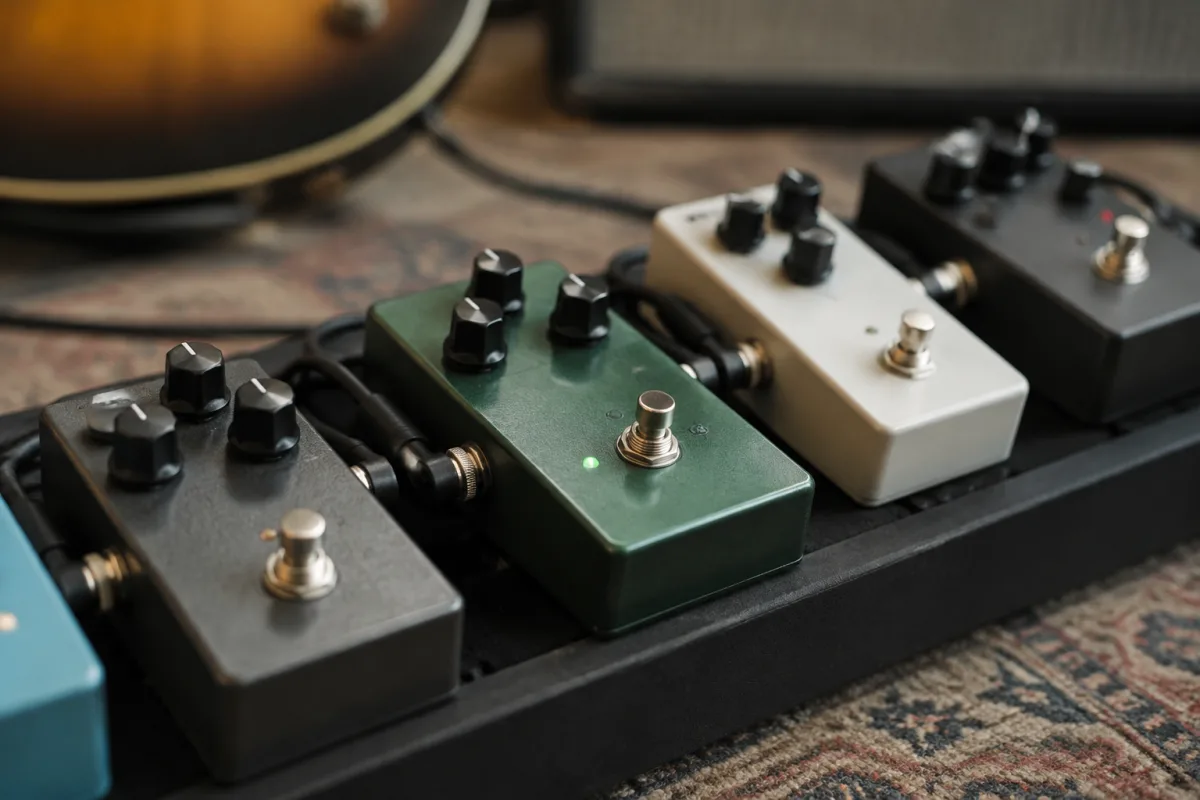
The MXR analog delay pedal stands as one of the most iconic and enduring effects in guitar history, beloved by professionals and beginners alike for its lush, warm, tape-like tone and surprising versatility. Whether you're chasing textured ambient soundscapes, adding subtle depth to lead lines, or crafting slapback slap delays, an MXR analog delay pedal delivers the character and responsiveness that define classic guitar tones.
Understanding MXR Analog Delay
Analogue delay uses a bucket-brigade device (BBD) to create warm, gently degrading repeats—the opposite of pristine digital delay. Each repeat cycle introduces subtle saturation and slight pitch wobble, mimicking the character of vintage tape echo machines. This analogue character is why MXR analog delay remains sought-after despite decades of digital alternatives.
Unlike digital delay that repeats your signal identically, analogue delay colours each repeat slightly, adding musicality and organic warmth. The repeats blend beautifully with your dry signal, creating a cohesive sense of space rather than distinct, laser-sharp echoes. For classic rock tones, blues phrasing, or ambient textures, analogue delay simply sounds "right" in ways digital often doesn't.
MXR Analog Delay Specifications
The MXR M169 Carbon Copy, the most popular modern MXR analog delay pedal, offers delay times from 20 milliseconds to 600 milliseconds—covering everything from slapback quickies to ambient swells. The Mix knob controls wet/dry balance, whilst Level adjusts output volume to compensate for delays that boost the overall signal.
True bypass wiring ensures your tone remains uncoloured when the pedal is off. The compact footprint fits easily on crowded pedalboards. Powered by two standard AA batteries or 9V power supply, the Carbon Copy offers reliable operation whether you're practising at home or gigging nightly.
Newer variants like the Carbon Copy Deluxe expand the feature set with expression pedal compatibility for sweeping delay times and additional toggle switches for deeper tweaking. Vintage MXR analog delays from the 1980s command respect for their slightly different character—warmer but less forgiving than modern versions.
Sound Character Across Settings
Short delays (20–100ms) create slapback and slap delay effects reminiscent of early rock and roll recordings. Use them subtly to thicken single notes or create snappy rhythmic repeats that punch without overwhelming your dry signal. Classic Elvis-influenced tones sit comfortably in this range.
Medium delays (150–350ms) add spacious, ambient textures without creating obvious rhythmic echoes. These settings work beautifully for lead guitar, allowing your phrasing to breathe and bloom without losing clarity. The repeats sit just far enough back that listeners hear space rather than distinct delays.
Long delays (400–600ms) create soaring, ambient soundscapes and delay-driven textures. Set the Mix control high and watch your guitar disappear into clouds of ambience. These settings are essential for experimental players, shoegaze-influenced guitarists, and anyone using delay as a compositional tool rather than a subtle effect.
Placement and Setup
MXR analog delay traditionally lives at the end of your effects chain, after distortion, overdrives, and modulation. This arrangement ensures your delay repeats the shaped tone from your other effects rather than delaying clean guitar. Experimentation matters—some players prefer delay before reverb for different spatial effects, whilst others run it through overdrive for crushed, aggressive repeats.
Pedalboard integration is straightforward. The compact footprint occupies minimal space. Use the battery compartment or integrate a standard 9V power supply into your board's power distribution. Many pedalboards benefit from having delay as the last effect before the amplifier's input, though personal preference varies.
Practical Playing Techniques
Use a light touch with the Mix knob at first—30–40% wet produces spaciousness without drowning your dry signal. Adjust as your ears adapt. Some delay enthusiasts keep different preset settings for different songs, adjusting Mix and Delay Time between tunes or even mid-performance.
Experiment with setting the Delay Time to rhythmic subdivisions of your song's tempo. If you're playing at 120 BPM, an eighth-note delay (300ms) creates locked, rhythmic repeats. A quarter-note delay (600ms) at that tempo produces slower, more ambient effects. This rhythmic locking feels musical and tight compared to random delay times.
Layering delays with other effects creates depth. Use a subtle reverb after your analog delay to blur the repeats further, or combine delay with modulation (chorus, flange) to create shimmering, evolving textures. The possibilities are vast and encourage creative exploration.
Maintenance and Reliability
MXR analog delays are built to last. The Metal Housing protects against road damage. Check battery terminals occasionally if using batteries, and replace them when tone quality diminishes or repeats become unstable. A 9V power supply eliminates battery maintenance entirely.
The footswitch is robust and designed for thousands of presses. If issues arise, professional repair is usually inexpensive. Most pedalboard-building guitarists carry a spare 9V battery or power supply connector as backup during gigs—the simple, time-tested design rarely fails unexpectedly.
Comparing MXR Analog Delay to Alternatives
Strymon Sunset and Boss Delay Zone offer digital precision and clarity, but lack the organic warmth of MXR's analogue character. Electro-Harmonix Deluxe Memory Toy delivers similar analogue warmth in a slightly different tonal flavour. For pure, classic analogue tone without digital interference, MXR remains the benchmark.
Vintage tape echoes like the Fulltone Tube Tape Echo provide ultimate character but require maintenance and expense. MXR analog delay captures much of that tape character in a compact, portable, affordable package suitable for any playing situation.
The Bottom Line
An MXR analog delay pedal is an investment in timeless tone character and proven reliability. Whether you need subtle space, rhythmic repeats, or soaring ambient textures, analogue delay from MXR delivers musicality that digital often approximates but never quite matches. Add one to your board and discover why classic players return to this effect decade after decade.


Comments