


Delay Boss Buying guide
Delay Boss: A Complete Buyer's Guide
Your guide to buying a Boss delay pedal. Learn which model suits your playing style, understand delay types, tap tempo, and how to choose the right pedal.
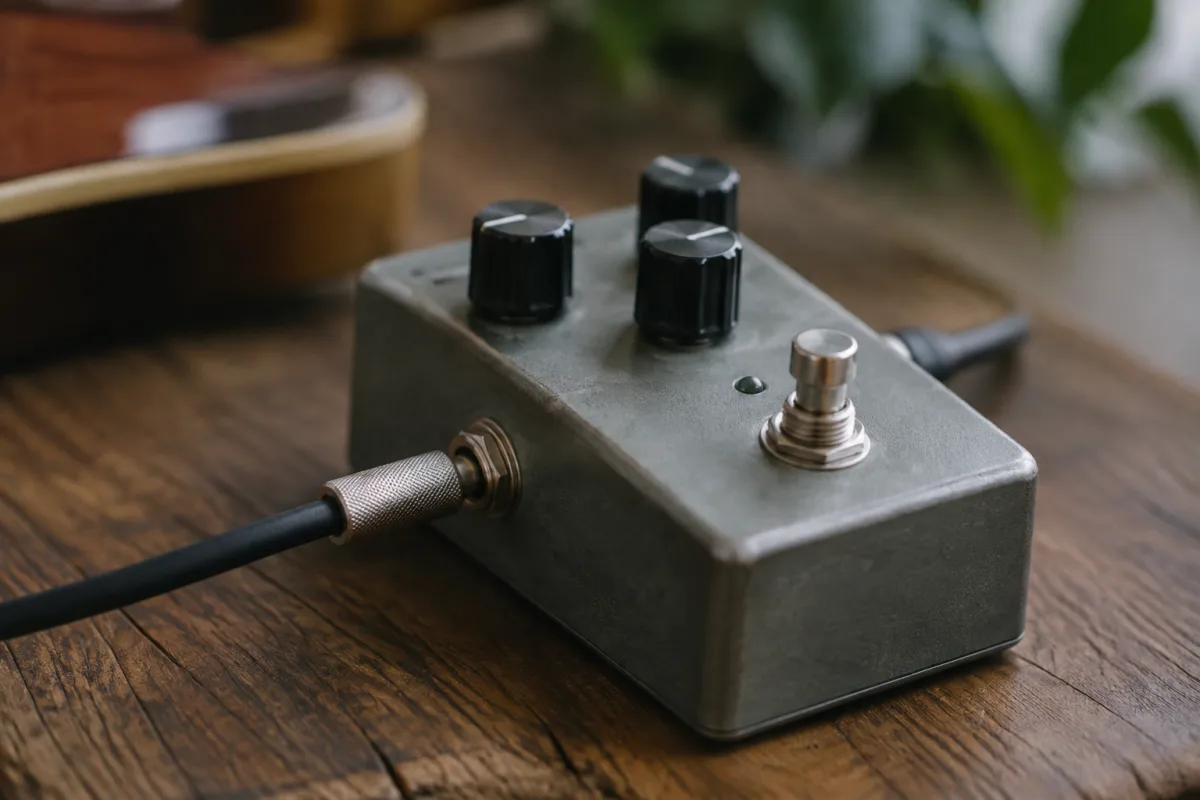
Buying a Boss delay pedal is one of the smartest investments a guitarist can make. Boss delay pedals are legendary for reliability, sound quality, and versatility—whether you're playing ambient soundscapes, rhythmic slap-back echo, or subtle spatial depth, there's a Boss delay that fits. But with several models in the Boss delay range, from compact to feature-rich, knowing which one to buy means understanding your genre, budget, and how much control you actually need. This guide walks you through the Boss delay pedal lineup, what each model excels at, and how to choose without overthinking it.
Why Boss Delay Pedals Matter
A delay pedal repeats your guitar signal after a set time interval, creating an echo or atmospheric effect. Boss has dominated this category for decades because their delay pedals sound warm, responsive, and musical—not sterile or overly digital. Whether you're playing classic rock, indie, ambient, or experimental music, a quality delay pedal is often the first effects pedal guitarists buy after overdrive.
Boss makes several delay models at different price points. All are reliable and sound professional; the differences are in features, size, and specialisation. Understanding these differences saves you from buying a pedal that's either overkill or limited for your needs.
The Boss Delay Pedal Lineup: An Overview
Boss DD-3 (Classic small delay, £80–120): The entry-level Boss delay, beloved for its simplicity and vintage charm. One knob controls time, another controls feedback (repeats), another controls level. No presets, no frills—just immediate, musical delay. Perfect for beginners, small pedalboards, or players who want simplicity. Sound quality is excellent despite the compact size. Cons: no tap tempo (you manually set delay time), limited editing.
Boss DD-7 (Mid-range compact delay, £150–200): Steps up from the DD-3 with tap tempo (tap the footswitch to set tempo), expression pedal compatibility, and a handful of delay types (analogue, tape, digital). Small footprint but more feature-rich. Great for players who want versatility without complexity. Sound quality rivals expensive pedals. Cons: still limited presets, smaller screen than professional models.
Boss DD-200 (Digital delay pedal, £250–350): A larger pedal with a screen, multiple delay algorithms, presets, and expression pedal support. Suitable for players who want to explore different delay sounds without buying multiple pedals. Footswitch tap tempo is responsive and accurate. Cons: overkill if you only want simple delay; learning curve for menus and deep editing.
Boss RE-20 (Reverb + delay combo, £300–450): Combines delay with reverb in one pedal. Brilliant for ambient and experimental players. Each algorithm is modelled on classic gear (tape echo, spring reverb). Cons: larger footprint; reverb might distract if you only want delay.
Boss ME-80 or ME-50 (Multieffects processor, £400–600): Not a dedicated delay pedal—it's a complete effects processor with delay, reverb, modulation, and more. Overkill if you just want a delay; ideal if you want one pedal covering every effect. Cons: complex, steep learning curve, might be unreliable for gigging if you need simplicity.
Understanding Delay Types and Sound Character
Most Boss delay pedals offer choices between delay types, each with a different character:
- Digital delay: Clean, pristine repeats. Modern and transparent. Great for rhythmic delay and slap-back echo. Most precise tempo control.
- Analogue delay: Warm, slightly compressed repeats that degrade beautifully. Emulates vintage tape echo. Great for atmospheric playing and classic rock tones.
- Tape echo: Models the classic Echoplex and Space Echo machines. Warmest and most musical, with natural wow and flutter that adds character. Beloved by ambient and post-rock players.
- Reverse delay: Repeats play backwards. Experimental and dramatic. Fun but limited use case.
If you're uncertain what you want, digital delay is the safest choice—it's versatile and works in almost every genre. Analogue and tape emulations are more specialised and appeal to players chasing a specific tone. Boss delay pedals model these types convincingly; the differences are subtle but real when you listen closely.
Size and Pedalboard Considerations
Boss delay pedals come in two sizes:
- Compact (DD-3, DD-7, small Boss pedals): 23 cm wide, one footswitch. Fits easily on any pedalboard or in a gig bag. True bypass (signal goes directly to your amplifier if the pedal is off, uncoloured). Perfect for working musicians and players with limited space.
- Larger (DD-200, RE-20, ME series): 60 cm+ wide, multiple switches. Requires dedicated pedalboard space. Better for studio use or experimental players where size isn't a constraint.
Most working guitarists choose a compact delay pedal for reliability and simplicity. Larger models are great for studio experimentation and players who don't tour or perform regularly. Consider your actual use case: if you're gigging, smaller is better; if you're recording or experimenting at home, size matters less.
Tap Tempo and Expression Pedal Compatibility
Tap tempo (tapping the footswitch to set delay time to your song's tempo) is a feature that seems basic but is absolutely essential once you've used it. The DD-3 lacks it; every other Boss delay pedal has it. If you're playing in a band or with recorded tracks, tap tempo is non-negotiable.
Expression pedal compatibility allows you to control delay parameters (feedback, level, time) with a wah-like pedal. Great for dynamic, expressive playing; unnecessary if you prefer set-and-forget pedal settings. Entry-level pedals (DD-3) don't support expression; mid-range and professional models do.
Common Buying Mistakes
Mistake 1: Buying a complicated pedal when you just want simple delay. Tempting to buy a DD-200 or ME-80 for "future-proofing," but most guitarists use 5% of available features. A DD-3 or DD-7 is more rewarding because you'll actually use it.
Mistake 2: Overlooking the DD-3 because it's cheap. The DD-3 is legendary for a reason—it sounds fantastic and has inspired countless classic records. Don't dismiss it for a complicated pedal. Sometimes simple is perfect.
Mistake 3: Ignoring tap tempo. If you're playing with others or recording, you'll regret a pedal without tap tempo within weeks. This feature is worth paying extra for.
Mistake 4: Buying based on list of algorithms without testing. A pedal with 20 delay types is worthless if you don't like the core sound. Test a Boss delay pedal in person and listen to how it responds to your playing. Sound character matters more than feature count.
Mistake 5: Ignoring power supply compatibility. Boss delay pedals use either 2 AA batteries or standard DC power. Make sure your setup matches your power plan (pedalboard with power supply, or carrying batteries). This sounds trivial but affects real-world usability.
Comparing Boss Delay to Competitors
Other brands make excellent delay pedals—Strymon, MXR, Line 6, Eventide—but Boss delay remains the standard for good reason. Boss is reliable (tour-proof), affordable, and has a huge used market (easy resale). Strymon sounds lushly digital; MXR is compact and punchy; Eventide is specialist. If you're uncertain, Boss is the safe choice and the industry standard for a reason.
Price Tiers and Value
Budget (DD-3, £80–120): The best entry-level pedal for delay. Full stop. Simple, reliable, sounds great. No frills, but no regrets either.
Mid-range (DD-7, £150–250): Adds tap tempo, multiple delay types, and expression pedal support. Worth the jump if you play with others or want more versatility. Excellent value for money.
Professional (DD-200, £250–350): Screen, presets, deep editing. For players who want to explore or need recall-ability. Overkill for most casual players.
Specialist (RE-20, ME series, £300–600+): Combination effects or multiprocessors. For studio work, experimentation, or players who've already built a rig and want one pedal to rule them all. High learning curve.
Practical Advice for Choosing
- If you're a beginner or casual player: Buy the DD-3. Simple, reliable, sounds professional. You'll use it for years and never outgrow it.
- If you play with a band or record regularly: DD-7 or DD-200, depending on whether you need presets. Tap tempo is essential.
- If you want one pedal covering everything: ME-80 or similar multiprocessor, but understand that complexity has a cost in gigging reliability.
- If you want to experiment with vintage delay sounds: RE-20 or a higher-end Boss model with tape/analogue emulation. Pure joy for ambient or post-rock players.
Cross-linking for Deeper Exploration
Once you've bought your Boss delay pedal, you'll want to understand how to use it musically, how to integrate it with other effects, and how to get the most out of specific models. Our complete guide to Boss delay pedals covers these topics, specific model deep-dives, and how to build a pedalboard around your delay pedal.
The Bottom Line
A Boss delay pedal is a purchase you won't regret. Start with the DD-3 if you're new to delay; move to DD-7 if you need tap tempo and versatility. Both sound fantastic, are built to tour, and have inspired countless iconic guitar tones. The delay sound is everything—choose based on listening (in person, if possible) rather than feature lists. Once you've found your Boss delay, you'll wonder how you ever played without it. This is one of the rare pieces of gear that justifies its reputation through decades of professional use and player loyalty.


Comments