


Wampler Compressor Pedal article
Wampler Compressor Pedal for Beginners: A Complete Guide
Got a Wampler compressor pedal? This beginner guide shows you how to use it properly, dial in professional tones, and avoid common mistakes.
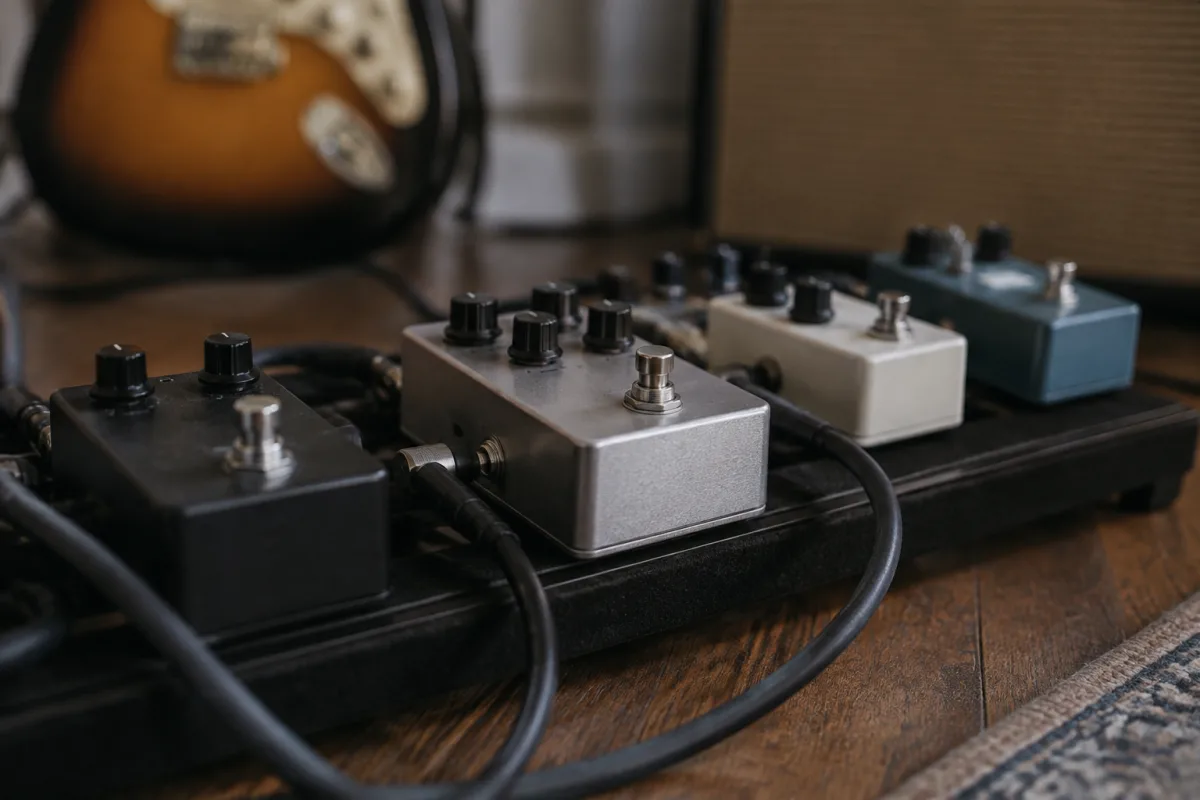
Just got a Wampler compressor pedal and not sure how to use it? You're holding one of the best-designed compressors on the market, but it can feel intimidating with all those knobs. This guide breaks down what each control does and shows you how to get great tones within your first session without needing to understand compression theory.
What a Compressor Actually Does (in Plain English)
A compressor pedal makes your tone more consistent. It turns down the volume automatically when you play louder notes and turns it back up when you play softer ones. Think of it as an invisible hand on your volume knob, evening out the peaks and valleys in your playing. A Wampler compressor pedal does this with exceptional transparency—it doesn't colour your tone, it just makes it smoother and more controlled.
For a beginner guitarist, a compressor is like adding a professional layer to your tone instantly. Suddenly your playing feels tighter, sustain improves, and dynamics feel controlled without sounding fake.
The Essential Knobs on Your Wampler Pedal (Simplified)
Your Wampler compressor pedal has several knobs, but most beginners only need to understand three to sound great:
- Output. This controls how loud the Wampler pedal is in your signal chain. Set it so the compressed tone matches (or slightly exceeds) the volume of your uncompressed signal. Start at noon and adjust to taste.
- Sustain (or Ratio). This controls how much compression happens. Low numbers give subtle compression; higher numbers give obvious, obvious compression. For most beginners, start around 2 o'clock and adjust by ear. Don't overthink this—if it sounds good, it's right.
- Tone. This lets you add a bit of colour to the tone. Leave this at around 9–10 o'clock for a transparent sound, or turn it up if your playing feels too bright. This is personal preference.
That's genuinely all you need to dial in a great basic tone. The other knobs on your Wampler compressor pedal (attack, decay, tone stack) come into play once you're comfortable, but you don't need them day one.
Getting Your First Great Tone: Step by Step
Here's how to set up a beginner-friendly tone in five minutes:
- Plug your guitar into the Wampler pedal. Plug the pedal into your amp. Turn everything on.
- Turn the Output knob to noon (12 o'clock). Turn Sustain to noon. Leave Tone alone for now.
- Play some chords, then some single notes, varying your picking intensity. Notice how the Wampler evens things out.
- If the tone feels too quiet, turn Output up slightly. If it feels too compressed (sounds squishy), turn Sustain down. Adjust until it sounds natural but controlled.
- If the tone feels too bright, turn Tone down a smidge. Play again and adjust by tiny amounts.
After these steps, your Wampler compressor pedal should sound professional. You've got a tone. Stop tweaking and play music.
Common Beginner Mistakes with Compressor Pedals
Turning Sustain too high. This is the number one error. Too much compression makes you sound like you're playing through a wall of glass—transparent but overly squashed. A Wampler compressor pedal at moderate sustain sounds natural. Aggressive compression is cool when you know why you're doing it, but avoid it when learning.
Using compression to fix bad technique. A compressor can't fix timing issues or inconsistent finger pressure. Don't use your Wampler pedal as a crutch. Use it to enhance good playing, not hide poor technique.
Ignoring the Output knob. Many beginners forget that Output exists, then wonder why their compressed tone is quieter than their dry tone. Output compensation is essential. Set it so both versions of your tone sit at the same volume level.
Stacking compressors. One Wampler compressor pedal is perfect. Using two compressors in your signal chain often leads to nasty, artificial-sounding squash. Trust one compressor and learn it deeply.
What "Transparent" Compression Means
You'll hear people say a Wampler compressor pedal is "transparent," meaning it compresses your tone without colouring it. In practical terms, this means your guitar's natural voice comes through—it just sounds more even and controlled. This is exactly what beginners want. You're not adding echo or fuzz or any obvious effect. You're just smoothing out your natural dynamics, which makes everything sound more professional.
For a technical dive into how compressors work and what all the controls do, check out our complete guide to Wampler compressor pedals.
Conclusion
A Wampler compressor pedal is straightforward to use, and you can dial in a great tone in minutes. Master the Output and Sustain knobs, play music, and trust your ears. Within a week of regular use, compression will feel so natural you forget it's there—which is exactly the point. Your tone will thank you.


Comments