


Boss Overdrive article
Boss Overdrive for Beginners: A Complete Guide
A beginner-friendly guide to setting up your first Boss Overdrive pedal, understanding the essential controls, and avoiding common mistakes to unlock great tones.
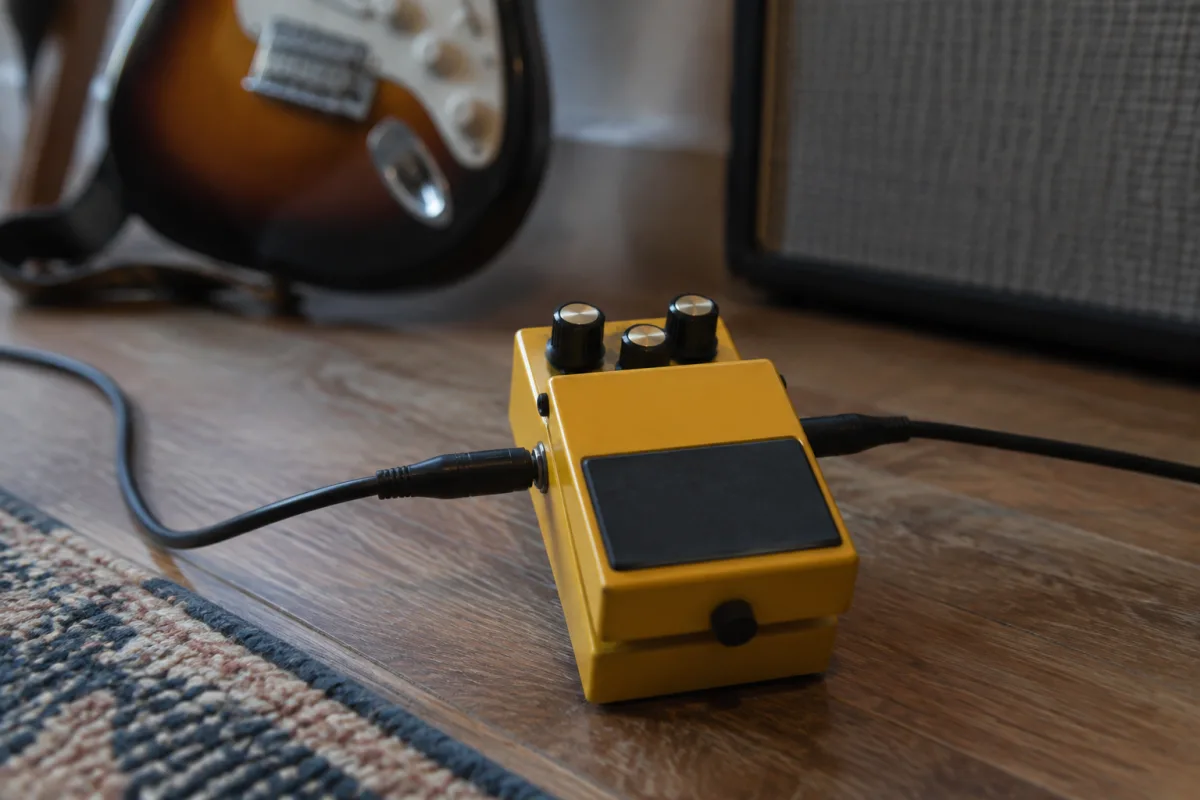
If you're brand new to guitar effects, picking up your first Boss Overdrive pedal can feel overwhelming—there are knobs, switches, and a lot of terminology that doesn't yet make intuitive sense. You might worry you'll break something or that you won't know how to dial in a decent tone. The good news is that Boss Overdrive pedals are genuinely beginner-friendly, and within minutes of connecting it properly, you'll experience noticeably improved tone. This guide skips the technical deep-dives that belong in our complete guide to Boss Overdrive and instead walks you through exactly what to do first, how to avoid the most common rookie mistakes, and how to start enjoying the enriched tones that make guitar more fun to play.
Setting Up Your Boss Overdrive: The Correct Way
Before you plug anything in, take a moment to understand the physical setup. A Boss Overdrive sits in your signal chain—the pathway your guitar's sound travels through before reaching your amplifier. For your first setup, position it immediately between your guitar cable and your amplifier. Later, you might experiment with different positions in your chain, but beginners achieve the best results keeping it simple and close to the amplifier.
Plug your guitar into the "In" jack on the back of the pedal (it's usually marked clearly). Connect the "Out" jack to your amplifier's input. Finally, grab the power supply—most Boss pedals ship with one included—and plug it into the pedal's power socket. You'll see a small LED light illuminate, confirming the pedal has power. Don't worry if nothing sounds different yet; you haven't activated the overdrive effect. Press the large footswitch at the base of the pedal to turn it on—you should see the LED brighten or change colour, and you'll immediately notice your tone becoming richer and more saturated when you play.
Understanding the Three Essential Controls
Most Boss Overdrive models feature three main knobs you actually need to understand as a beginner. Don't panic about extra controls—you can safely ignore advanced parameters until you're comfortable with the fundamentals.
The "Level" knob controls how loud the overdrive effect is compared to your clean tone. Set this so the overdrive tone matches your regular clean volume—this prevents the pedal from suddenly boosting your volume when you switch it on. A good starting point is roughly midway on this knob; you'll adjust it finer once you hear how it sounds through your specific amplifier.
The "Drive" knob determines how much overdrive saturation you get. Turn it all the way down, and you barely hear any effect. Turn it fully up, and you get maximum distortion. As a beginner, start at about 25–30% (roughly 9 o'clock position if you imagine the knob as a clock face), then turn it up gradually until your tone sounds warm and slightly saturated, not harsh or broken-sounding. You're looking for richness, not aggression at this early stage.
The "Tone" knob shapes the brightness of the overdriven sound. Lower settings produce darker, warmer tones that suit blues and classic rock; higher settings brighten the sound for contemporary styles. Find a position that sounds pleasant through your ears—there's no "correct" setting, only what sounds good to you. Most beginners gravitate toward midway positions (12 o'clock) initially.
Your First Practice Session: Building Confidence
Now comes the fun part. Sit down with your Boss Overdrive turned off, play your usual warm-up riff or chord progression, and listen to your dry guitar tone through the amplifier. This is your baseline. Now press the footswitch to activate the overdrive and play the exact same passage. Notice how the tone becomes rounder, fuller, and more expressive? That's what a good overdrive does—it enhances what's already good about your playing without completely transforming your identity as a player.
If the effect sounds too harsh or scratchy, the Drive knob is probably too high. Turn it down 10% and try again. If it sounds like nothing changed at all, turn up the Drive knob 10% and retry. Within a few adjustments, you'll find a sweet spot where the overdrive feels musical and inspiring rather than gimmicky. Save this setting by marking it—many players use tape labels or write it down—so you can return to this "safety setting" when experimenting.
Play for 20–30 minutes with these settings, exploring how the overdrive changes the character of different notes, chord types, and techniques. Listen to how bends become more vocal and singing. Notice how sustained notes bloom instead of fading quickly. Pay attention to how your usual mistakes (slightly out-of-tune bends, sloppy timing) become more obvious with the overdrive on—this is actually helpful feedback for improving your fundamentals.
Common Beginner Mistakes and How to Avoid Them
The most frequent error beginners make is setting the Drive too high immediately, then concluding that Boss Overdrive pedals sound bad. An over-driven sound turned up to maximum doesn't sound good through most amplifiers—it sounds muddy and harsh. Start conservatively low and increase gradually. Your ears will thank you, and you'll actually enjoy using the pedal.
Another common pitfall involves incorrect cable connections. Double-check that your guitar plugs into the "In" side and your amplifier plugs into the "Out" side. Many beginners accidentally reverse these connections and hear absolutely nothing, leading to panic and needless frustration. The labels on the back are clear, so take 10 seconds to verify before troubleshooting anything else.
Beginners frequently forget to turn on the amplifier itself before testing the pedal, then spend 10 minutes worried they've broken something. Always power on your amplifier first, then the pedal. It's just a simple habit that prevents confusion.
One psychological mistake is comparing your early Boss Overdrive experiments directly to professional recordings, then feeling discouraged. Professional musicians spend decades developing their technique and ear training. Their overdrive tone sounds great partly because they're playing the amplified fundamentals perfectly. Your tone will sound richer naturally as you improve fundamentally, regardless of which pedal sits in your signal chain. Use the overdrive as motivation to practice more consistently, not as a magic fix.
Experimenting Safely: What Not to Fear
Here's a liberating truth: you cannot break a Boss Overdrive pedal by experimenting with its knobs. Turn every control to its maximum setting simultaneously if you want. Turn them all to minimum. Try extreme combinations. The worst that happens is you hear unpleasant sounds, which you then fix by adjusting the controls. It's genuinely impossible to damage the pedal or your equipment through knob adjustments.
The power supply is similarly worry-free. The included Boss power adapter is regulated specifically for this pedal and won't cause problems. You've got a safe, contained device that encourages exploration rather than discouraging it.
Once you feel confident with Level, Drive, and Tone, gradually explore other controls if your specific model has them. Many advanced Boss Overdrive versions include middle-frequency adjustments or compression controls. These are genuinely useful, but they're refinements for later—focus on mastering the core three controls first.
Moving Forward: Building Your Pedalboard
After playing with your Boss Overdrive for a few weeks, you'll instinctively understand how overdrive works and what role it plays in your sound. At this point, many guitarists start wondering about adding more effects—delay, reverb, modulation—or different overdrive pedals entirely. You've got time for that exploration. Right now, the goal is becoming genuinely comfortable with a single, reliable effect.
The Boss Overdrive is specifically designed as a beginner's entry point, yet it's professional-quality enough to keep using for years, even after you've accumulated more effects. Some of the world's best guitarists still use the same Boss Overdrive model they started with, simply because it works beautifully and does its job with zero fuss.
Enjoy this phase of your musical journey. The Boss Overdrive represents your first intentional step toward shaping your sound rather than accepting what your amplifier and guitar naturally produce. That's genuinely exciting, and you've chosen an excellent tool for that exploration. Play confidently, experiment playfully, and let your ears guide your adjustments. You're going to discover tones that inspire you to practice more, write better music, and enjoy your guitar more deeply than ever before.


Comments