


Boss Overdrive Buying guide
Boss Overdrive: A Complete Buyer's Guide
A practical buying guide to Boss overdrive pedals, covering main models, key features, price tiers and how to select the right one for your musical style.
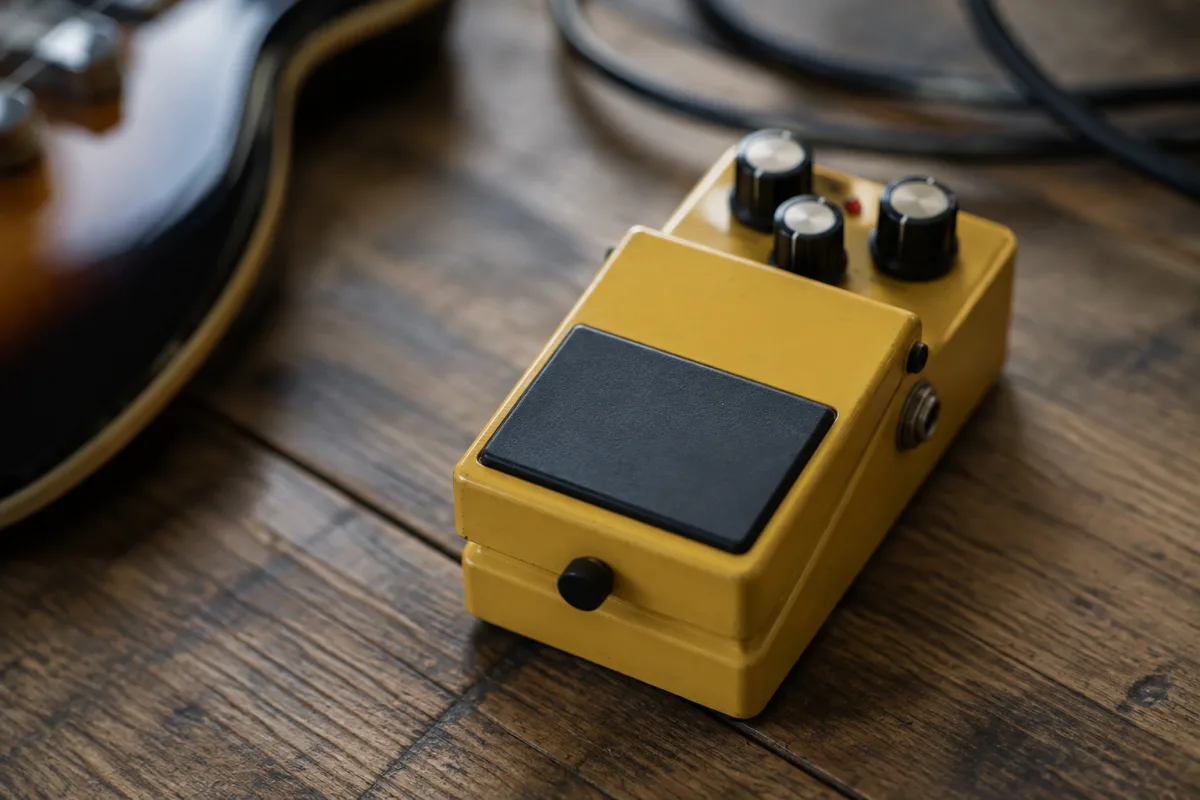
A Boss overdrive pedal ranks among the most versatile tone-shaping tools in guitar playing. Whether you're a blues musician seeking warm breakup, a rock player layering drive, or an amateur exploring compression and sustain, Boss overdrives deliver professional-grade performance at accessible prices. This guide covers the main models, key features, price points, and how to choose one suited to your musical style.
Boss Overdrive Pedals: The Overview
Boss, a division of Roland, dominates the effects market with a reputation for durability and consistency. Overdrive pedals specifically compress and warm your tone while adding sustain and slight breakup—subtler than distortion, more aggressive than boost. Boss models are found on countless album recordings and stages worldwide because they work reliably and sound musical.
Main Boss Overdrive Models
OD-1/OD-1x (Classic Overdrive)
The original model, reissued as the OD-1x, delivers warm tube-like compression. It's transparent yet characterful—excellent for blues, classic rock, and any style needing subtle enhancement. Mid-priced around £120–200. Great choice for beginners seeking their first Boss overdrive.
BD-2/BD-2w (Blues Driver)
Warmer and more aggressive than the OD-1, the Blues Driver excels at thick, singing sustain. It's mid-priced (£120–200) and beloved by blues and classic rock players. The BD-2w adds a "waveform" mode for extra tonal flexibility.
SD-1 (Super Overdrive)
Brighter and punchier than the OD-1, the SD-1 works well for classic rock and hard rock without crossing into heavy distortion. Affordable (£100–150) and extremely common—a reliable workhorse on countless pedalboards.
MT-2/MT-2 Metal Zone
More aggressive than other Boss models, the Metal Zone sits between overdrive and distortion. It's priced around £100–180, favoured by metal and hard rock players. Often considered Boss's heaviest stock offering.
OS-2 (Overdrive/Distortion)
A hybrid model combining overdrive and distortion circuits with switchable character. Priced £150–250, it offers remarkable tonal range from light crunch to metal sustain on a single pedal.
JB-2 (Jampan Boost/OD-1 Combo)
A modern dual-pedal combining the OD-1 overdrive with a booster stage. Priced around £180–280, it layers versatile tone-shaping in one compact footprint. Excellent for players wanting boost-controlled drive.
Key Specifications and Features
Tone Control
Most models include a single tone knob (bass/treble emphasis); premium models add separate EQ. More control lets you sculpt character; simpler controls are easier to use onstage.
Drive and Level
Every overdrive has separate drive (amount of distortion) and level (output volume) controls. This separation is crucial—drive shapes tone, level balances your overall signal.
True Bypass vs Buffered
True bypass removes the pedal from the signal chain when off, preserving your tone when the pedal is inactive. Buffered bypass always colors tone slightly. Most Boss models are buffered; some prefer true bypass purists.
Power Supply
Boss pedals run on either a 9v battery or optional power adapter (£15–30 extra). Battery lifespan is typically 30–50 hours; a power adapter is more convenient for regular use.
Price Tiers
| Price (GBP) | Types | Best For |
|---|---|---|
| £80–150 | SD-1, OD-1, Blues Driver | Beginners, hobbyists, standard tone-shaping |
| £150–250 | OS-2, JB-2, Metal Zone | Advancing players, multiple styles, versatile rigs |
| £250+ | Boutique Boss or older vintage reissues | Tone-obsessed professionals, collectors |
All Boss overdrives are professional-grade; the price difference is usually about tonal range and features, not build quality. Budget models sound great; premium models offer more flexibility.
Choosing Your Boss Overdrive
Match Your Genre
Blues and classic rock players thrive with the OD-1 or Blues Driver. Hard rock players favour the SD-1 or Metal Zone. Metal and modern players lean toward the MT-2 or OS-2. Playing the models in person is ideal; online demos work if you can't visit a shop.
Consider Your Rig
A single pedal on a minimalist board is easier to dial in. Multiple Boss overdrives layered on a large pedalboard can sound muddy if not carefully EQ'd. Start with one and add more if needed.
Budget Accordingly
A quality Boss overdrive costs £100–200. Add £30 for a decent power adapter and cable. Don't overspend; a £120 SD-1 sounds excellent; a £400 boutique alternative offers incremental gains.
Common Mistakes
- Chasing tone without playing. Hear the pedal yourself before buying. YouTube demos help but don't capture your guitar and amp combination.
- Overdrivting the drive knob. Overdrives sound best with moderate drive and high level; maxing drive creates mush. Leave drive at 12 o'clock, adjust for tone.
- Ignoring the tone control. The tone knob shapes character dramatically. Spend time dialling it in; it's not cosmetic.
- Stacking too many overdrives. Multiple overdrives can layer beautifully but often sound worse than one good pedal. Resist the urge to collect endlessly.
- Using a cheap power supply. A cheap power adapter introduces hum. Spend £20–30 on a quality supply if you use the pedal regularly.
Where to Buy
Music stores, online retailers, and secondhand marketplaces stock them widely. Used Boss overdrives hold value well; buying used saves 20–30%. Check the footswitch responsiveness and listen for any crackling in the controls before committing.
For a deeper look at overdrive tone-shaping and pedalboard design, see the complete guide to overdrive pedals.
Your Decision
Start with a single model that matches your primary style: SD-1 for rock, Blues Driver for blues, Metal Zone for metal. Play it for a month before buying another. Most guitarists never need more than one quality overdrive. Choose based on demos, player reviews in your genre, and your budget. A Boss overdrive is an investment that'll outlast your current amp and guitar—choose the one that makes you want to practise more.


Comments