


Capo for a Ukulele article
Capo For A Ukulele for Beginners: A Complete Guide
A capo for a ukulele is simple but powerful. Here's how to use one confidently and expand your song repertoire immediately.
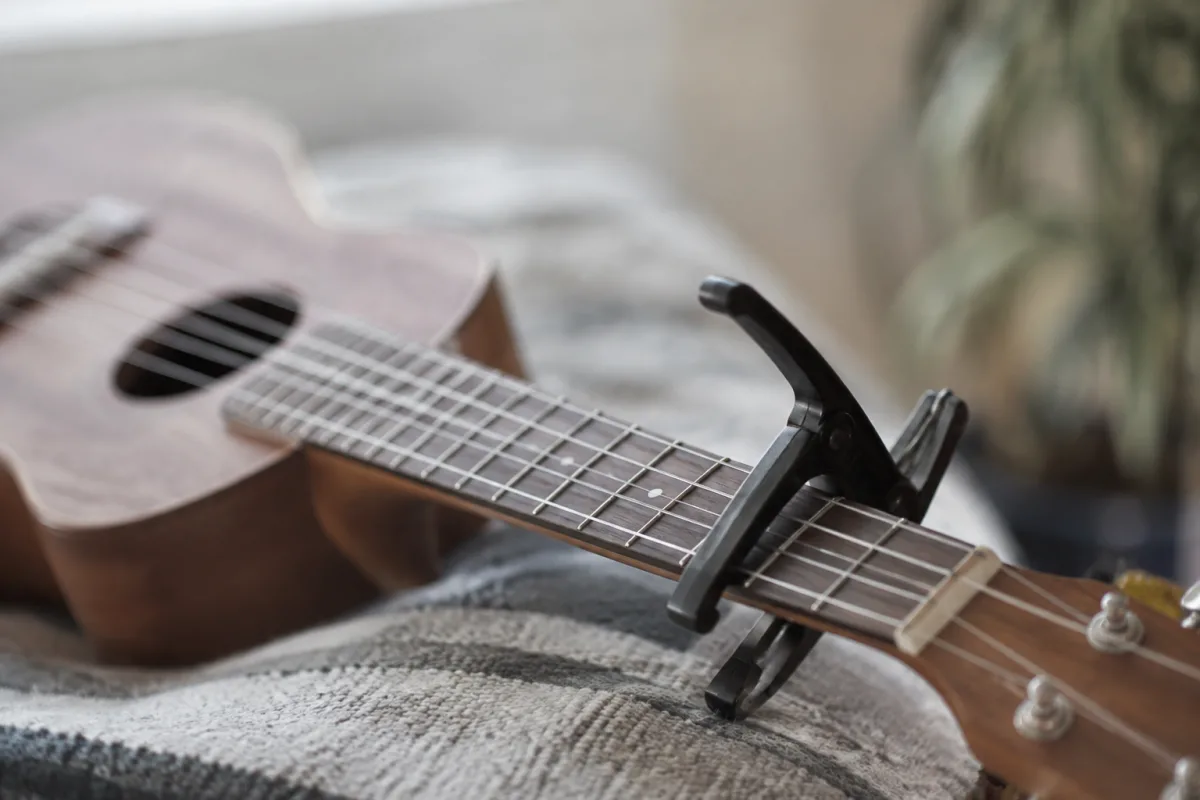
A capo for a ukulele might seem like a mysterious accessory when you're starting out, but it's actually one of the simplest and most useful tools a beginner can own. Understanding how to use a capo for a ukulele opens up hundreds of songs you can play whilst still developing core techniques. This beginner's guide demystifies the capo for a ukulele and shows you how to use it effectively.
What a Capo for a Ukulele Does
A capo for a ukulele is a small clamp device that presses across all your strings at a particular fret. It essentially "moves the nut" of your ukulele higher up the neck, raising the pitch of every open string. By moving your capo for a ukulele to different frets, you change the key of songs without learning new chord shapes—the same chord fingerings produce higher pitches.
For beginners, a capo for a ukulele removes a massive barrier. You can play songs in any key using only the basic chords you've learned (G, C, F, Am, etc.). This lets you accompany singers, play with others, and build confidence before mastering the neck's full fingerboard.
Types of Capos for Ukuleles
Unlike guitars, ukuleles require specific capo styles:
- Trigger-style capo for a ukulele: Most common. Squeeze the handle to open and release the clamp. Affordable (£5–£15) and easy for beginners to operate.
- Gear-turn capo for a ukulele: Turn a screw to tighten and release. Finer control but slightly slower to adjust. Usually £10–£20.
- C-clamp-style capo for a ukulele: Vintage-looking and very durable. Requires more hand strength to operate. Common on professional instruments.
- Elastic band method: No capo at all—wrap an elastic band tightly around the neck. Free but not reliable, and ukuleles have nylon strings that roll under pressure, making proper capos essential.
For beginners, a trigger-style capo for a ukulele is ideal—inexpensive, reliable, and simple to use.
How to Use a Capo for a Ukulele
Using a capo for a ukulele is straightforward once you understand the technique:
- Identify your target fret: If a song is written in a key your basic chords don't match, find which fret to capo. For example, if a song is in D but you only know G chords, a capo for a ukulele at the second fret transforms your G chord into A.
- Position the capo for a ukulele: Place it just behind the target fret wire (slightly toward the headstock). The capo for a ukulele should press all four strings firmly but not painfully tight.
- Check each string: Pluck each string individually. Every string on your capo for a ukulele should ring clearly. If one sounds dull or dead, reposition the capo or tighten slightly.
- Tune after clamping: A capo for a ukulele slightly changes string tension. Always retune your ukulele after using a capo, even if it was in tune before.
Common Mistakes Beginners Make with Capos
New ukulele players make these typical capo errors:
- Pressing too hard: Over-tightening a capo for a ukulele strangles the sound and strains the neck. Just tight enough to make all strings ring clearly is ideal.
- Positioning too far from the fret: A capo for a ukulele placed too far back (toward the body) creates a dead sound. Position it just behind the fret wire itself.
- Forgetting to retune: A capo for a ukulele changes string tension, shifting tuning slightly. This ruins the performance. Tune every time you clamp a capo for a ukulele.
- Assuming the capo for a ukulele makes all chords sound identical: Capo positioning affects tone. A capo for a ukulele at fret 4 sounds brighter and thinner than the same song played at fret 1. Use capo position strategically to match song tone.
- Leaving a capo for a ukulele on the ukulele when not playing: Extended clamping strains the neck. Remove your capo for a ukulele immediately after playing.
- Using a capo for a ukulele that doesn't fit properly: A guitar capo for a ukulele doesn't work well (different string count and neck width). Always use a capo specifically designed for ukuleles.
Using a Capo for a Ukulele Strategically
The real power of a capo for a ukulele is flexibility. Learn three key chords (G, C, Am) and you can play hundreds of songs across dozens of keys by moving your capo for a ukulele around. This accelerates learning and keeps beginners motivated.
As you develop, you'll notice different capo positions create different moods. A capo for a ukulele higher up the neck produces brighter tone; lower positions feel warmer. Use this to match the emotional intent of songs.
Building Beyond Basic Capo Usage
Beginners often rely on a capo for a ukulele entirely, which is fine initially. But as your skills develop, learning to play the same song without a capo for a ukulele—using different chord shapes and positions—greatly expands your musicianship. A capo for a ukulele is a tool, not a crutch.
For detailed information about ukulele construction, advanced capo techniques, and the physics of how a capo for a ukulele affects sound, explore the complete guide to capos for ukuleles. Until then, invest in a reliable trigger-style capo for a ukulele (£10 or so), learn how to position it properly, and use it to expand the songs in your repertoire. Your musical journey will accelerate dramatically.


Comments