


Capo for a Ukulele Buying guide
Capo For A Ukulele: A Complete Buyer's Guide
Looking for a capo for your ukulele? Learn about capo types, ukulele-specific requirements, pressure consistency, materials, and price tiers. Choose the right capo for clear tone and tuning stability.
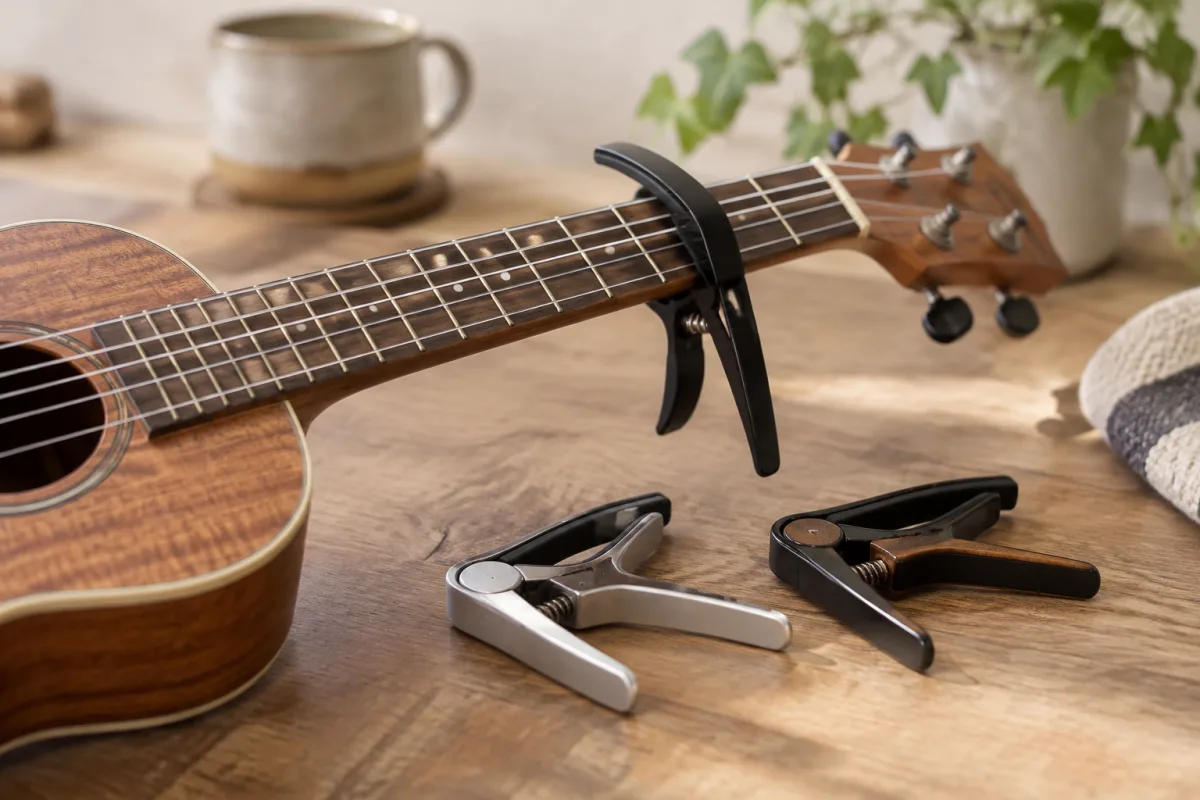
If you're learning ukulele, you've likely encountered a capo—a small device that clamps across all four strings, raising their pitch without requiring fingering or tuning adjustments. Capos are essential ukulele accessories, yet many beginners don't fully understand why they're useful or how to choose one that actually works well. Purchasing the wrong capo can frustrate your learning experience, creating muted strings, tuning instability, or damage to your instrument. This buyer's guide walks you through what makes different capos suitable for ukuleles specifically, the critical specifications that determine quality, and how to choose a capo that serves your playing style and budget without compromising your instrument's condition.
Understanding Why Capos Matter for Ukulele Playing
A capo functions as a movable nut, shortening the strings' effective length and raising their pitch. Rather than learning new fingering patterns when songs require higher keys, placing a capo at different frets lets you play familiar chord shapes whilst achieving the required pitch. This is invaluable for beginners learning chord transitions; using a capo reduces the number of distinct finger patterns you must memorise. Capos also allow playing songs in their original keys without stretching to demanding positions beginners cannot yet execute. For singers, capos let you transpose songs to comfortable vocal ranges without relearning chords. Understanding these benefits explains why capos are standard equipment for ukulele players of all levels. A good capo is one of the best small investments you can make in your playing journey.
Ukulele-Specific Capos vs. Guitar Capos: Critical Differences
The single most important specification when buying a capo is that it's designed specifically for ukulele, not guitar. Ukuleles have smaller, more rounded necks than guitars; guitar capos are too large and heavy for ukulele necks, causing tuning problems, string muting, and potential neck damage. Some guitar capos technically fit ukuleles but apply excessive pressure, damaging the instrument. Before buying anything, confirm the product is marketed specifically for ukulele or that it explicitly states ukulele compatibility. Attempting to save money by repurposing guitar capos often results in damaged ukuleles and regretted purchases. Ukulele capos are inexpensive—typically £5–£20—so there's no legitimate economic reason to risk your instrument on incompatible equipment.
Capo Types: Spring, Trigger, Screw, and Strap Variants
Ukulele capos come in several types, each with distinct advantages and disadvantages. Spring capos are lightweight and portable, operating through simple spring tension. They're affordable and beginner-friendly but sometimes apply uneven pressure, muting strings if not positioned perfectly. Trigger capos (similar to quick-release mechanisms) are faster to apply and remove, convenient for frequently changing capo positions. Screw capos use precise adjustment screws to apply exactly the right pressure; they're slightly slower but offer superior tuning stability. Strap capos use elastic or leather straps rather than clamps; they're gentle on instruments but slower to apply. Before buying, consider how frequently you change keys during playing. Frequently changing capos favours quick-release options. Playing full sets in one key favours screw capos where superior stability matters more than speed. Most beginners favour spring or trigger capos for convenience and speed.
Pressure Application and Tuning Stability
The quality difference between adequate and excellent capos centres on pressure application consistency. Poor capos apply inconsistent pressure across all four strings, muting some whilst leaving others too loose. This frustrating problem sounds like dead, muffled strings and ruins tone quality. Professional capos apply consistent, even pressure across all four strings simultaneously, ensuring tuning stability and clear tone. When evaluating capos before buying, look for designs where the clamping mechanism maintains parallel alignment across all strings. Offset designs that tilt or rock compromise pressure consistency. Testing capos in-store (if possible) by listening carefully to tuning stability and tone clarity reveals pressure-application quality before you buy. Online reviews from other ukulele players also describe pressure consistency issues, which are invaluable when deciding between options.
Build Materials and Durability Considerations
Capo construction materials directly affect durability and tone quality. Plastic capos are inexpensive but prone to breaking, with springs weakening or clamps cracking after months of regular use. Metal capos (typically aluminium or steel) are dramatically more durable and retain their pressure characteristics indefinitely. Rubber or felt padding on the underside protects your ukulele's neck from direct metal contact; quality padding prevents indentation marks and protects your instrument's finish. Before buying, examine construction closely: metal capos feel substantial and durable, whilst plastic capos feel cheaper and less reliable. Quality padding feels thick and supportive; thin or worn padding offers less protection. Spending £10–£15 on a durable metal capo with quality padding prevents regrettable breakage or instrument damage worth hundreds of pounds.
Fret Accessibility: Ensuring Your Capo Won't Block Playing
Capos should clamp just behind the fret wire without blocking access to the fretboard. Poor capo designs sit too far on the frets, restricting your ability to play notes near the capo position or interfering with your strumming hand. Before buying, check product reviews and photos confirming the capo sits appropriately behind the fret. Strap-style capos often position more ideally than screw capos, though quality matters in every type. Testing in-store by placing the capo at different fret positions and attempting to play confirms accessibility. Online discussions and user reviews from other ukulele players often mention fret-blocking issues if they're problematic with specific models, which is invaluable information when deciding.
Price Tiers and Value Assessment
Capos fit into clear price tiers reflecting build quality and durability. Under £5, you'll find basic plastic spring capos adequate for casual use but prone to breaking. £5–£10 offers mid-range capos with decent durability and acceptable performance. £10–£20 provides professional-quality capos with metal construction, quality padding, and reliable pressure consistency. Above £20, you're buying premium capos with specialised features or boutique craftsmanship. For most ukulele players, spending £8–£15 on a quality metal capo provides excellent value and prevents regrettable equipment failure. Budget conscious beginners can start with cheaper options but should expect to replace them within months if playing regularly. Investing slightly more upfront often proves cheaper long-term.
Specific Design Considerations for Different Ukulele Types
Soprano and concert ukuleles (the most common sizes) use standard capos designed for their smaller neck dimensions. Tenor and baritone ukuleles, with larger necks, require capos specifically designed for their size; standard soprano/concert capos cannot accommodate them properly. Before buying, confirm your ukulele size and select capos compatible with that size. Purchasing wrong-sized capos wastes money and frustrates your playing. Vintage or non-standard ukuleles sometimes pose challenges finding compatible capos; if you own unusual instruments, researching compatibility before buying prevents disappointment.
Tuning Stability and Tone Quality: The Real Test
Beyond specifications, the true test of a quality capo is what you hear when you play. When a capo is clamped and you strum, all four strings should sound equally clear and in tune. Muted or buzzing strings indicate pressure inconsistency or poor positioning. Tuning instability—where strings drift flat or sharp over time—indicates inadequate pressure consistency or spring weakness. If you can test capos before buying, clamp them across various fret positions and listen critically. Poor capos reveal themselves immediately through muted tones or tuning problems. Quality capos sound transparent—you forget the capo is there and just hear your ukulele at higher pitch. This audible quality difference is the most important factor in choosing wisely.
Common Buyer Mistakes and How to Avoid Them
The most frequent mistake is buying guitar capos thinking they're compatible with ukuleles; this damages instruments or creates terrible tuning problems. Always confirm ukulele-specific compatibility before purchasing anything. Another common error is choosing purely on price, purchasing cheap capos that fail within months. Slightly more expensive capos prove cheaper long-term through durability. Many beginners also fail to test capo pressure consistency before buying, discovering tuning problems only after purchase. If possible, test in-store or purchase from retailers with good return policies. Finally, buyers often ignore size specifications, purchasing soprano-sized capos for tenor ukuleles or vice versa. Checking your ukulele size prevents these frustrating incompatibilities.
Essential Capo-Using Skills for Best Results
Capo quality matters, but using capos properly matters equally. Position capos just behind (slightly down the fretboard from) the fret wire, not directly on top of it. Clamping directly on the fret creates unwanted resistance and tuning instability. Apply consistent, even pressure across all strings; excessive pressure damages instruments, insufficient pressure mutes strings. When applying capos, strum and listen; you should hear immediate tuning clarity confirming proper installation. Learning to install capos correctly maximises the quality you get from even inexpensive options.
Buying a quality capo is one of the best small investments you can make in your ukulele playing. Choose ukulele-specific models, prioritise metal construction with quality padding, and listen critically to tuning stability before committing money. A good capo becomes invisible in your playing, enabling transposition and chord simplification that accelerates learning and increases repertoire. Within months, you'll wonder how you ever played without one.


Comments