


Sitar Electric article
Sitar Electric for Beginners: A Complete Guide
Learning electric sitar as a beginner is achievable and rewarding. This guide covers first steps, why electric sitar suits beginners better than acoustic, essential setup, practice routines, and encouragement for this unique musical path.
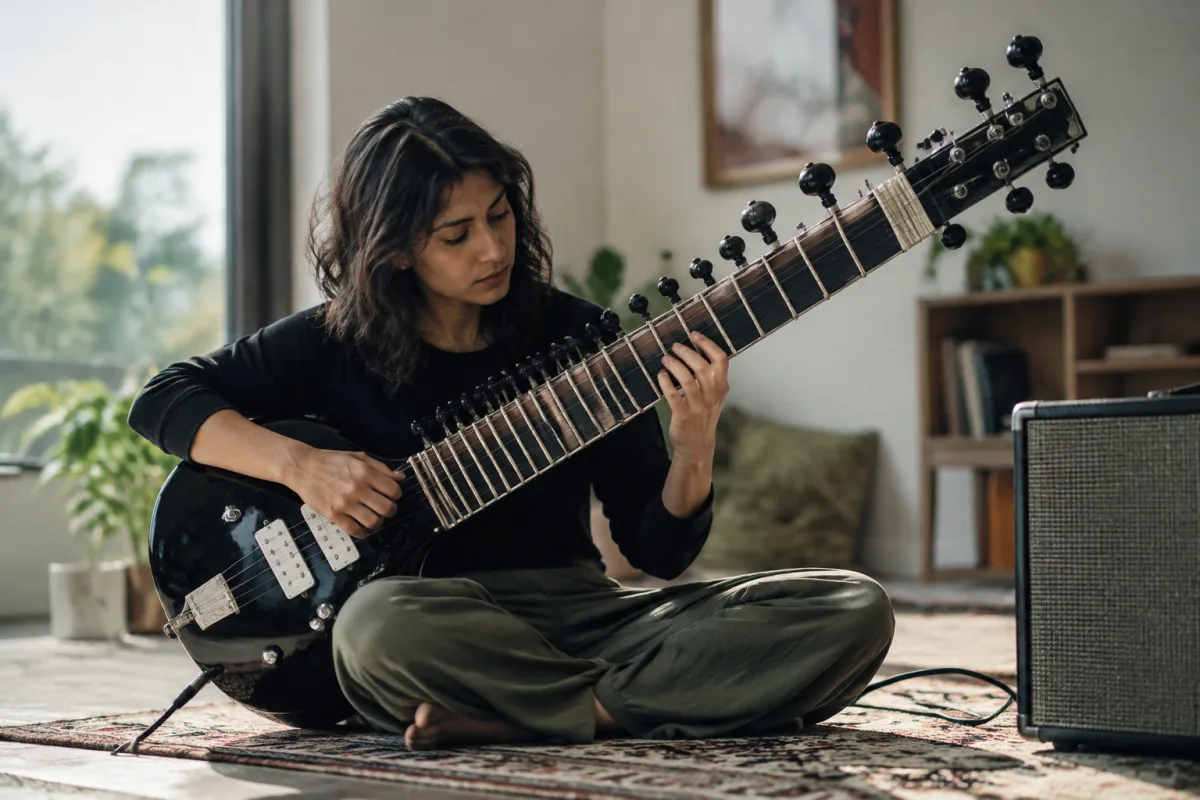
The electric sitar represents a genuinely accessible entry point into sitar playing, particularly for Western musicians curious about Indian classical music. An acoustic sitar's learning curve is steep—the instrument is physically demanding, requires extensive hand conditioning, and produces frustratingly quiet sound in quiet practice spaces. An electric sitar bypasses many of these obstacles. Through amplification, you develop technique without generating noise that alienates household members. The electronic amplification and sympathetic string resonance create recognisable sitar character immediately, rewarding even beginners with satisfying sound. This beginner's guide walks you through your first steps with an electric sitar, sets realistic expectations, helps you establish foundational practice habits, and offers genuine encouragement for this wonderfully rewarding musical journey.
Why Electric Sitar Suits Beginners
A traditional acoustic sitar demands finger strength, hand dexterity, and pain tolerance that intimidate many beginners. Your fingers bleed initially. Your hand cramps. Acoustic resonance is quiet in small rooms, making it hard to hear whether you're making progress. An electric sitar amplifies through a speaker or headphones, so you hear clearly regardless of acoustic space. Sympathetic strings (wire strings running underneath the main playing strings) vibrate in response to your playing, creating traditional sitar shimmer with minimal technique required. This means beginners sound genuinely musical immediately—you're not fighting the instrument to produce acceptable tone. This is profoundly encouraging and makes consistent practice feel rewarding rather than punishing.
Understanding Electric Sitar Design
An electric sitar typically features a smaller body than acoustic sitars, often with a solid or semi-solid design. Main playing strings run across the fretted fingerboard—usually six or seven strings. Sympathetic strings (10–20 thinner wires) run underneath and vibrate in sympathy with the main strings. An onboard pickup or microphone captures both the main strings and sympathetic resonance, sending the signal to an amplifier or headphone interface. This design captures the essential character of sitar playing without the extreme physical demands of traditional instruments. Electric sitars often include built-in effects—reverb, chorus, or overtone controls—allowing beginners to explore sitar character and contemporary electronic applications simultaneously.
Your First Electric Sitar: Entry-Level Options
Budget electric sitars (£200–£400) from brands like Sitar Electronics or mid-range manufacturers offer genuine playability for beginners. These instruments sound recognisably like sitars, respond reasonably to technique, and don't require you to invest heavily before discovering whether sitar captivates you. Mid-range electric sitars (£400–£800) from more established makers offer improved build quality, better electronics, and more sophisticated sound character. You don't need a professional-level instrument to begin learning—a budget electric sitar serves perfectly for your first year of exploration.
Essential Setup Beyond the Instrument
An electric sitar requires minimal additional equipment compared to acoustic instruments. A practice amplifier (£50–£150) or a headphone interface (£30–£80) lets you hear yourself clearly through amplification. Quality headphones (£30–£80) allow silent practice. A music stand (£15–£30) holds sheet music or reference materials. A gig bag (£30–£60) protects your instrument when travelling. These essentials total roughly £150–£350 beyond the sitar itself—modest investment compared to acoustic sitar setups requiring professional maintenance and specialised accessories.
First Steps: Establishing Comfortable Hand Position
Sitar playing requires a distinctive hand position unlike guitar or other Western instruments. Your left hand sits in a specific position allowing fingers to reach sympathetic strings and adjust pitch through subtle finger movements. Your right hand plucks using a pick or fingernails in characteristic rhythm patterns. Early practice focuses on establishing these positions without pain or cramping. Unlike acoustic sitar, where hand-building is arduous, electric sitar allows you to establish position and develop muscle memory comfortably. Your fingers will still develop calluses, but the process is gentler and more forgiving.
Foundational Technique: Start With Sympathetic Resonance
The most encouraging beginner step with electric sitar is playing the sympathetic strings. These thin wires vibrate in response to the main string vibrations, creating the characteristic sitar shimmer that makes the instrument instantly recognisable. Beginners can activate sympathetic resonance through simple main-string playing—plucking gently, letting vibrations transfer. This immediate gratification is remarkably encouraging. After just a few practice sessions, you sound genuinely musical. You're not struggling to make acceptable tone; you're exploring how the instrument responds. This psychological shift—from frustration to genuine enjoyment—is invaluable for beginner motivation.
Learning Your First Raga Patterns
Sitar playing revolves around ragas—melodic frameworks with specific rules and emotional character. Don't immediately attempt complex ragas. Start with beginner-friendly patterns that establish basic finger movements and rhythm sense. Simple two-minute improvisations on basic raga patterns reward consistent practice immediately. Online tutorials and YouTube channels devoted to sitar teaching offer scaled-down beginner raga lessons. Apps like Raag.FM provide raga reference sounds and backing tracks for practice. These resources make learning accessible without requiring traditional Indian classical instruction.
Daily Practice and Realistic Progress
Sitar rewards consistent daily practice, though "consistent" doesn't demand extreme commitment. Twenty to thirty minutes daily develops technique faster than occasional longer sessions. Your hand needs time to adapt, and daily play allows gradual adaptation. Weekly hour-long sessions followed by weeks off creates frustration rather than progress. Establish a sustainable routine—even fifteen minutes if that's realistic for your schedule—and maintain it consistently. Progress with sitar is gradual. You won't play recognisable ragas fluently within weeks. After months of patient practice, you'll notice genuine improvement in tone production, finger accuracy, and ability to maintain rhythm.
Common Beginner Mistakes to Avoid
Don't neglect sympathetic string tuning. Correctly tuned sympathetic strings sound beautiful and encouraging; poorly tuned strings sound chaotic. Learn to tune them properly from the beginning. Don't rush toward complex ragas before mastering basics. Impatience frustrates more quickly than patient progression. Don't ignore proper hand position—establish good habits immediately rather than correcting bad habits later. Don't compare your progress to professional sitarists—sitar masters study for years or decades. Your progress as a beginner represents genuine development, not inadequacy. Finally, don't abandon the instrument because early sound is imperfect. Sitar tone develops gradually. Initial awkwardness is completely normal and temporary.
Finding Instruction and Community
Unlike guitar or piano, finding sitar instruction locally can be challenging. Online teachers offer genuine value—many specialists teach beginner sitar through Zoom or video lessons. YouTube channels and tutorial sites provide reference material. Indian classical music communities, particularly in larger cities with significant South Asian populations, sometimes offer beginner classes. Connecting with even one experienced sitar player—whether through lessons or casual conversation—dramatically accelerates your learning and deepens your understanding of musical philosophy behind sitar playing.
Final Encouragement
Learning electric sitar is genuinely rewarding and genuinely achievable for beginners. You're not fighting an instrument designed for dedicated masters—you're learning on something that encourages early success. Your fingers will adjust. Your technique will develop. Your ear will improve. For deeper context about sitar instruments and the broader musical landscape, explore the complete guide to electric sitar. The learning journey is long, but every practice session builds something genuine. You're developing skill in an instrument with thousands of years of musical history and philosophical depth. That's not casual—that's meaningful. Begin with patience, maintain consistent practice, and trust that progress accumulates. The sitar is waiting to teach you music in a way that very few instruments can.


Comments