


Kids Ukulele article
Kids Ukulele for Beginners: A Complete Guide
Teaching kids ukulele is gentler than you think. Here's how to guide a nervous first-timer through the early weeks and build real musical confidence.
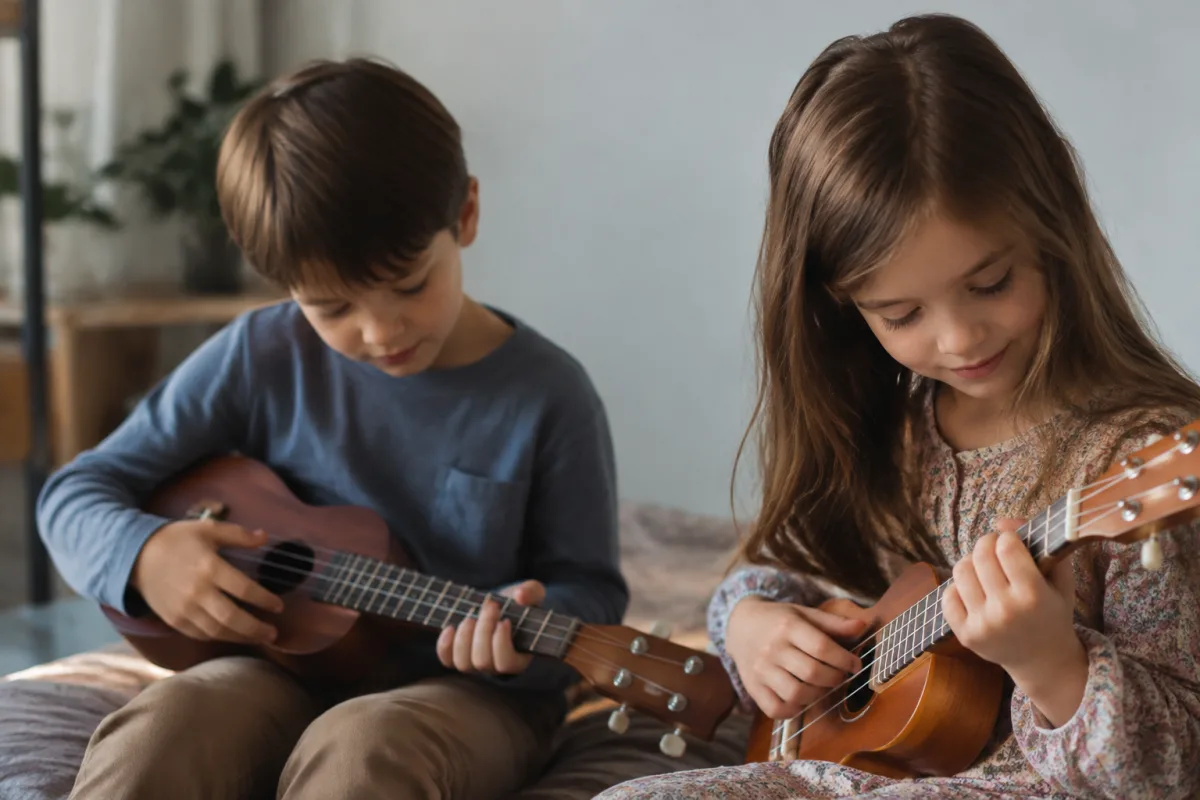
Teaching a child to play ukulele is one of the gentlest introductions to music you can offer. A kids ukulele is small, the strings are nylon rather than painful steel, and simple songs are reachable within weeks. Yet many adults hesitate—you might worry you don't know how to teach, that your child will lose interest, or that you'll get stuck on something you can't solve. Those worries are natural. Here's what you actually need to know to help a nervous first-time learner find confidence with a kids ukulele and discover genuine joy in making music together.
Start By Making the Ukulele Comfortable
A kids ukulele should feel familiar and accessible, not intimidating. Let them hold it without pressure—just sit together and let them explore the sound by plucking strings gently. No lessons yet, just play. Most children naturally want to make noise; let them discover that plucking creates sound. This removes the fear that the instrument is fragile and precious (it isn't—kids ukuleles are pretty robust).
Tune your kids ukulele to standard tuning (GCEA) using a free app like Ukulele Tuner. In-tune strings matter for proper ear training; a buzzy, off-key kids ukulele teaches bad habits and frustrates learners. Spend two minutes tuning before each session. This becomes automatic and teaches your child that preparation matters.
Three Simple Chords: That's Genuinely Enough
You don't need to know advanced music theory to teach a kids ukulele. You need three chords: G, C, and Am (A minor). These three chords open up dozens of songs. Spend your first week just learning where these fingers go. G is first finger on the second fret of the C string (the thick string). C is middle and ring fingers on the third fret of the A and E strings. Am is middle and ring fingers on the second fret of the G and B strings. Watch a YouTube video once and you'll have it.
Don't perfect your own playing before teaching. Your child doesn't need perfect—they need to see someone trying, making mistakes, and persisting. Show them your fingers on the neck, press down, and strum. When your fingers hurt (they will), acknowledge it: "Yes, this part is uncomfortable for a few days, but it gets easier." Normalising the learning curve makes children resilient to difficulty.
Strumming Patterns: Keep Them Ridiculously Simple
Forget complicated patterns. Start with down-strums only: four downstrokes per bar. That's it. This works for almost every beginner song. Your child learns to change chords, hear the rhythm, and feel the pulse. Once they're comfortable, add an upstrum: down-down-up-down-down-up. This rhythm drives hundreds of folk songs and pop standards.
A metronome helps—even a free app at 60 beats per minute. It removes pressure on you to keep steady time and lets both of you hear when you're together. Make it a game: "Can we play ten bars without losing the beat?" Success builds confidence.
Song Selection: Choose Victories
Pick songs with only two chords first. "Twist and Shout" works with G and D (but substitute C instead of D for beginners—same idea). "Bad Moon Rising" is G, D, A minor—you've got those. "Wonderwall" (Oasis) uses Em7 and Gadd9, but approximating with Em and G sounds close enough for a beginner and builds momentum.
Avoid complex songs with quick chord changes. Your child will get frustrated. Pick songs they already know and love—that familiarity makes learning rewarding. Hearing themselves play "Somewhere Over the Rainbow" on day ten is magical and keeps them engaged.
The Frustration Point: How to Navigate It
Around week two, most kids ukulele learners hit a wall. Fingers hurt, chord changes feel impossible, and progress seems to stall. This is completely normal—every musician hits this. Here's how to handle it: acknowledge the frustration ("Yes, this is hard right now"), remind them of progress ("Look, you're holding a chord perfectly now"), and take a break. Five-minute practice sessions with a day off are better than thirty-minute grinding that breeds resentment.
Frame difficulty as temporary: "Lots of musicians felt this way. Give it two more weeks and you'll notice you're faster." Don't rescue them by playing more than they do. They need to develop the skill themselves. You're a guide, not a performer. Resist playing along perfectly while they struggle; play badly alongside them. They need to hear themselves make music.
Common Pitfalls: What Not to Do
Don't push practice. A kids ukulele should feel like a privilege, not a chore. If your child asks to stop, stop. Short, happy sessions beat forced marathons. An angry child practising for twenty minutes learns nothing; a joyful child in five-minute bursts builds real skill.
Don't compare their progress to other kids. Every learner progresses at their own pace. One child might nail three chords in a week; another takes three weeks. Both are normal. Comparison kills confidence.
Don't demand perfection. Your kids ukulele learner will play chords with buzzing strings sometimes. They'll miss strums. They'll forget which finger goes where. These moments are learning, not failure. Cheerfully say, "Let's try that again," and move on.
When They Hit Their Stride
Around week three or four, something clicks. Your child suddenly changes a chord smoothly. They play a full song with minimal mistakes. The instrument stops feeling foreign; it starts feeling like theirs. This moment—where their face lights up because they made real music—is what makes teaching worth it.
Once they're comfortable with basic chords, introduce simple songs with four-chord changes. Progress to strumming patterns beyond basic down-strums. But let them lead this progression. If they want to stay on simple songs, that's fine. If they're hungry for more, feed that hunger.
Building a Sustainable Practice Habit
Ten to fifteen minutes daily beats sporadic hour-long sessions. Make it a routine: same time, same place, no distractions. Let your child choose what to work on within reason. If they want to learn "Let It Go" from Frozen using G and Am, do it. Agency builds motivation.
Play together when you can. Duets (even simple ones where you play three steady strums while they play one) are joyful. Don't judge your own playing—focus on the experience of making music together. Your kids ukulele learner will remember the fun far longer than perfect notes.
You're Doing Better Than You Think
If you're uncertain about teaching, that uncertainty probably means you care about doing it well. That care matters more than perfect technique. Your child will forget whether your G chord was perfectly voiced; they'll remember learning music with someone who believed in them. For comprehensive background on kids ukuleles, technique, and teaching methods, read our complete guide to kids ukuleles.


Comments