


Five String Banjo article
Tuning Five String Banjo: A Complete Guide
The five string banjo is central to American folk and bluegrass music. Discover the instrument's unique design, playing techniques and how to start learning.
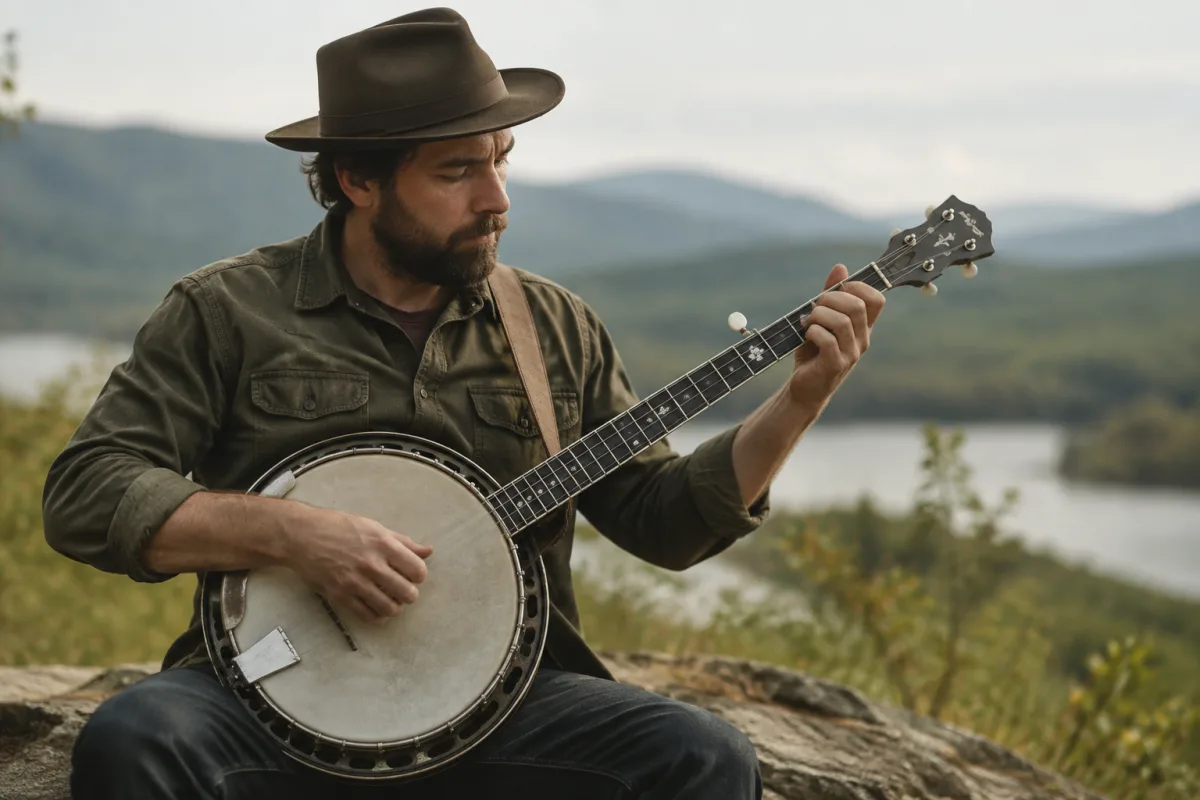
What Is a Five String Banjo?
A five string banjo is the most common banjo configuration, used across bluegrass, folk, country and popular music. It features four full-length strings with a fifth short string (the drone string) that runs partway down the neck. This design creates the banjo's distinctive bright, percussive tone and enables the unique fingerpicking patterns that define American roots music.
The five string banjo evolved from African and Caribbean prototypes and became central to American folk tradition. Whether played with fingernails, picks or fingerpicks, the five string banjo delivers a sound instantly recognisable—bright, punchy and utterly distinctive.
Five String Banjo Construction
A banjo consists of a drum-like head stretched over a circular rim, a wooden neck with frets, and hardware that holds everything together. The circular body acts as a resonating chamber, producing the characteristic bright tone.
The five strings traditionally run: first string (high E), second string (B), third string (G), fourth string (D), and the drone string (G) which is shorter and sits adjacent to the fourth string, creating the banjo's distinctive look. This setup enables both melodic playing and rhythmic drone accompaniment simultaneously.
The head is crucial to tone. Thicker heads produce darker tone; thinner heads produce brighter, punchier tone. Many players experiment with head choice to dial in preferred tone character.
Playing Styles and Techniques
Fingerstyle (or bluegrass style) is the most common approach—players use thumb, index and middle fingers to pluck strings in rapid patterns called rolls. These rolling patterns create the banjo's dancing, rhythmic quality. Clawhammer (or folk style) uses a claw-like hand position, strumming down and picking up with the thumb.
Fingerpicking develops finger independence and speed. Many bluegrass banjo players can achieve remarkable velocity and precision. Clawhammer is simpler initially but develops different muscle memory and produces a different tone—more percussive and driving than fingerstyle's flowing precision.
Both approaches are equally valid. Bluegrass players favour fingerstyle; folk and traditional players often embrace clawhammer. A complete player learns both.
Bluegrass Banjo Tradition
Five string banjo is central to bluegrass music. Players like Earl Scruggs revolutionised the instrument by developing the three-finger roll technique that defines modern bluegrass banjo. His influence remains profound—most contemporary bluegrass banjo players learn his patterns as foundational technique.
Bluegrass banjo is characterised by rapid, flowing rolls—continuous picking patterns that create the genre's propulsive, energetic sound. The banjo drives the rhythm whilst also carrying melody, making it both rhythm and lead instrument simultaneously.
Festivals celebrate bluegrass banjo specifically. The banjo championship at events like IBMA World of Bluegrass showcases the instrument's technical heights. Listening to competition-level banjo players demonstrates remarkable virtuosity.
Folk and Traditional Banjo
Before bluegrass, banjo was played primarily with clawhammer technique in folk and traditional contexts. This approach remains vibrant, especially in folk circles. Clawhammer produces earthier, more percussive tone than fingerstyle's flowing patterns.
Folk banjo often emphasises drone strings more obviously—the short fifth string is played rhythmically alongside melodic lines, creating textured accompaniment. This is excellent for singing accompaniment and works beautifully in ensemble contexts.
Many contemporary folk musicians blend clawhammer with fingerstyle elements, creating hybrid approaches that honour tradition whilst allowing modern experimentation.
Choosing Your First Five String Banjo
Budget matters significantly. Student banjos (£200–400) are serviceable but have limitations in tone and playability. Intermediate banjos (£600–1,200) offer noticeably better sound and more comfortable playing experience. Professional instruments (£2,000+) represent significant investment but deliver superior tone and durability.
Don't buy the cheapest option—a truly cheap banjo is discouraging to play. But you needn't spend professional prices to begin. A mid-range instrument is the sensible starting point.
Consider your playing style. Bluegrass players should look for brighter tones and responsive necks. Folk players might prefer slightly warmer tone and prefer instruments set up for clawhammer. Visit shops and play before buying if possible.
Setup and Maintenance
A properly set-up five string banjo is pleasure to play; a poorly set-up one is frustrating. Action (string height above the fretboard) should be low enough for comfortable playing but high enough to avoid buzzing. Have a luthier check setup when you acquire a new instrument.
The head eventually wears out and needs replacing—usually every 2–5 years depending on how much you play. This is normal maintenance, not a defect. Replace heads when they lose tone or develop wrinkles that affect playability.
Keep the banjo in a comfortable environment—extreme humidity or temperature changes can warp the neck or damage the head. A humidified case or room humidity control preserves your instrument.
Learning Five String Banjo
Many players start with fingerstyle because instructional materials emphasise it. But consider what style appeals to you—bluegrass velocity or folk earthiness. Both are equally valid entry points.
Beginners should expect gradual development. Banjo fingers take time to develop calluses and independence. Smooth rolls require months of practice. But the bright, energetic sound provides immediate rewards that motivate continued practice.
Learn traditional repertoire—bluegrass standards or folk songs. This grounds you in the instrument's living tradition and connects you with the playing community.
Conclusion: The Five String Banjo's Enduring Appeal
The five string banjo has remained central to American music for centuries. Its bright, distinctive tone and fingerpicking patterns create music that's immediately recognisable. Whether you pursue bluegrass velocity or folk tradition, the five string banjo offers genuine musicianship and connection to deep cultural roots.
Start with a reasonable instrument, find teaching materials that suit your style, and commit to regular practice. The five string banjo rewards dedication with access to a rich musical tradition and a community of players who value the instrument deeply.





Comments