


Five String Banjo article
Five String Banjo for Beginners: A Complete Guide
A complete beginner's guide to the five string banjo—why it's friendlier than you think, how to get your first sounds, and how to build steady progress from your very first practice session.
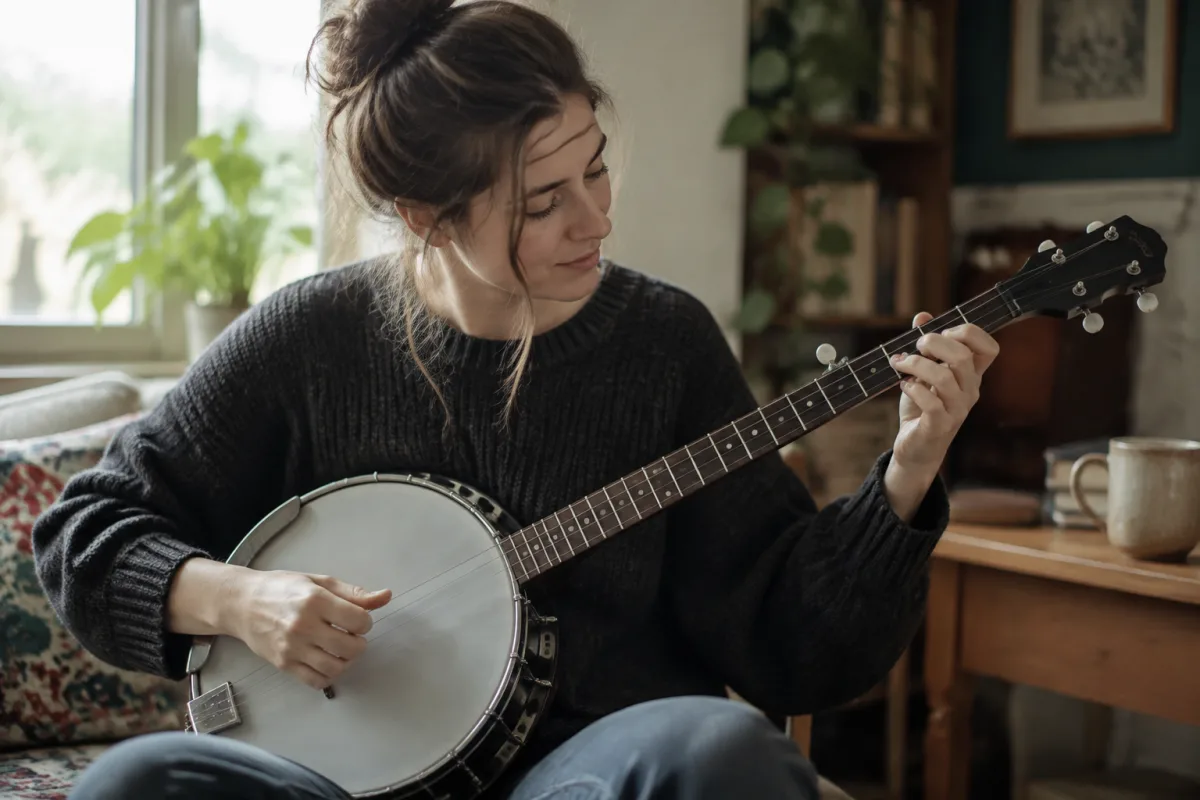
The five-string banjo can look intimidating if you've never touched one before. The unique neck, the unfamiliar tuning, and the percussive sound all feel foreign compared to a guitar. But here's the encouraging truth: the five-string banjo is genuinely one of the friendliest instruments for nervous beginners to pick up. With a bit of confidence and the right approach, you'll be playing recognisable songs within weeks. This guide shows you exactly how to start, what to expect, and how to keep yourself motivated.
Why Beginners Shouldn't Feel Intimidated
The five-string banjo has a reputation as a difficult instrument, but that reputation is largely undeserved. Unlike a piano, where you need to understand music theory from day one, or a violin, where producing an in-tune note takes weeks of practice, the five-string banjo rewards beginners quickly. Your fingers won't hurt as much as on a classical guitar. Your first attempts will sound like actual music, not squeaks and scratches.
The five-string banjo's unique design actually makes it easier for beginners. The short neck means your hand doesn't have to stretch as far. The open tuning means simple finger patterns produce pleasant, resonant sounds. And because the strings are bright and responsive, you hear results immediately when you play correctly. That instant feedback builds confidence faster than almost any other instrument.
Another reason beginners thrive on the five-string banjo: the bluegrass and folk communities are genuinely welcoming. If you join a local jam or a beginner's circle, you'll find people eager to encourage you, share tunes, and help you improve. That supportive atmosphere is invaluable for a nervous beginner.
Getting to Know Your Five-String Banjo
Before you start playing, spend a few minutes getting familiar with the instrument. The five-string banjo has five strings, obviously, but what matters is that four of them run the full length of the neck, whilst the fifth—called the drone string—is shorter and only runs partway down. This fifth string sits higher than the others and gives the banjo its distinctive, shimmering character.
The tuning pegs are arranged around the head, and they're how you adjust the pitch of each string. Turn a peg one direction, and the string gets tighter and higher; turn it the other way, and it gets looser and lower. It's the same principle as any stringed instrument, just with a different layout.
The frets are the metal bars running along the neck. When you press a string against a fret and pluck it, the string vibrates between your finger and the fret, producing a specific pitch. Again, this is identical to how a guitar works; it's just that a banjo neck is shorter and the overall feel is different.
One peculiarity of the banjo: the strings sit at a relatively high action—meaning there's more space between the strings and the fingerboard than on a guitar. This is intentional and helps the banjo sound bright and clear. It means your fingers will experience some pressure as you hold down strings, but that's part of the learning process, and your fingertips toughen up quickly.
Your First Tuning: Getting It Right
The standard tuning for a five-string banjo—G tuning, or "open G"—is different from a guitar, and that's intentional. In open G, the strings (from lowest to highest) are tuned to G, D, G, B, D, with the short drone string tuned to G. You don't need to understand why this tuning is used; you just need to tune to it.
The easiest way to start is with a tuner—a small electronic device that listens to each string and tells you if it's too high or too low. Most smartphones have free tuner apps, and they work perfectly well. Plug in or place your phone near the banjo, pluck each string one at a time, and adjust the tuning pegs until the tuner says each string is in tune. It takes five minutes, and you'll quickly develop the feel for how much to turn each peg.
Tuning by ear—listening to two strings and adjusting one to match the other—comes later, once you've trained your ear. Don't attempt it yet; use a tuner until matching pitches becomes intuitive.
Your First Strumming: Getting a Sound
Now the fun part: making a sound. Hold the banjo so it sits naturally against your body, angled slightly toward you. Your picking hand hangs over the strings, relaxed. Beginners often tense up; resist that urge. The five-string banjo is most responsive when your hand is loose and your fingers are relaxed.
The most basic technique is called "clawhammer" or "frailing." You use your fingernails to strike the strings downward, then your thumb plucks the drone string upward, creating a rhythmic, bouncing pattern. It sounds more complicated than it is. In reality, you're using a hand motion similar to how you'd knock on a door, striking multiple strings on the down motion, then plucking the drone string on the up motion.
Start slowly. Play the down motion on all strings with your fingernails, then add the upward thumb pluck of the drone string. Repeat this motion over and over at a comfortable pace. After five minutes of this, you're playing banjo. It won't sound perfect, but it will sound like a banjo, and that's thrilling for a beginner.
Three-finger picking—using your thumb and two fingers to pluck individual strings in patterns—is another common technique. It's more complex than clawhammer, so leave it for later. Master the basics first, and three-finger picking will follow naturally.
Common First Mistakes and How to Sidestep Them
The biggest mistake beginners make is tensing their hands. A tight, tense hand produces poor sound and tires quickly. The five-string banjo responds best when your hand is relaxed and loose. Remind yourself to breathe and relax every few minutes during practice.
The second common pitfall is practising inconsistently. A five-string banjo rewards frequent, short practice sessions far more than occasional long ones. Fifteen minutes a day is infinitely better than three hours every Sunday. Your fingers build calluses and muscle memory through repetition, not through marathon sessions.
Many beginners also get frustrated because their fingers hurt. That's genuinely normal. Your fingertips will be tender for the first few weeks, but calluses form quickly, usually within a fortnight of regular practice. Use it as an excuse to take breaks and let your hands recover rather than pushing through pain.
Another mistake is jumping too quickly to difficult songs or advanced techniques. Spend a week or two playing simple clawhammer patterns and single melodies. Build your foundation on basic, comfortable material. Advanced techniques become accessible once you've internalised the fundamentals.
Finally, beginners sometimes assume they need to understand music theory before they can play the five-string banjo. That's backwards. Learn to play first, and music theory will make sense in context. Many brilliant banjo players learned through imitation and ear rather than formal theory, and you can too.
Learning Your First Tune
Within your first few practice sessions, pick a simple tune you genuinely love. It doesn't need to be a traditional bluegrass standard; any melody you know and enjoy works. Start with something slow and simple—perhaps a folk song, a lullaby, or even a pop melody you adore.
Work out the melody by ear, playing one string at a time until you find the right notes. This develops your musical instinct and connects what you're hearing in your head to what your fingers do on the instrument. Once you've found the melody, play it over and over until it's familiar.
As you become more comfortable, add a simple rhythm underneath the melody. That's all arranging is: a melody plus a rhythmic foundation. Now you're genuinely making music, not just practising exercises.
To deepen your understanding of five-string banjo playing styles and techniques, check out our complete guide to five-string banjos, which covers playing styles and advanced topics in depth.
Building Your Practice Routine
A sustainable practice routine is the secret to steady improvement. Aim for fifteen to thirty minutes of deliberate practice each day. Spend five minutes warming up with simple clawhammer patterns, then focus on whatever specific skill or tune you're learning. Use the last few minutes to play something you know well—this reinforces good habits and ends your practice on a positive note.
Keep a simple log of what you've practised. "Worked on clawhammer rhythm for 10 minutes, then learned first four bars of 'Cripple Creek.'" You don't need anything fancy; this helps you track progress and stay motivated over weeks and months.
Most importantly, make your practice time enjoyable. If clawhammer bores you, experiment with three-finger picking instead. If traditional bluegrass tunes don't excite you, find modern songs you love and adapt them for banjo. The instrument is flexible, and your interest drives your improvement.
Joining a Community
One of the best things about the five-string banjo is that there's a thriving community of players at every level. Look for local bluegrass jams, folk circles, or beginner groups. Showing up as an obvious beginner might feel nerve-wracking, but most musicians remember being beginners themselves. You'll find encouragement, learn from watching others, and make friends who share your interest.
Online communities—forums, social media groups, YouTube channels—also offer support and learning opportunities. Watching other beginners progress is genuinely encouraging, and most communities are kind and helpful to newcomers.
Your Journey Begins
The five-string banjo is a genuinely rewarding instrument for beginners. You'll produce real music quickly, your fingers will adapt faster than you'd expect, and the supportive community will encourage your progress. Give yourself permission to play badly for the first few weeks. That's where everyone starts, and it's part of the process. After a month of consistent practice, you'll play melodies that surprise and delight you. After three months, you'll be genuinely musical. Trust the process, and enjoy the journey.


Comments