


Travel Drum Kit article
Travel Drum Kit for Beginners: A Complete Guide
Travel drum kits make learning drums accessible in small spaces without volume concerns. This guide helps you choose between acoustic and electronic options, set up properly, and develop real drumming technique.
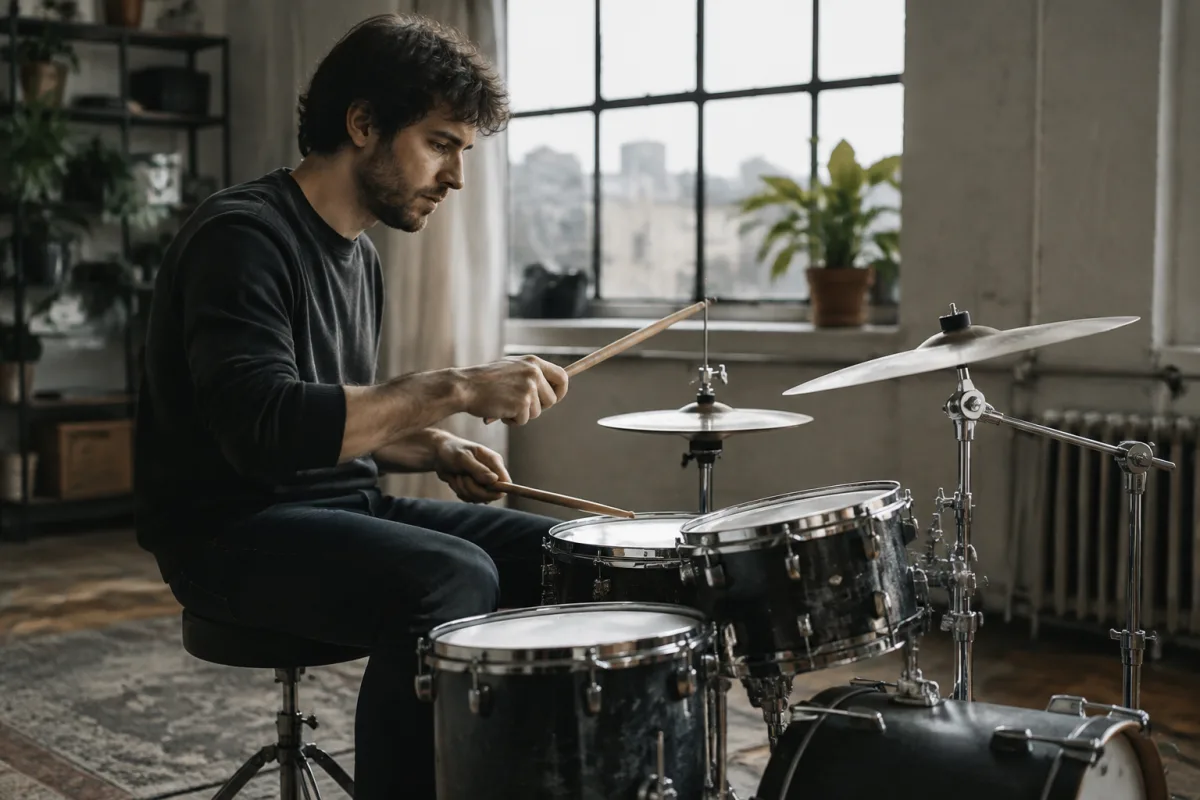
Learning drums doesn't require a bedroom-consuming full-size kit, and travel drum kits have revolutionised how emerging drummers practice and perform. Whether you're in a small flat, constantly moving between locations, or just exploring drums before committing to a full kit, a travel drum kit offers compact playability without massive compromise. This beginner's guide walks you through understanding travel kit options, setting them up properly, and using them effectively for learning.
What Makes a Travel Drum Kit Different
Travel drum kits compress a full drum setup into a fraction of the space. They use smaller drums (13-inch toms instead of 16-inch, compact kick drums), lightweight materials, and efficient mounting systems. The fundamental layout remains the same—kick, snare, toms, cymbals in a recognisable arrangement—but everything scales down. Some travel kits fold almost flat for transport; others break down efficiently but aren't truly suitcase-compact.
The trade-off is simple: space efficiency versus full acoustic tone. Travel kits sound thinner and punchier than full-size kits because smaller drums naturally produce higher pitches with less sustain. This isn't bad—it's just different. Professional drummers use travel kits for practice and even recording when space or portability matters, so viable musicality isn't sacrificed.
Different Types of Travel Kits
Acoustic travel kits use real drums in compact sizes. They produce legitimate acoustic sound, feel like normal drumming, and build proper technique. The learning experience is authentic—playing a travel acoustic kit doesn't bad-habit your playing for eventual full-size transition.
Electronic travel kits use rubber pads and digital sound modules. They're infinitely quieter (essential in flats or shared spaces), infinitely more portable, and tremendously versatile—one kit produces hundreds of sounds. However, playing feel differs significantly from acoustic drums. Your hands learn different strikes and dynamics on rubber pads versus actual drums. Many beginners start on electronic kits for noise reasons, then find the transition to acoustic drums jarring.
Hybrid travel kits combine small acoustic drums with electronic pads, bridging approaches. These offer moderate volume, acoustic feel on some components, and electronic on others. They're bulkier than pure electronic kits but more playable than minimal acoustics.
Space and Setup Considerations
Before buying, measure your space honestly. A travel acoustic kit still needs room—roughly 6 feet wide by 4 feet deep is realistic minimum when fully set up. Electronic travel kits occupy less space but need enough room for your arms to move freely without hitting walls or furniture. Playing drums is physically expansive; cramped setups frustrate and limit proper technique development.
Consider noise. Acoustic travel kits still produce volume—not full-kit volume, but substantial. Downstairs neighbours notice. Electronic kits with headphones are genuinely silent. If noise is a genuine constraint, electronic is honest choice rather than acoustic disappointing everyone.
Assess your home setup—can you leave the kit assembled between sessions, or must it pack away daily? Daily packing makes assembly motivation wear thin. If you're pulling the kit out every practice session then packing it away, you'll practice less. Factor this into your decision.
Acoustic Travel Kit Evaluation
When considering acoustic travel kits, check drum sizes (13-inch tom vs. 16-inch affects tone and reach), shell construction (plywood vs. maple changes sound), and bearing edge quality. Smaller drums mean higher pitches—a 12-inch kick sounds very different from a 20-inch kick. Listen to demo videos; you'll immediately hear tonal differences.
Check hardware quality. Mounting systems should be stable and smooth to adjust. Cheap travel kits use plastic lugs and wobbly stands that frustrate you daily. Spend extra for solid hardware; it's worth every penny because you interact with hardware constantly.
Verify cymbal stands and pedal quality. A cheap kick pedal with mushy response will destroy your developing technique. Spend on pedal quality even if other compromises are necessary. Your feet develop technique on this pedal—mediocre pedal feedback teaches bad habits.
Electronic Travel Kit Evaluation
Electronic kits live or die on pad quality and sound module capabilities. Check pad responsiveness—do they register rapid strikes, or do quick rolls become muddy? Premium pads trigger crisply; budget pads feel sluggish and unreliable. Playing feel suffers dramatically with poor pads.
Sound module quality matters equally. Entry-level modules have limited, mediocre sounds and weak playback quality. Better modules offer rich sound libraries and realistic audio processing. Listen to audio demos before buying; you'll hear tremendous difference in sound quality between budget and mid-range modules.
Check connectivity options. Do you need to connect headphones, or do you want to jam with backing tracks from your laptop? Does the kit have USB MIDI output so you can sequence it? These options expand a kit's usefulness beyond standalone practice.
Building Proper Technique Despite Size Limitations
Travel drums teach the same fundamental technique—proper grip, posture, striking technique—as full-size kits. The movements are identical; the kit is simply smaller. One significant difference: reach. With a travel kit, drums sit closer together, requiring tighter hand movements. This actually forces good technique development because sloppy, expansive movements don't work as well.
Practice proper seating posture even in small spaces. Your back position and hip angle matter regardless of kit size. Don't slouch because it's a "practice kit"—develop proper habits from day one. They transfer perfectly to full-size kits later.
Use a metronome relentlessly. Travel kits make timing development even more critical because the compact layout masks imprecision less than full-size kits. Tight timing is rewarded immediately; sloppy timing becomes obvious.
First Practice Sessions
Start simple: basic kick-snare-hihat patterns. Spend 30 minutes getting comfortable with the kit's physical layout and feel. Your hands need to find "muscle memory" for where drums sit relative to your body. This happens surprisingly quickly on small kits—within a week, you'll play without looking.
Practice stick control: open-close single strokes on the snare for 5-10 minutes daily. Grip the stick properly (not too tight), keep wrists loose and bouncy, let the stick do the work. Poor technique develops fastest when struggling against tight grips and stiff wrists. Invest practice time in fundamentals.
Learn basic beats: steady hihat with kick and snare variations. These simple patterns taught on millions of drums are still the most productive place to start. Resist the urge to tackle complex patterns immediately. Fundamentals matter.
Transitioning From Travel Kit to Full-Size
If you learn on a travel acoustic kit, transitioning to full-size drums involves moderate adjustment. The layout is the same; your reach just expands. Playing a larger kit feels refreshing—more space, fuller tones, greater sustain. Your technique transfers directly.
Transitioning from electronic to acoustic is harder because pad feel is so different from drum heads. If you suspect you'll eventually want acoustic drums, starting on acoustic—even compact acoustic—prepares you more authentically. Electronic kits are brilliant for noise-constrained situations but create a bigger learning gap later.
Common Beginner Mistakes With Travel Kits
Don't assume a travel kit will frustrate you into upgrading. Many professional practice on travel kits by choice. They're genuinely viable tools, not training wheels. Play your travel kit confidently, not as a temporary regrettable option.
Don't let compact size excuse poor practice habits. Posture, grip, and timing matter just as much on small kits. In fact, they matter more because errors become obvious more quickly. Use the travel kit as a tool for developing excellent technique, not cutting corners.
Don't underestimate power needed. Even small kits demand proper technique and physical engagement. A wimpy, half-committed approach teaches nothing. Strike the pads with real intention; work on dynamics and control intentionally.
Conclusion
A travel drum kit is a genuine, legitimate way to learn drumming without massive space or noise requirements. Choose between acoustic (authentic feel but more volume), electronic (true portability and silence), or hybrid approaches based on your constraints and goals. Set them up in proper playing position despite limited space, focus on fundamentals, and play with real intention. Travel kits aren't compromise tools—they're thoughtful choices that serve many drummers throughout their development. For deeper understanding of specific travel kit options and features, explore everything you need to know about travel drum kits.



Comments