


Mic a Snare Drum Buying guide
Mic A Snare Drum: A Complete Buyer's Guide
Shopping for a snare microphone? This guide covers the specs that matter: SPL handling, pickup pattern, frequency response, and common mistakes that result in poor recordings.
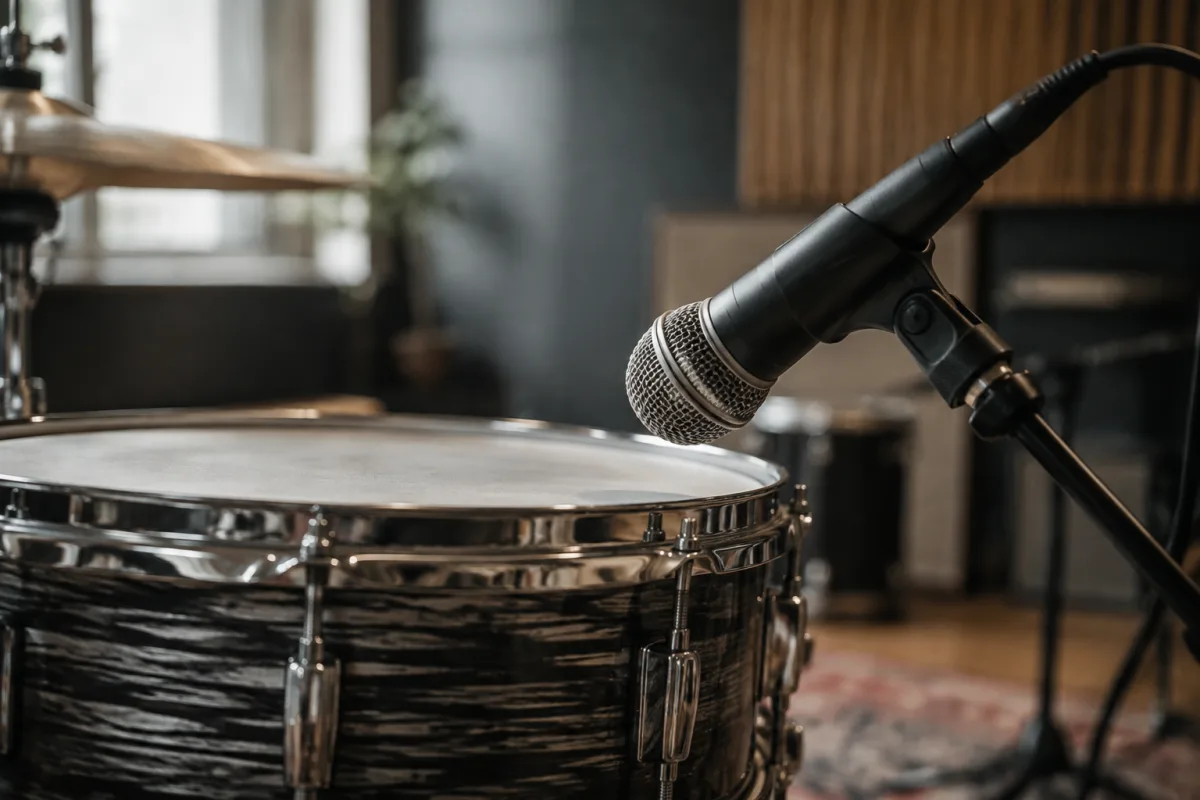
Choosing a microphone to mic a snare drum matters far more than most drummers realise. The wrong mic picks up rumble, cymbal bleed, and ambient room noise; the right one captures snare punch and clarity. This guide walks you through the specs that matter, the mic types that work best, price tiers, and the common mistakes that result in unusable recordings.
Microphone Types for Snare: What Actually Works
Three types of microphones dominate snare recording: dynamic, condenser, and ribbon. Each excels in different applications, and your choice depends on what sound you're after.
Dynamic Microphones
Dynamic mics are the industry standard for snare drums, especially in live settings and rock recording. They're rugged, handle high sound pressure levels (SPL) without distortion, and typically reject cymbals better than condensers. Most professional snare recordings use dynamics.
Classics like the Shure SM57 and SM7B remain the gold standard for a reason: they're affordable (£80–300), durable, and deliver consistent, punchy snare tone. If you're buying your first snare mic, a quality dynamic is the smart choice.
Condenser Microphones
Condenser mics pick up more detail and presence than dynamics. They excel at capturing snare nuance and articulation, but they're also more sensitive to cymbal bleed and room noise. They require phantom power (48V from your mixer or preamp) and aren't as rugged as dynamics.
Condensers are better for studio recording where you can control the environment and mic placement precisely. Live setting? Usually impractical. Budget condensers often pick up too much room noise to be useful on snare.
Ribbon Microphones
Ribbon mics deliver a warm, vintage tone prized by some engineers. They're delicate, expensive (£300–2,000+), and rarely the practical choice for snare. If you're renting studio time, it's worth trying one; for buying, ribbon mics are specialised tools, not essential.
Key Specs to Understand Before Buying
Sound Pressure Level (SPL) Handling
Snare drums are loud. A close mic to a snare hit can exceed 130 dB SPL. Your microphone must handle this without distortion. Budget mics often spec 130–140 dB SPL; professional snare mics handle 140+ dB. Check this spec before buying—an underpowered mic will clip (distort) during transient peaks, ruining the recording.
The SM57 handles 132 dB SPL at 1% THD; the SM7B handles 140 dB+. These specs tell you the mic won't distort even when placed directly on the snare.
Frequency Response
Snare tone lives in the mid-range (300 Hz–3 kHz for body, 5–8 kHz for crispness). Look for mics with a presence peak in this range—they'll deliver punchy snare tone naturally. A flat frequency response works, but presence peaks make snare recording easier.
The SM57 has a natural presence peak around 4 kHz, which is why it sounds great on snare without heavy EQ. Knowing this prevents you from buying a "flat" condenser and then wondering why the snare sounds muted.
Polar Pattern (Cardioid vs. Omnidirectional)
Cardioid mics reject sound from the sides and rear, isolating the snare drum and rejecting cymbals. This is what you want for most snare recording. Omnidirectional mics pick up equally from all directions—useless for isolating snare in a band setting.
Always choose cardioid for snare, especially if recording drums in a room with other instruments.
Output Level and Impedance
Snare mics should output strong signal even when placed at distance. Low impedance (50 ohms) is standard and ensures clean, reliable signal. If impedance exceeds 200 ohms, you risk RF interference and signal loss over long cable runs.
Most professional mics spec 50 ohms; this isn't a reason to overspend, but do check it on budget options.
Price Tiers and What You Actually Get
| Price Range | Typical Use | SPL Handling | Notable Examples |
|---|---|---|---|
| £50–120 | Practice, demos, beginners | 130–135 dB SPL | Shure PG56, Audio-Technica AT2005 |
| £120–250 | Studio, gigging musicians | 135–140 dB SPL | Shure SM57, Sennheiser e604 |
| £250–500 | Professional studios, touring bands | 140–145 dB SPL | Shure SM7B, Audix D6 |
| £500+ | Specialised applications, premium studios | 145+ dB SPL | Neumann KMS, Sennheiser MD421 |
Common Buying Mistakes
Buying a Condenser and Expecting Isolation
Condenser mics are sensitive and pick up cymbals, room reflections, and background noise readily. If you're recording drums in a normal room, a condenser will frustrate you with unwanted bleed. Start with a dynamic mic if you're unsure.
Assuming More Expensive = Better Snare Tone
The Shure SM57 has been the standard for snare since the 1960s. It costs £100–150 new. The Shure SM7B costs £350–400. The SM7B is better (handles higher SPL, slightly punchier tone), but the difference doesn't justify the price for most users. The SM57 is genuinely excellent and often a smarter purchase.
Neglecting Mic Placement Over Mic Quality
A £80 mic positioned correctly beats a £400 mic placed badly. Mic height, angle, and distance from the snare dramatically affect recorded tone. Many beginners waste money on premium mics while ignoring mic technique. Learn placement first; upgrade the mic once you've mastered the basics.
Buying Without Checking SPL Specs
Placing a budget condenser (specs: 120 dB SPL max) directly on a snare will result in clipping distortion. Check the SPL rating against your intended distance. If you're miking close (2–4 inches), demand 140+ dB SPL capability.
Confusing XLR Cable Quality With Microphone Quality
Cheap XLR cables introduce noise. But investing in a £10 quality cable while using a £50 microphone is backwards. Spend 80% of your budget on the microphone, 20% on cables and stand. A great mic with decent cables beats a mediocre mic with expensive cables.
Buying for Different Scenarios
Home/Practice Recording
Budget is tight and you're recording in a room with less-than-ideal acoustics. Buy an SM57 or Sennheiser e604 (both £100–200, both cardioid dynamics). These handle room reflections better than condensers and deliver professional-quality snare tone at reasonable cost.
Professional Studio Recording
You're miking in an acoustically treated room with experienced engineers. Buy the mic that sounds best to your ear in that space. Many studios prefer the Shure SM7B for its extended presence peak and full-bodied low end. This is a £350–400 investment that delivers audible results.
Live Sound
Your snare mic must handle feedback, gain structure, and fast setup/teardown. The SM57 is ubiquitous in live applications for good reason: it's nearly indestructible and sounds great through any console. Buy an SM57, treat it well, and it'll last 20 years.
Touring
You need reliability above all. An SM7B is rugged, standard in tour trucks, and rental companies stock spares. If your primary mic fails, you can borrow an identical unit at your next stop. Standardisation matters more than owning the "best" mic.
Optional Accessories Worth Considering
- Mic clip and stand: £10–20. Essential for stable positioning; cheap to buy, huge difference in setup time.
- Pop filter or foam windscreen: £5–15. Reduces plosive noise if the mic is too close to your mouth during talkback; less critical for snare but useful to have.
- Quality XLR cables: £8–15 per cable. Invest in two or three good cables—they last years and prevent signal loss.
- Shock mount (if using condenser): £20–50. Isolates the condenser from vibration transmitted through the stand. Unnecessary for dynamics on snare.
Your Buying Checklist
- Decide on mic type: dynamic (most common) or condenser (studio-only)
- Confirm the mic is cardioid pickup pattern
- Check SPL handling against your intended mic distance (140+ dB recommended)
- Verify frequency response includes presence peak around 3–5 kHz
- Compare microphones in the price tier that fits your budget
- If possible, test the mic on actual snare before buying
- Factor in XLR cables, clip, and stand (total add-ons cost £20–50)
- For live use, prioritise brand standardisation (SM57 if unsure)
- Consider rental if this is your first snare mic (£20–40 monthly rental explores options cheaply)
Making Your Decision
Start with an SM57 or similar cardioid dynamic in the £100–200 range. Learn microphone technique, placement, and mixing on that foundation. Once you've recorded dozens of snare tracks and know exactly what you're missing tonally, invest in a premium mic. For a comprehensive exploration of snare recording techniques and the full scope of options, read the complete guide to miking a snare drum.
The best snare mic is the one that delivers the sound you want consistently. Mastering technique matters more than owning the most expensive option.


Comments