


Jazz Drum Kit article
Jazz Drum Kit for Beginners: A Complete Guide
A jazz drum kit is different from a rock kit. This beginner's guide explains what you need and why it matters to start correctly.
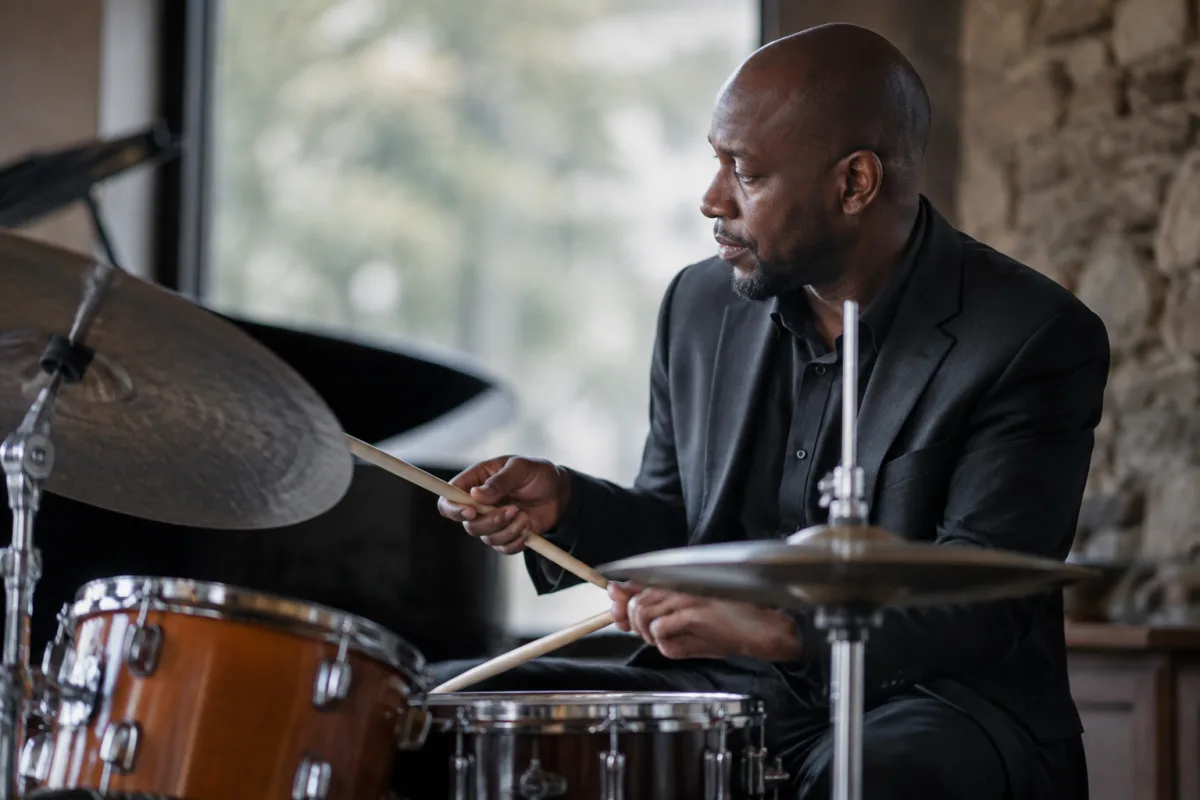
Jazz Drum Kit Essentials for Beginners: Starting the Right Way
Jazz drumming is a beautiful, expressive art, but it asks something different from your kit than rock or pop drumming does. If you are starting jazz and choosing your first kit, or adapting a rock kit to jazz, this guide is for you. Jazz drums have a specific character and setup, and understanding that from the start saves you years of frustration.
What Makes a Jazz Drum Kit Different?
A jazz drum kit is smaller, warmer and more responsive than a rock kit. Rock drums are built for volume and projection; jazz drums are built for nuance, control and subtle dynamics. You should be able to play delicate cymbal work and ghost notes without drowning everything out. A jazz kit punches through with finesse, not brute force.
Why This Matters to a Beginner
Learning jazz drumming on a rock kit teaches you bad habits. A loud, boomy bass drum and bright cymbals will make your technique feel clumsy. A properly tuned jazz kit responds to light touch and lets you hear every little note you play. You learn faster and sound better immediately. The investment in the right kit pays off in motivation and progress.
Key Components of a Jazz Drum Kit
The Bass Drum
Jazz bass drums are typically smaller than rock drums (18–22 inches, compared to 22–24 for rock). Smaller size produces a warmer, more controlled tone. Tuning is crucial: a jazz bass drum is tuned higher and tighter than a rock drum, with less resonance and decay. This lets you articulate notes cleanly without the boom carrying for seconds.
For a beginner, a 20-inch bass drum is ideal. It is portable enough to carry easily and deep enough to sound authoritative.
Snare Drum
Jazz snare drums are typically shallower than rock snares (13×4 or 13×5 inches are common; rock often uses 14×5 or deeper). A shallower snare is easier to play with control and produces a crisp, cutting tone that sits perfectly in a jazz context. The snares themselves should be sensitive enough to respond to light playing.
For beginners, look for a snare with medium-strength snare wires. Too tight and it chokes; too loose and it sounds sloppy. Medium gives you room to experiment.
Toms
Many jazz drummers use just two toms (high and low) instead of the three toms common in rock kits. This keeps things simple and maintains the compact aesthetic. Tom sizes are typically 10×8 (high tom) and 14×14 (floor tom). The smaller diameter (10 inches for the high tom instead of 12) contributes to the tighter, warmer jazz sound.
Cymbals
Jazz cymbals are fundamentally different from rock cymbals. Jazz cymbals are thinner, lighter and darker, producing a warm, complex wash rather than a bright crash. Sizes typically include:
- Hi-hats (13–14 inches): Medium weight. Articulate enough for sophisticated foot technique, warm enough not to cut harshly.
- Ride cymbal (20–22 inches): The workhorse of jazz. A good ride has a distinct "ping" and a warm wash. It defines the jazz cymbal sound.
- Crash cymbals (16–18 inches): Warm and quick to decay. Jazz crashes are subtle; you use them for colour and punctuation, not volume.
For a beginner, start with hi-hats and a ride. Add crashes and extra cymbals as your playing grows.
Setup and Tuning for Jazz
Bass Drum Tuning
Tune the bass drum so it is tight and controlled. Tap it and listen for a short, punchy tone rather than a booming resonance. A common approach is to tune the batter head (the one you play) higher than the reso head (the back), creating articulation without too much sustain.
Snare Tuning
Tune the top head (batter) quite tight for clarity. The bottom head (reso) should be even tighter to maximise the crisp, cutting snare response. This setup lets you play subtle ghost notes that still cut through the mix.
Tom Tuning
Jazz toms are tuned higher and tighter than rock toms. This contributes to the bright, articulate sound. Avoid deep, boomy tom tones; jazz toms should ring and cut.
Common Beginner Mistakes with Jazz Drums
- Using a rock drum kit and expecting jazz results. A rock kit tuned for jazz will still feel wrong. Invest in a proper jazz kit if you are serious about learning the style.
- Tuning drums too loosely. Many beginners inherit the rock tuning they learned and keep drums resonant and boomy. Jazz drums need to be tighter and more controlled.
- Choosing bright, modern cymbals. Vintage jazz cymbals are better for learning because they are forgiving and teach you sensitivity. Modern bright cymbals punish light touch.
- Playing too hard. Jazz requires control and nuance. Many rock players come in hitting too hard, making the kit sound clumsy. Learn to play with finesse from day one.
- Ignoring cymbal selection. Cymbals are 80 percent of your jazz sound. A cheap ride cymbal will sabotage your learning. Invest in at least a decent ride and hi-hats.
- Not learning the full kit early. Some beginners focus only on the bass drum and snare. Learn to play all the drums and cymbals together from the start. Jazz drumming is orchestral.
- Underestimating the importance of listening. Listen to Elvin Jones, Tony Williams, Joe Morello and other jazz legends. Hear how they use the kit. Imitation is how jazz drummers learn.
Budget Considerations
Entry-Level: £500–1,000
A basic jazz drum kit from a reputable brand (Yamaha, Gretsch, Ludwig) with adequate hardware and a reasonable ride cymbal. This will teach you properly and let you progress.
Intermediate: £1,500–3,000
A higher-quality kit with better shells, hardware and cymbals. Upgrade your cymbals especially; a nice ride changes everything.
Premium and Vintage: £3,000+
Professional kits and vintage equipment from the golden age of jazz (1940s–1960s). Not necessary for learning, but the quality and history are inspirational.
Your First Steps
Before you buy, sit down with a jazz drummer or visit a shop that stocks jazz kits. Play different setups. Feel how a properly tuned jazz kit responds compared to what you might have at home. Listen to how the bass drum, snare and cymbals sound together. This hands-on experience will clarify what matters to you.
Once you have your kit, spend time just playing it and listening. Learn to hear its voice. Tune it carefully based on what sound you are going for. Then practise—not just the flashy stuff, but the fundamentals. Ghost notes, dynamics, brush technique. A jazz drum kit rewards thoughtful, patient practice.
The Bottom Line
A proper jazz drum kit is smaller, warmer and more nuanced than a rock kit. Investing in the right instrument from the start teaches you good habits and accelerates your learning. Do not try to adapt a rock kit to jazz. Find a setup that responds to light touch, tuned for articulation not resonance, with cymbals that inspire you. That kit becomes your voice in the ensemble.


Comments