


Timbale Drums article
Timbale Drums for Beginners: A Complete Guide
Timbale drums look complex but are surprisingly beginner-friendly. Here's how to start playing beautiful Latin rhythms within your first week.
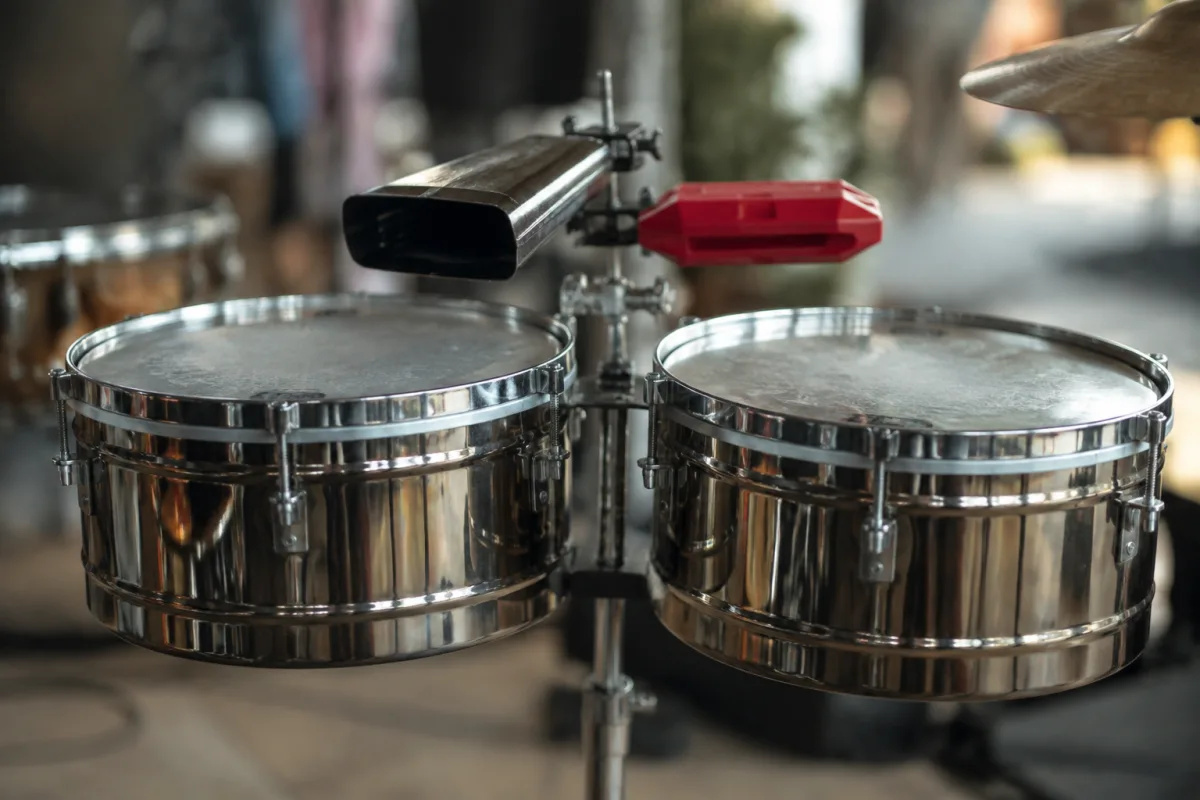
Timbale drums—the high-pitched, resonant drums of Latin music—look intimidating but are genuinely beginner-friendly percussion instruments. Their relatively small size, clear melodic tone, and straightforward playing technique make them perfect for percussion beginners who want to play energising, recognisable rhythms quickly. If you're interested in Latin music, percussion, or just want an inspiring first percussion instrument, timbale drums won't disappoint.
What Are Timbale Drums and Why Beginners Love Them
Timbales are a pair of single-headed drums, typically 13 and 14 inches in diameter, played with thin wooden sticks. They originated in Cuba and are central to salsa, mambo, merengue, and other Latin percussion traditions. The sound is bright, piercing, and melodic—nothing like the deep thuds of bass drums or toms.
Beginners connect with timbales quickly because the learning curve is remarkably gentle. Basic rhythms are playable within your first session. Within weeks, you can groove with recordings and jam with other musicians. This rapid gratification—far faster than most percussion instruments—keeps beginners motivated and eager to practice.
Physical Requirements: They're Easier Than You Think
Worried you don't have the hand strength or coordination for percussion? Timbales don't require either at a beginner level. Here's why:
- Light sticks: Timbale sticks are thin and lightweight. You don't need powerful arm strength to produce a clear tone. Beginners and children play timbales comfortably.
- Natural hand position: Your hands hold the sticks in a relaxed grip similar to holding pencils. No extreme finger contortions or difficult hand angles required.
- Forgiving technique: Timbale playing rewards natural, flowing motions. Beginners produce recognisable, musical tones immediately—even if technique is imperfect.
- Smaller playing surface: The drum head is compact, making it easier to hit your target consistently compared to larger drums like bass drums or timpani.
If you're concerned about physical limitations, timbales are genuinely accessible. Age, strength, and prior coordination don't matter—musicality and rhythm do.
The Sound: Melodic, Bright, and Inspiring
Timbale drums produce high, ringing tones that cut through a mix and sound inherently musical. Unlike tom-toms or snares that emphasise attack and decay, timbales ring out beautifully, sustaining tone in a way that feels expressive.
This sound character is beginner-motivating. Your first attempts at a timbale rhythm sound good—clear, energetic, and recognisable. You're not producing dull thuds or confusing noise; you're creating actual music within minutes. That psychological boost accelerates learning and keeps you practising.
Getting Started: Your First Timbale Session
Here's what your first weeks with timbales might look like:
- Grip and stance (lesson 1): Hold the sticks lightly, stand comfortably beside the drums, and strike the top surface gently. Within 10 minutes, you'll produce clear tones. Correct posture matters long-term but isn't essential for initial fun and motivation.
- Basic rhythms (week 1): Simple patterns—alternating left-right strikes, or basic cascara rhythm—are playable immediately. These patterns are the foundation of Latin music and form the basis of most timbale grooves.
- Playing along (week 2–3): Once basic rhythm feels comfortable, play along with recordings. You'll surprise yourself hearing your timbales locked into a salsa or mambo track. This real-world application accelerates learning exponentially.
- Expanding vocabulary (month 2+): As you grow comfortable with basics, you'll explore syncopation, cross-rhythms, and more complex patterns. But you can get there gradually—week 1 is just basic fun.
Common Beginner Mistakes and How to Avoid Them
Most beginners make the same missteps. Here's how to sidestep them:
- Gripping too hard. Tension blocks relaxation and makes playing tiresome. Hold sticks lightly, like pencils. Your wrist and forearm do the work, not your grip.
- Striking the shell instead of the head. Beginners often miss the playing surface and hit the drum's rim or shell. This produces noise rather than tone. Aim for the centre-top of the head until the motion becomes automatic.
- Playing too loud immediately. Beginners sometimes bash timbales trying to create "power." Timbales shine at moderate dynamics. Finesse matters more than force. Lighter playing with relaxed technique sounds better than hard hitting.
- Ignoring posture. Standing awkwardly or hunching will tire your back and shoulders. Take time early to establish comfortable stance—it pays dividends as you progress.
- Learning in isolation. Timbales are ensemble instruments. Practising only by yourself is demotivating. Find recordings to play along with from day one. Real-world grooving makes practice feel purposeful.
- Assuming all timbale rhythms are complicated. They're not. Basic cascara, basic clave, and simple straight eighth-note patterns are genuinely simple. Start there; advance gradually.
Listening and Rhythmic Awareness
Timbale success depends more on rhythmic intuition than technical skill. Before you play, spend time listening to timbale grooves in salsa, merengue, and reggaeton. Hear the characteristic high-pitched patterns—they're immediately distinctive.
This listening foundation accelerates learning. When you can hear timbale rhythms, your hands naturally replicate them. Beginners who skip this listening phase often struggle with rhythm accuracy despite decent technique. Reverse that by listening first, playing second.
Choosing Your First Timbale Set
For beginners, decent timbales cost £200–400. Entry-level options from Meinl, Mapex, or Latin Percussion are solid, playable instruments that don't require upgrading for years.
What matters for beginners: drums that produce clear tone, tuning that stays stable, and a comfortable stand. Avoid ultra-budget timbales (£100 or less) that have poor tone and frustrating tuning stability. A modest investment in decent instruments makes practice rewarding rather than discouraging.
Tuning and Maintenance: Simple and Intuitive
Timbale tuning is straightforward. Two or three tuning lugs control pitch; tightening them raises the pitch, loosening lowers it. Most beginners dial in a tuning once and leave it—you don't need to retune frequently unless the drums take impacts or environmental temperature changes dramatically.
Maintenance is minimal: keep heads clean (gently wipe dust off), avoid extreme temperature changes, and check that hardware remains tight. Timbales are forgiving instruments that require far less maintenance than, say, timpani or vibraphones.
Playing Contexts: Where Timbales Fit
Timbales aren't just Latin instruments. They appear in:
- Salsa and mambo (their traditional home)
- Reggaeton and Latin trap
- World music ensembles
- Jazz fusion and contemporary percussion
- Recording studios as texture and colour
If you love any of these styles, timbales will accelerate your musicality. Even if you're exploring percussion without a specific style preference, timbales' versatility means you'll find contexts to apply your skills.
Building Motivation: Playing With Others
Timbales truly shine in ensemble settings. Within weeks, you can join informal jams or percussion circles. This community element—making music with friends—is profoundly motivating and far more rewarding than solo practice alone.
Seek out local Latin music ensembles, percussion meetups, or drum circles. You'll improve faster in a group context and discover that timbales unlock immediate musicianship in ways solitary practice can't replicate.
Progression Path: From Beginner to Player
Here's a realistic timeline for timbale learning:
- Week 1: Basic grip, stance, tone production. You're playing clear notes comfortably.
- Weeks 2–4: Basic rhythms (cascara, simple patterns). You can groove with recordings.
- Weeks 5–8: Expanding patterns, exploring syncopation, playing more complex grooves.
- Month 3+: Playing in ensembles, jamming, developing personal style.
This progression is rapid compared to many instruments. You're making genuine music within weeks, which keeps the learning curve rewarding.
Conclusion
Timbale drums are an inspiring, beginner-accessible percussion instrument that produces beautiful sound immediately and connects you to rich musical traditions. Don't worry about strength or coordination—timbales reward musicality and rhythm sense over power. Start with listening, progress to basic rhythms within your first week, and push yourself to play with others as soon as you're comfortable. Within a month, you'll surprise yourself with what you can play and the joy timbales bring to your musical life. The bright, ringing tone will inspire you every practice session, and the cultural richness of the instrument will keep you engaged for years to come. Pick up some sticks and start playing—timbales are waiting.


Comments