


Timbale Drums Buying guide
Timbale Drums: A Complete Buyer's Guide
Timbales are deceptively simple-looking, but quality varies dramatically. Learn what to examine, common pitfalls, and fair pricing for this essential Latin percussion.
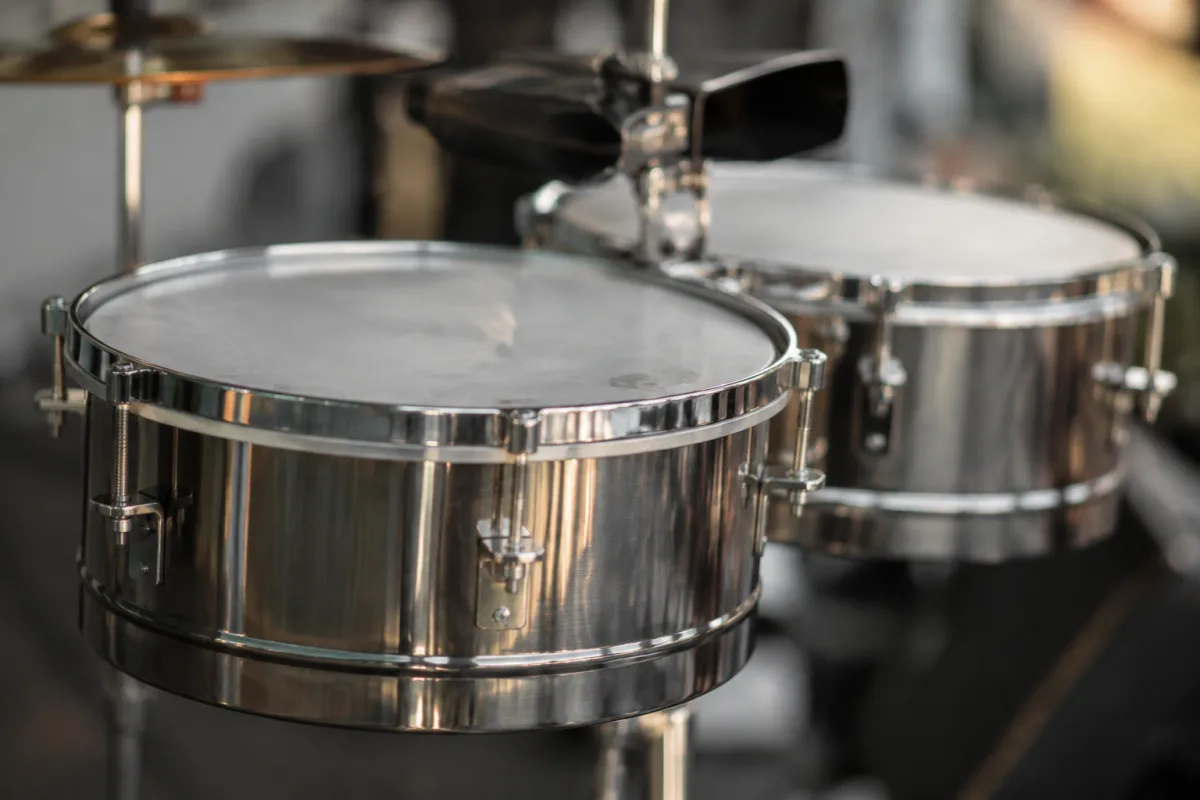
Timbales are deceptively simple-looking drums, but buying a quality pair requires understanding their construction, materials, and what separates a decent instrument from one that'll frustrate you for years. Whether you're exploring Latin percussion or building a percussion kit that includes timbales, knowing what to check when you're shopping makes the difference between finding treasure and wasting money. This guide focuses on the practical realities of timbale purchasing—what actually matters and what doesn't.
Understanding Timbale Construction
A timbale is a single-headed drum, typically paired as a high drum and low drum (each with a different pitch). The shell is shallow compared to a tom-tom—this shallow depth is what gives timbales their characteristic pitch range and crisp attack. Never confuse timbales with toms; they're structurally and tonally distinct.
Shell diameter is the primary size designator. A standard pair is usually 13" (high) and 14" (low), though 12"/13" pairs are popular for smaller hands or jazz settings, and 14"/15" pairs suit big band and orchestral contexts. Diameter matters far more than depth—a 13" timbale and a 16" tom are completely different instruments despite similar names.
Shell material is crucial. Professional timbales use brass or copper shells—materials that project well and resonate richly. Cheap timbales often use steel shells, which are cheaper to produce but sound thin and metallic. Some student-level options use aluminium, a middle ground that's acceptable for learning. The shell thickness also matters; thicker shells vibrate less freely and sound duller, whilst thinner shells (1–2mm) resonate more dynamically.
Head Quality and Tuning Mechanism
The head is where the sound is created. Calf skin heads were historically standard, but modern timbales predominantly use Mylar or Remo synthetic heads. Synthetic heads are more durable, consistent across different humidity conditions, and cheaper to replace (£15–30 versus £40–60 for calf skin). For most buyers, synthetic heads are the practical choice.
The tuning mechanism must turn smoothly and hold pitch reliably. Some entry-level timbales have clunky tuning lugs that stick or slip under pressure. Spend a few minutes at the shop turning the tuning handles—they should feel smooth and responsive. A lug that catches or locks abruptly indicates poor manufacturing.
Check the bearing edge (the curved edge of the shell where the head sits). A well-shaped bearing edge holds the head firmly and supports a clear, ringing tone. A flat or poorly shaped edge leads to buzzing or a muted sound. Feel the rim with your finger—it should be smoothly finished, not rough or jagged.
Hardware and Mounting
Timbales must mount securely. Most sit on a stand that holds both the high and low drum, angled for comfortable playing. Check that the stand is stable and adjustable—you should be able to move the drums higher, lower, or tilt them to suit your playing height and angle. A wobbly stand will drive you mad after even a short practice session.
Some timbales come as a matched pair from the same manufacturer; others are individual drums you pair yourself. Matched pairs are generally easier—they'll track well together and the stand is designed for them. Individual drums require knowing how to match them (usually by ear, checking that the timbre complements rather than clashes).
Hardware should be solid and corrosion-resistant. Cheap hardware rusts easily or bends under normal use. Stainless steel or chrome-plated brass is standard; painted steel is acceptable but less durable. Check the lug welds—they should be solid, not rough or thin.
Common Pitfalls When Buying Timbales
Pitfall one: buying matched pairs from different eras or manufacturers. A 1970s Slingerland 13" and a modern Ludwig 14" might both be excellent drums, but they'll sound disconnected together. If possible, play the pair together before committing. Chemistry matters.
Pitfall two: ignoring shell damage. A small dent in the shell usually doesn't affect sound, but a deep dent or crack can prevent the head from seating properly, causing buzz or dead spots. Examine the entire shell carefully under good lighting.
Pitfall three: assuming heavier means better. A thick, heavy timbale shell will actually sound duller and less responsive than a well-designed thin shell. Weight is not an indicator of quality. Sound is.
Pitfall four: buying timbales you can't actually hear. Online purchases are risky—photos hide tonal characteristics. If possible, visit a shop, play the pair, and listen to how they sound together. If buying online, purchase from a dealer with a return window and test thoroughly upon arrival.
Pitfall five: confusing timbales with other percussion. Cowbells, jam blocks, and other Latin percussion are sometimes mislabelled online. Verify you're actually buying timbale drums, not decorative percussion or untuned instruments.
Price Tiers and What You Get
- £80–150: Entry-level student timbales. Steel shells, basic hardware, acceptable for learning. Sound is thin but workable. Expect to upgrade within a year or two if you get serious.
- £150–300: Solid beginner-intermediate timbales. Brass or thick aluminium shells, decent tuning mechanisms, professional-grade heads. These hold their value and can serve you for years if well-maintained.
- £300–600: Quality professional timbales. Proper brass shells, excellent hardware, smooth tuning, rich tone. These will last decades and withstand gigging abuse. Investment grade.
- £600+: Handmade or boutique timbales, often with exotic shells, premium hardware, or renowned builders. Diminishing returns for most players, but some swear by them.
Most serious players should budget £200–400 for a reliable pair. Anything below £150 is genuinely student-level and will probably frustrate you within months. Anything above £600 is boutique territory and rarely worth the premium unless you have specific needs.
New vs. Vintage
Vintage timbales (1960s–1980s) can be excellent buys. Slingerland, Ludwig, and Latin Percussion timbales from this era are well-built and often cost less than modern equivalents in good condition. The risk: previous owners may have replaced heads, tuning lugs, or stands, making a "complete" pair potentially mismatched internally.
New timbales come with warranty and the knowledge that everything matches. You pay a premium for this peace of mind. Modern manufacturing has improved, so new instruments are typically consistent and reliable.
Second-hand timbales from a reputable dealer (with a return period) offer the best value. You can hear them before committing and have recourse if something's wrong.
Tuning and Sound Testing
When you're examining a pair, test both drums across their full tuning range. The high drum should ring clearly when struck on the head; the low drum should produce a deep, resonant tone. Neither should buzz or sound choked. Tap near the rim and near the centre—the sound should be relatively consistent across the head.
Listen carefully to how the two drums complement each other tonally. Ideally, the high and low drums should feel like they belong together—one slightly brighter, one slightly deeper, but both sounding like they're from the same family. Drums that sound completely different (one tinny, one dull) won't work well as a pair.
Care and Maintenance
Timbale heads wear and lose tension over time. Expect to replace them every 2–5 years depending on play frequency. Keep the drums in a humidity-controlled environment—extreme swings in moisture cause warping and tuning instability. A drum humidifier or dehumidifier in your practice space (£20–50) protects your investment.
Wipe hardware with a dry cloth after playing to prevent corrosion. Store timbales on their stand or in a protective case. Unlike bass drums or snares, timbales don't really need to be cased for storage—they're less fragile—but a case (£40–100) protects them during transport.
For deeper context on timbale history, construction variations, and their role in different musical styles, see our complete guide to timbale drums.
The Bottom Line
Buy a matched pair with brass or quality aluminium shells, smooth tuning mechanisms, and professional-grade heads. Expect to spend £200–400. Test them together before committing if possible. Check the shell for damage, the bearing edge for wear, and the hardware for sturdiness. Don't buy based on brand reputation alone; listen to how the pair sounds together. A well-chosen pair of timbales will serve you for decades and grow more rewarding as your technique improves.


Comments