


Sampler Drum Pad article
The Complete Guide to Sampler Drum Pad
Sampler drum pads trigger pre-recorded sounds through pressure-sensitive interfaces, essential tools for beat makers, producers, and live performers. Understand pad types, features, and workflows.
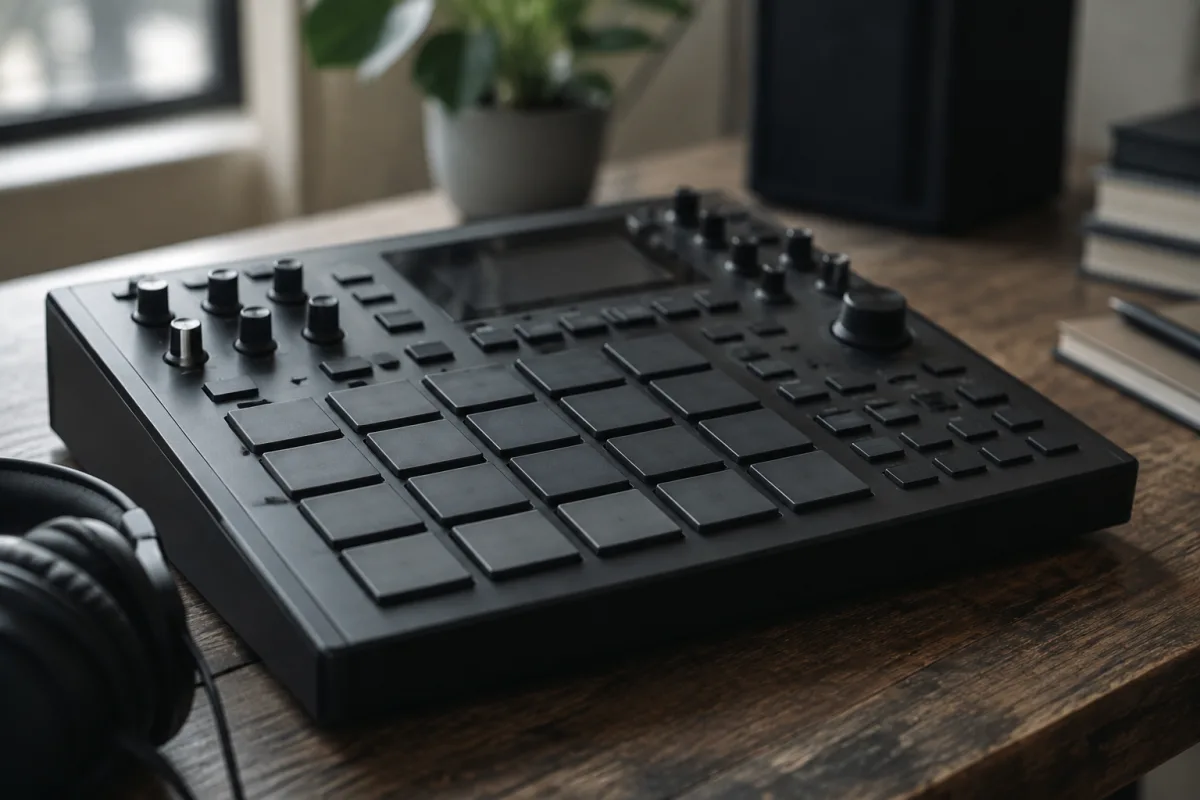
Sampler drum pads have evolved from specialist music production tools into essential instruments across electronic music, hip-hop, live performance, and studio production. These pressure-sensitive pads trigger recorded sounds—drums, percussion, synth sounds, or any audio imaginable—allowing performers and producers to create rhythm and melody by tapping, slapping, and combining pre-recorded or synthesised samples. Whether you're a beat maker, electronic musician, live performer, or producer exploring drum programming, understanding sampler drum pads reveals tools that have powered countless hit records and transformed how modern music is created and performed.
What Are Sampler Drum Pads and How Do They Work?
A sampler drum pad is a touch-sensitive surface that triggers audio samples when activated. Unlike acoustic drums, which produce sound through physical vibration, drum pads work electronically: you tap the pad, a sensor detects the strike, and a connected device (a sampler, sequencer, or DAW software) plays the associated audio file. The triggering mechanism is remarkably sensitive, detecting velocity (how hard you struck) and even position (where on the pad you struck), allowing expressive control over the sound.
Pads typically come mounted on a controller or sampler device containing multiple pads, each assignable to different samples. A 4-pad controller might trigger four different drum sounds (kick, snare, hi-hat, clap). A 16-pad grid provides more flexibility, allowing you to sequence rhythms by striking pads in tempo. Professional controllers offer grids of 24, 32, or even 64 pads for complex productions.
Types of Drum Pad Controllers
Sampler drum pads come in several formats, each optimised for different use cases. Integrated samplers like the Akai MPC or Native Instruments Maschine combine pad controllers with built-in sound synthesis, sequencing, and recording. These are complete music-making tools; you can produce entire tracks without a computer. They typically feature 16 pads arranged in a 4×4 grid, extensive sound libraries, and professional-grade recording and sequencing capabilities.
MIDI pad controllers are smaller devices that connect to computers or synthesisers via USB or MIDI. The Novation Launchpad, Akai APC, and Teenage Engineering OP-Z all feature pad grids that trigger external devices. This approach offers flexibility—you choose your sound source (DAW, synth, sample playback software)—but requires additional hardware or software to complete the setup.
Finger drum pads are designed specifically for real-time performance—quickly striking pads to create rhythms and variations live. These prioritise speed, pad responsiveness, and visual feedback. Many feature backlit pads showing which sounds are active, crucial for live performance when split-second timing matters.
Software drum pads exist as plugins or standalone applications, using your computer keyboard or mouse to trigger sounds. Whilst limited compared to hardware alternatives (keyboard and mouse lack the tactile feedback of physical pads), they offer zero additional hardware cost and reasonable usability for bedroom producers.
Key Features and Control Parameters
Velocity sensitivity is essential. Striking a pad hard or softly produces different volume levels (or other parameter changes), allowing expressive playing. Professional controllers feature curve settings, allowing you to adjust how velocity affects sound—some players prefer a linear response; others want gentle strikes to produce significant volume variation.
Pad size and arrangement affect usability. Larger pads (3–4 cm) are easier to strike accurately during live performance. Compact pads (1–2 cm) fit more onto smaller devices but require precision. Arrangement—whether pads are close together or spaced widely—affects ergonomics and playing style. Some performers prefer the close arrangement of finger drums; others prefer widely-spaced pads mimicking acoustic drum kits.
Aftertouch sensitivity (pressure applied after initially striking) adds expressive control. Pressing a pad after striking can modulate parameters—perhaps adding filter cutoff sweep, reverb, or pitch bend. This transforms pads into genuinely expressive instruments rather than simple triggering devices.
Visual feedback—lights, colour changes, or displays—is increasingly important. Backlit pads showing active samples help performers navigate complex setups. Displays showing current sound, parameters, and sequencer status reduce reliance on screens in live settings.
Sound Design and Sample Management
The sounds triggered by drum pads come from either built-in sound engines, external samplers, or audio samples you provide. Integrated samplers like Aika MPCs include extensive sound libraries covering drums, percussion, synths, and melodic instruments. You can combine these library sounds with your own recordings, creating hybrid instruments.
MIDI controllers triggering external software have access to unlimited sounds—any sample in your DAW, any synthesiser preset, any plugin you own. This flexibility is powerful but requires sound library management. Professional producers often maintain meticulously organised sample collections spanning drum kits, percussion, one-shots, and specialized sounds.
Sound design on pads encourages certain approaches. Since you're working with discrete, triggerable units, you typically layer multiple samples together—triggering a kick, snare, and hi-hat simultaneously to create a drum pattern. This encourages thinking in terms of patterns and rhythmic gestures rather than continuous sound evolution.
Applications Across Music Genres and Contexts
Hip-hop and rap production was revolutionised by drum pads. Producers like DJ Premier, Pete Rock, and Timbaland used MPCs and related devices to create the distinctive layered, rhythmic approach that defined golden-era hip-hop. The hands-on, real-time nature of pad-based production encourages the kind of rhythmic experimentation that became central to the genre.
Electronic music and EDM use drum pads extensively in live performance. A DJ or electronic musician performing live might use pad controllers to trigger samples, create rhythmic variations, or introduce new sounds in response to the crowd. The visual spectacle of someone performing on pads is also compelling—it demonstrates musicianship rather than simply playing back pre-recorded tracks.
Pop, R&B, and contemporary music producers use drum pads in studio production. Many hit records feature drum parts created on pads, sometimes recognisable by their tight quantisation and particular rhythmic sensibilities that pad-based production encourages.
Live drummers increasingly use drum pads to augment acoustic kits. A kick drum pad triggering electronic bass drum sounds, or a tom pad triggering sampled percussion, blends acoustic and electronic textures. This hybrid approach is increasingly common in touring bands.
Popular Sampler Drum Pad Devices
The Akai MPC (Music Production Center) is the legendary standard. Produced since 1988, the MPC defined pad-based production. Modern MPCs (the MPC Live II, MPC One, software MPC Renaissance) remain popular, favouring musicians who value the classic MPC workflow and workflow.
Native Instruments Maschine is a comprehensive music-making system combining a pad controller with professional software. It offers excellent integration, extensive sound libraries, and professional workflows. It's particularly favoured by producers working within DAWs like Ableton or Cubase.
Novation Launchpad is an affordable 8×8 pad controller designed for Ableton Live integration. Its visual feedback and intuitive workflow have made it popular with electronic musicians and live performers worldwide.
Roland Octapad and TR-808 variants offer distinctive character and the imprimatur of a legendary manufacturer synonymous with electronic music hardware.



Comments