


Roland Drum Pad Buying guide
Roland Drum Pad: A Complete Buyer's Guide
Choosing Roland drum pads requires understanding pad count, responsiveness, and your specific workflow. This buying guide covers specifications, use cases, and pricing tiers.
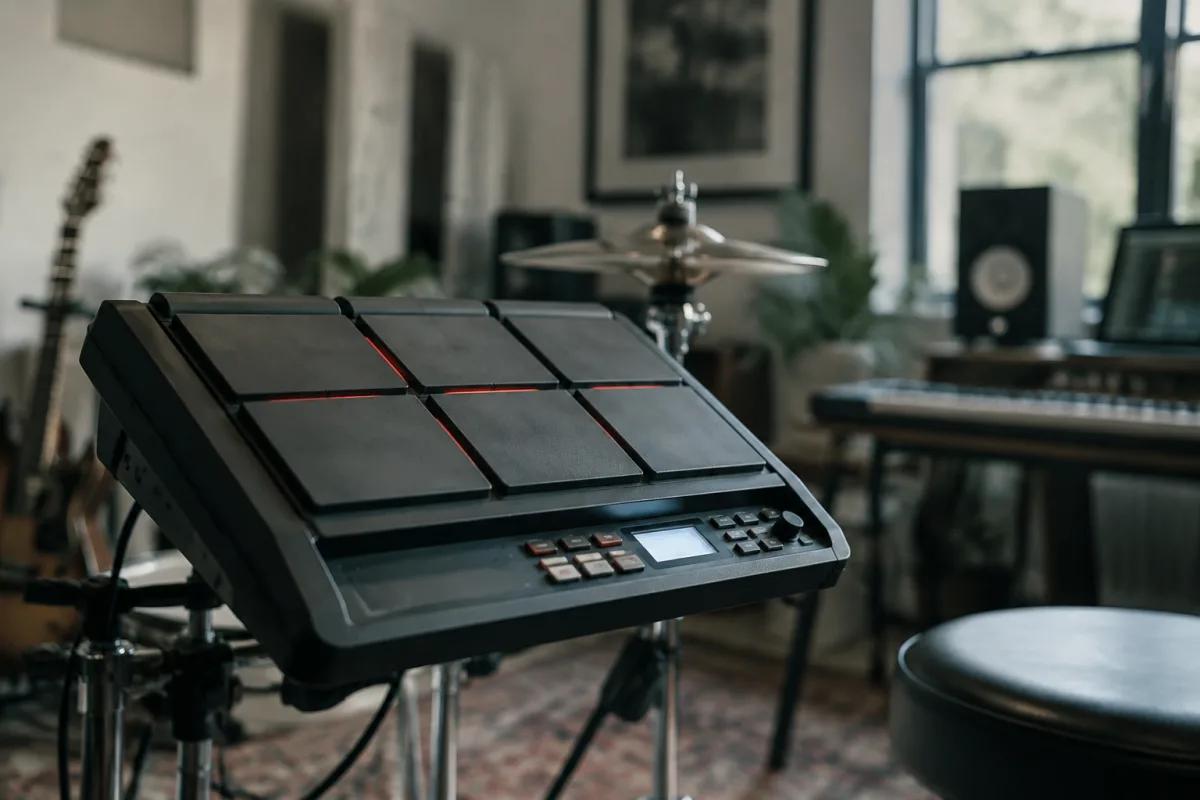
Selecting the right Roland drum pad requires understanding specifications, use cases, and the specific advantages Roland offers in the drum pad market. Whether you're sampling sounds for beat production, triggering drums for electronic music, or incorporating pads into a live rig, Roland drum pads deliver industry-standard features and reliability. This buying guide helps you navigate the range and choose Roland drum pads matching your specific needs.
Understanding Roland Drum Pad Categories
Roland manufactures several distinct drum pad product families, each serving different musical purposes.
SPD (Sampling Pad) series Roland drum pads emphasise performance and sampling. These are professional-grade pads designed for touring musicians and producers who need absolute reliability and extensive sound control. SPD Roland drum pads are expensive but deliver professional-level durability and features.
TR-Rec Roland drum pads focus on rhythm recording and beat production. These pads are more affordable than SPD series, targeting producers and bedroom musicians. TR-Rec Roland drum pads integrate nicely with DAW software for computer-based music production.
Octapad series Roland drum pads offer eight-pad configurations popular for percussion programming and live performance. Octapad Roland drum pads balance professional features with more accessible pricing than SPD models.
Compact and portable Roland drum pads serve mobile producers and travelling musicians who need lightweight gear. These sacrifice some control and size compared to professional models but excel at flexibility and convenience.
Critical Specifications for Roland Drum Pads
Understanding these core specs helps determine which Roland drum pads suit your needs.
Pad count affects workflow. Roland drum pads with 4 pads are portable but limit simultaneous triggering. 8-pad Roland drum pads offer standard performance. 16-pad Roland drum pads provide complex triggering but demand more space and attention. More pads aren't always better—match pad count to your actual playing needs.
Pad sensitivity and responsiveness matter enormously. Quality Roland drum pads respond immediately to strikes without lag. Budget models sometimes show latency where your strike doesn't trigger immediately. This ruins performance feel. Prioritise responsive Roland drum pads, especially for live use.
Built-in sound quality in Roland drum pads determines whether you need external samples. Premium Roland drum pads include excellent built-in percussion and electronic sounds. Budget models include basic sounds requiring supplement from external samples. Check sample quality before purchasing.
Connectivity options determine integration with your setup. USB connectivity on Roland drum pads simplifies computer connection. MIDI output lets you trigger external synthesisers or drum machines. Some Roland drum pads include dedicated audio outputs for direct monitoring. Evaluate which connectivity matters for your workflow.
Roland Drum Pads: Comparing Features by Use Case
| Use Case | Ideal Roland Drum Pads | Key Requirements | Budget Range |
|---|---|---|---|
| Bedroom Beat Production | TR-Rec or Octapad | USB connectivity, decent sounds, 8 pads minimum | £200-£500 |
| Live Performance | SPD or Octapad Pro | Durability, responsiveness, MIDI control, routing | £600-£1500 |
| Mobile Production | Compact Roland Drum Pads | Portability, USB, battery operation, lightweight | £300-£700 |
| Studio Sampling | SPD-SX or SPD-30 | Extensive sampling, excellent sound quality, professional build | £1000-£2000+ |
Understanding Roland Drum Pad Pricing Tiers
Roland drum pads span significant price ranges reflecting materials, build quality, and included features.
Budget Roland drum pads (£150-£300) offer basic functionality for experimenting. Pads are less responsive, sounds are basic, and build quality is acceptable but not robust. Suitable for hobbyists testing commitment before investing more.
Mid-range Roland drum pads (£300-£700) deliver genuinely useful features for serious hobbyists and semi-professionals. Responsiveness is excellent, sounds are professional quality, and build quality inspires confidence. This represents the best value tier—you get real capability without unnecessary premium features.
Professional Roland drum pads (£700-£1500) target touring musicians and studio professionals. These pads combine robust construction, exceptional responsiveness, and extensive control. Premium-grade Roland drum pads justify their cost through durability and performance under demanding use.
Specialist Roland drum pads (£1500+) address highly specific needs—extreme sampling capability, unique trigger options, or customisation. Only musicians with specific requirements justify this investment.
Common Mistakes When Buying Roland Drum Pads
Several errors trap buyers into unsuitable choices. Avoid these.
First mistake: Choosing more pads than you'll actually use. 16-pad Roland drum pads seem impressive until you realise you only need 8. The extra pads waste space and increase cost. Honestly assess your workflow before committing.
Second mistake: Ignoring responsiveness in favour of price. Laggy Roland drum pads frustrate quickly. The few pounds saved on budget pads aren't worth the performance penalty. Prioritise responsiveness.
Third mistake: Assuming more sounds automatically means better Roland drum pads. Professional-quality sounds matter more than sound quantity. Roland drum pads with 100 mediocre sounds perform worse than Roland drum pads with 20 excellent sounds you actually use.
Fourth mistake: Not considering actual integration with your existing setup. Roland drum pads need to connect meaningfully with your workflow. Check compatibility with your DAW, synthesisers, or controllers before purchasing. Otherwise, you've bought an island that doesn't connect to anything.
Fifth mistake: Overlooking used Roland drum pads. Professional gear holds value well. Used Roland drum pads often cost 30-40% less than new whilst offering identical performance. Seriously consider second-hand options.
Workflow Integration Considerations
Beyond specs, evaluate how Roland drum pads integrate into your actual music-making process. Will you use them primarily with computer software? Real integration with DAW software matters then. Need MIDI control of external gear? MIDI connectivity becomes critical. Want standalone operation without computers? Look for Roland drum pads with self-contained sounds and sequencing.
Testing integration before purchasing prevents frustration. Visit a music shop and try Roland drum pads triggering your preferred synthesiser or DAW. Real-world testing reveals compatibility issues that specs alone miss.
For detailed coverage of all Roland drum pad models and advanced workflow techniques, explore our complete guide to Roland drum pads, covering every product line and professional application.
Making Your Purchase Decision
Start by clearly defining your use case. Bedroom production, live performance, and mobile work demand different Roland drum pads. Match your priorities to the appropriate product family and price tier. Then prioritise responsiveness and build quality over feature abundance. Finally, test integration with your existing gear when possible. This approach yields Roland drum pads genuinely serving your needs rather than Roland drum pads that looked impressive in marketing materials.


Comments