


Drum Hardware Buying guide
Drum Hardware: A Complete Buyer's Guide
Drum hardware—stands, pedals, and mounting systems—is critical to kit stability and playability. This buying guide breaks down stand quality, pedal response, boom arm flexibility, and how to assess value across price tiers without overspending.
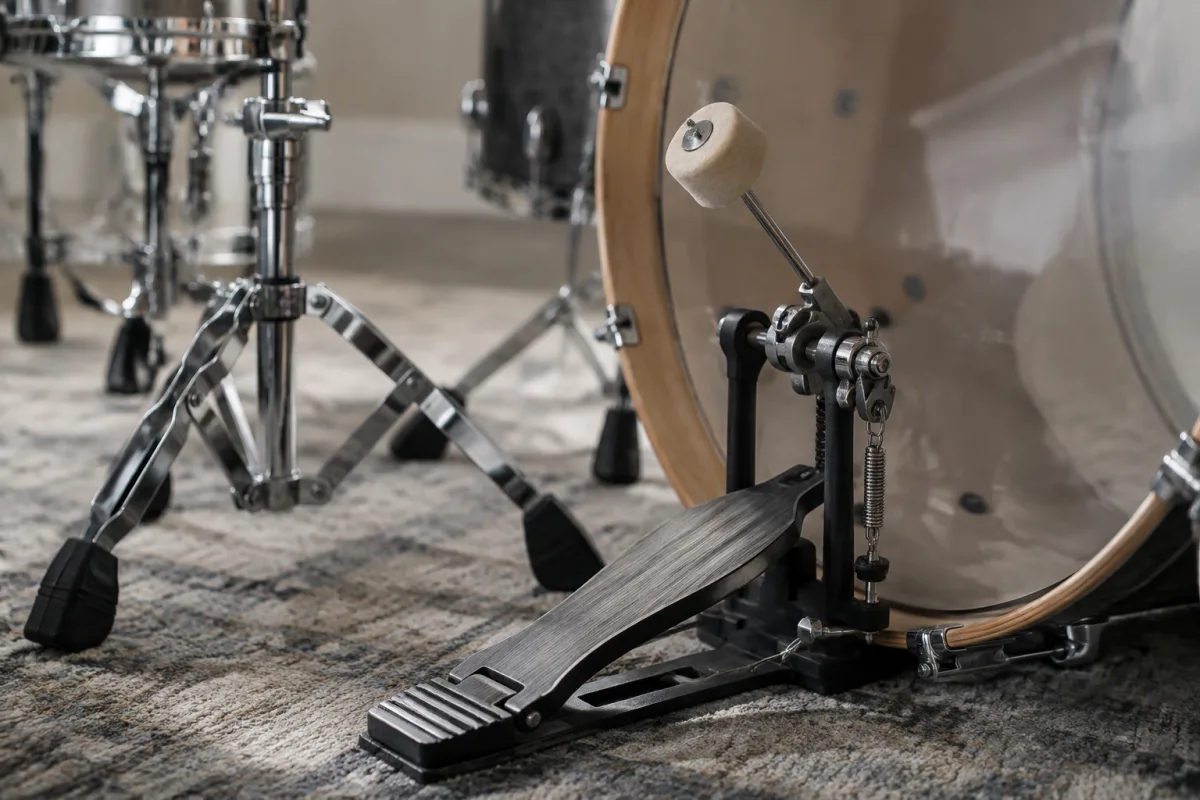
Selecting drum hardware—the stands, pedals, and mounting gear that holds your kit together—is less glamorous than choosing cymbals or drums, but it's equally critical to playability and durability. Quality hardware makes the difference between a kit that inspires confidence and one that feels shaky, squeaky, and unstable during gigs. This buying guide focuses on the specifications and features that affect your purchasing decision: stand stability, pedal response, mounting systems, and how to assess value across price tiers. For a comprehensive overview of drum hardware types and specifications, see our complete drum hardware guide. This guide prioritises getting hardware that won't embarrass you on stage.
Stand Stability and Build Quality
Drum stands come in three main types: cymbal stands, tom stands (for mounting toms on the kit), and snare stands. The most visible hardware is usually cymbal stands, and this is where build quality becomes audible. A cheap cymbal stand wobbles, and when you hit a cymbal hard, the entire stand oscillates, dampening the cymbal's tone and looking unprofessional. Quality hardware stands rock-solid; when you strike the cymbal, only the cymbal rings, not the stand. Test a stand by placing your hand on the cymbal and shaking gently; good hardware barely moves. Leg configuration matters: a tripod base (three legs) is standard, but legs that spread wider offer more stability at the cost of stage footprint. Tube diameter and thickness are the real indicators of quality—thicker, heavier tubes resist vibration better than thin, lightweight ones. This is why quality hardware is heavier; that weight buys stability. Don't assume a lighter stand is more portable-friendly; portability matters less than on-stage stability, especially in a band mix where the drummer's timing depends on everything feeling rock-solid.
Bass Drum Pedal Response and Feel
Bass drum pedals dominate the "feel" of your kit. A sluggish, spongy pedal that lacks response demoralises even experienced drummers; a crisp, responsive pedal inspires confidence. Pedal response is determined by beater mass (the foot striking the drum), spring tension, and footboard leverage. Budget pedals often feature cheap springs that lose tension quickly, making the pedal feel dead after a month of playing. Mid-range pedals offer responsive springs that maintain feel through seasons of gigging. Premium pedals include adjustable spring tension, beater materials (plastic, wood, or felt), and sophisticated leverage systems that feel snappy even at slower tempos. When testing a pedal, play a steady pulse at various speeds—80 BPM, 120 BPM, 160 BPM—and assess responsiveness at each. If the pedal feels sluggish at faster tempos, move to the next option. Speed matters less than feel; a slightly slower pedal that feels responsive beats a fast but spongy one every time.
Cymbal Boom Arms and Flexibility
Boom arms extend from a stand, letting you position cymbals at precise angles without cluttering kit footprint. Quality boom arms rotate smoothly and hold position without drifting. Budget boom arms slip or drift mid-song—a nightmare on stage. Arm length matters for reach and spacing; longer arms let you mic cymbals easily and position them far from other drums. Shorter arms are more compact for small kits or tight stages. Counterweights on boom arms help offset cymbal weight; heavier cymbals need more counterweight or the arm tilts. When assessing a boom arm, rotate it fully through its range; smooth motion without grinding or friction indicates decent bearings. Locking mechanisms vary: some use friction locks, others use lever clamps. Lever clamps are faster and more reliable for quick adjustments during setup.
Tom Mounting Systems
Toms can mount directly to the kick drum (tom mounts on the kick), sit on stands, or hang from a rack system. Kick drum mounts save space and look clean, but they can transmit vibration between drums and limit tom placement. Dedicated tom stands offer independence and precise positioning. Rack systems provide maximum flexibility but occupy significant stage real estate. Choose based on your kit size: small kits (one or two toms) work fine with kick mounts or single stands. Larger kits benefit from dedicated tom stands or racks to position toms ergonomically. Test any mounting system by placing a tom in position and tapping it; if the stand vibrates noticeably or squeaks, move on. Quality mounts isolate the drum from vibration and stay silent.
Common Buying Mistakes
Mistake one: buying the cheapest hardware to save money, then replacing it after six months when it falls apart. This false economy bites hard. Mistake two: prioritising weight over stability. Lightweight hardware looks appealing for transport but often wobbles. Mistake three: ignoring pedal feel and buying based on reviews or brand hype. Pedal feel is deeply personal; test every pedal you're considering. Mistake four: assuming larger hardware is always better. A massive cymbal stand serves no purpose if you're playing intimate venues; the footprint matters. Mistake five: buying mismatched hardware from different brands. Most professional drummers standardise on one brand for consistency in feel and appearance. Mixing brands isn't wrong, but it requires more fine-tuning.
Price Tiers and Value
| Price Range | Typical Specs | Best For |
|---|---|---|
| Under £80 | Basic tripod stands, weak springs, plastic components, non-adjustable tension | Bedroom drummers, absolute beginners, practice-only use |
| £80–£200 | Solid stands, reliable springs, single-braced legs, standard boom arms, responsive pedals | Rehearsal musicians, semi-pro gigging, home studio |
| £200–£400 | Heavy-duty stands, premium springs, double-braced legs, smooth boom arms, adjustable pedals, quality finishes | Working gigging drummers, touring musicians, professional studios |
| Over £400 | Premium brand names, customizable settings, boutique finishes, extended warranties, professional support | Session musicians, endorsement players, touring acts |
Key Specifications Checklist
- Cymbal stands: tube diameter, leg spread, footprint compactness
- Bass drum pedal: spring tension, beater response at various tempos, adjustability
- Tom stands: stability when mounted, isolation from vibration, height adjustability
- Boom arms: smooth rotation, lock mechanism reliability, counterweight options
- Mounting systems: compatibility with your existing kit, flexibility for future changes
- Hardware finish: chrome, black, or brushed; durability against corrosion and wear
- Weight and portability: suitable for your transport methods (van, car, flight cases)
- Compatibility: ensure hardware matches your drum sizes and cymbal weights
- Warranty: 2–5 years standard; check coverage for moving parts (springs, bearings)
Assessing Value for Your Gigging Reality
If you're rehearsing twice a week in a constant room, mid-range hardware (£80–£200) delivers reliability without premium pricing. If you're gigging regularly and traveling, invest in premium hardware; the durability pays off over years of transport and setup. For bedroom drummers, basic hardware suffices, but even beginners benefit from one quality cymbal stand; it changes how inspiring practice feels. Read user reviews focusing on long-term durability—do springs last years or months? Do boom arms drift? Is customer service responsive if something fails? A drum hardware company with poor support isn't worth the price. Test pedals and stands in person if possible; hardware feel is tactile and personal. An expensive pedal that doesn't suit your technique isn't money well spent. Finally, budget for miscellaneous hardware—wing nuts, felts, stand extensions—that accumulate over time. A £20 kit maintenance budget annually prevents expensive emergency replacements.
Where to Buy and Final Tips
Specialist drum retailers stock wide ranges and usually offer hands-on testing of pedals and stands. Compare the same model across retailers before committing; prices vary significantly. Online retailers often undercut shops but lack the testing advantage. Confirm return policy if buying remotely; hardware fit is important. Check if stands and mounts come with necessary adapters; some models require separate purchases. A protective case or gig bag is worth £30–£100 insurance against damage during transport. Don't assume brand reputation alone; test the specific model you're buying. A company's flagship pedal might be excellent while their budget line is mediocre. Join local drummer communities online; experienced players offer invaluable advice on which hardware holds up under gigging stress. Finally, resist the urge to upgrade hardware every year. Quality hardware lasts decades; invest once, then focus money on drums, cymbals, and technique rather than chasing incremental hardware improvements.


Comments