


Claves article
Claves for Beginners: A Complete Guide
Claves are simple wooden sticks that teach profound rhythm literacy. This beginner guide covers holding technique, the son clave pattern, and how to progress from day one.
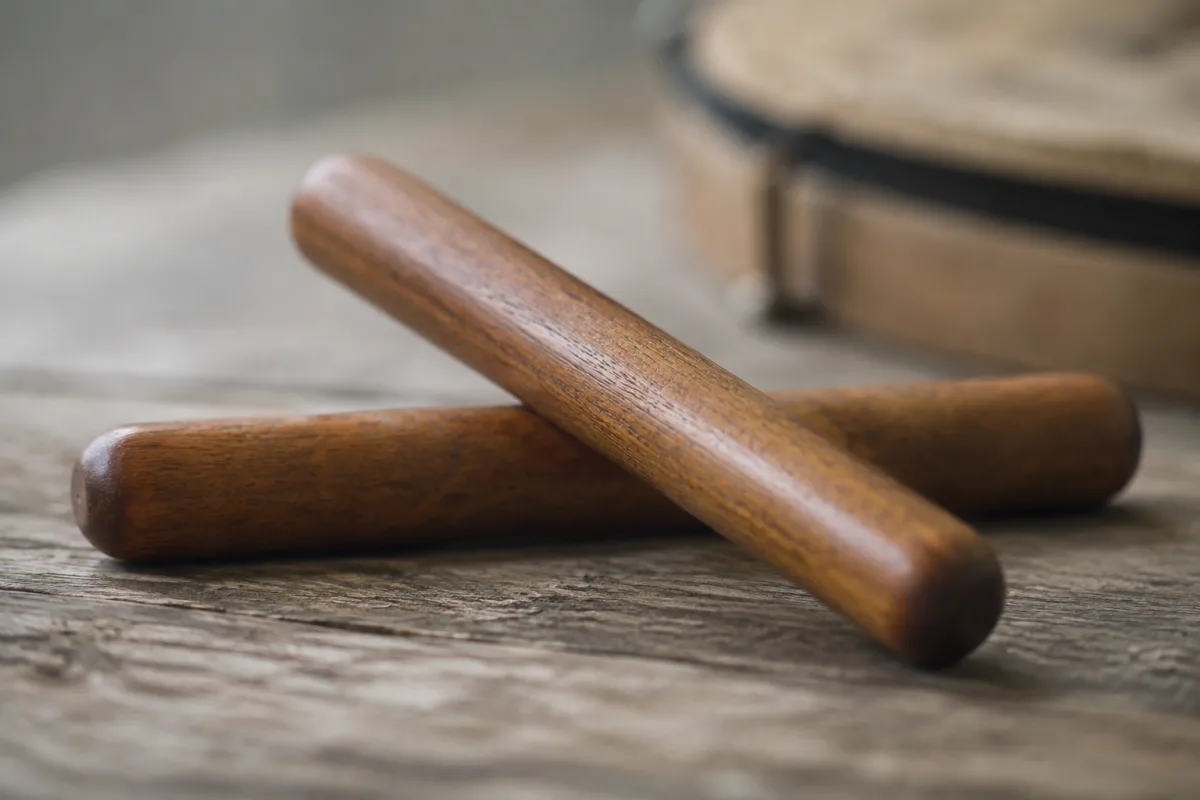
Claves are two wooden sticks that create one of the most recognisable rhythms in world music—a pattern so fundamental that once you hear it, you'll notice it everywhere from salsa to pop to world music recordings. For a beginner exploring percussion, learning claves teaches rhythm timing, hand coordination, and opens doors to understanding Latin and Afro-Cuban music traditions.
What Are Claves?
Claves are two wooden sticks, typically made from hardwoods like rosewood or granadillo, about 20–25 cm long. One stick (the resonator) is held lightly in your cupped hand; the other (the striker) is held loosely in your fingers. You strike the resonator with the striker to create a bright, percussive tone. Simple as that.
The true magic is not the instrument but the rhythm pattern. "Clave" refers both to the sticks and to a specific rhythmic pattern that is fundamental to Latin music. Learning claves means learning that pattern until it lives in your body.
Two Clave Rhythms: Son Clave and Rumba Clave
There are many clave variations, but beginners focus on two:
Son Clave (the most common)
Son clave is a five-stroke pattern over two bars (four beats per bar, so eight beats total): short-short-long-short (bar 1), short-long-short (bar 2). The long notes are slightly held; short notes are quick. Once this pattern is in your body, every Latin rhythm makes sense—because everything either fits with this clave or deliberately breaks it for effect.
Rumba Clave (the alternative)
Rumba clave shifts the emphasis slightly: short-short-short-long (bar 1), short-long-short (bar 2). Sounds similar to the untrained ear, but rumba clave has a different feeling and usage context. Learn son clave first; rumba comes naturally once you understand the concept.
Getting Started: Your First Steps
Step 1: Choose your claves
For a beginner, a basic pair of claves costs £8–20. Brands like Latin Percussion (LP), Meinl, and Vic Firth make reliable entry-level claves. You don't need expensive rosewood claves yet; a simple hardwood pair teaches the fundamentals. Avoid plastic claves—the tone is thin and discouraging.
Step 2: Hold them correctly
The resonator (passive stick) rests in your cupped hand, held loosely near your fingers so it can vibrate freely. The striker (active stick) is held like a drumstick, loosely in your fingers (not gripped tightly). Your grip should allow the striker to bounce slightly—tension kills tone and speed.
Step 3: Produce a good tone
Strike the resonator near its middle, using a quick, light flick of the wrist. Don't muscle it; let the wood do the work. You should hear a bright, crisp "click" that resonates for a moment. If it's dull, you're gripping too tightly or striking too hard. Relax your hands and focus on finesse.
Step 4: Internalise the son clave rhythm
Tap it slowly on a table (without the resonator hand) to feel the pattern: ta-ta, ta-rest, ta-rest (bar 1), ta-rest, ta-rest (bar 2). Don't worry about hitting an instrument yet—just feel the rhythm in your hands. This internalisation is more important than perfect technique.
Step 5: Combine hands and rhythm
Once the rhythm feels natural in your body, add the resonator hand and play the pattern slowly with actual claves. Speed will come; correctness comes first. Repeat until the pattern is automatic—when you can play it without thinking, you've truly learned it.
Common Beginner Mistakes to Sidestep
Mistake 1: Gripping the sticks too tightly. Tension in your hands kills tone quality and speed. A loose, relaxed grip lets the wood resonate and bounce naturally. Beginners often think "harder grip = better control"; the opposite is true for claves.
Mistake 2: Rushing the learning process. Claves are deceptively simple but deeply important. Spending time playing slowly and correctly builds a foundation that pays dividends later. Don't try to play fast until the rhythm is automatic at a slow tempo. Speed is earned, not forced.
Mistake 3: Holding the resonator hand too rigidly. Your cupped hand should allow the resonator to vibrate and ring out. Gripping it tightly dampens the tone. Cup your hand loosely—think of it as a resonance chamber, not a clamp.
Mistake 4: Confusing clave with other rhythms. Beginners sometimes mix up clave patterns or assume all Latin rhythms follow son clave. Each rhythm has its own character and usage. Son clave is your foundation; after you own it, learning rumba, mambo, and other variations makes sense.
Mistake 5: Playing only in isolation. Claves become alive when played with other musicians or backing tracks. A clave rhythm alone is nice; clave with bass, drums, and horns is magical. Once you're comfortable, play along with recordings to hear how your clave sits in an ensemble.
Progressing Beyond the Basics
Add dynamics and feeling
Once the clave pattern is solid, explore subtle variations: softer notes, slightly delayed or rushed notes, different striking angles on the resonator. These nuances give the clave colour and personality. Professional clavistas (clave players) spend years perfecting these small details.
Explore clave in context
Listen to son music (Buena Vista Social Club is a great entry point), salsa, and other traditions where clave is central. Hear how the clave pattern sits underneath everything. Notice how soloists and band arrangements respect or intentionally play against the clave. This contextual learning is more valuable than solo practice.
Experiment with other Latin rhythms
Once son clave is automatic, learning cascara (hi-hat pattern), tumbao (bass pattern), and montuno (piano pattern) becomes easier—they all relate to the underlying clave. You're building literacy in an entire musical language.
Choosing Between Clave and Drum Kit
Claves are beautifully focused: you learn one rhythm pattern deeply rather than juggling multiple limbs. This focused learning suits beginners who want rhythm foundation without overwhelming complexity. A drum kit requires learning four limbs independently; claves require mastering one pattern and one pair of hands.
If you love percussive focus and world music, claves are your path. If you're drawn to pop, rock, or jazz drums, start with drum kit instead. Both are valid; they teach different things.
Building Your Clave Foundation
Three weeks of regular practice (15–20 minutes daily) will have you playing son clave solidly. Two months of practice makes it effortless. After three months, you'll be playing with confidence and feeling the rhythm in your body in ways that enhance every musical experience.
The beauty of claves is that they're portable, affordable, and deeply rewarding. A pair costs less than a meal out, yet learning them opens profound musical understanding. Start with a basic hardwood pair and inexpensive claves; as you progress, you might invest in premium rosewood claves that resonate with even richer tone. But the premium instrument will only shine once your technique is solid.
For a complete overview of clave history, regional variations, and advanced playing techniques, see our full guide.


Comments