


Claves Buying guide
Claves: A Complete Buyer's Guide
Quality claves produce a bright, cutting crack; cheap claves sound dull. Here's exactly what to check when buying claves for performance or recording.
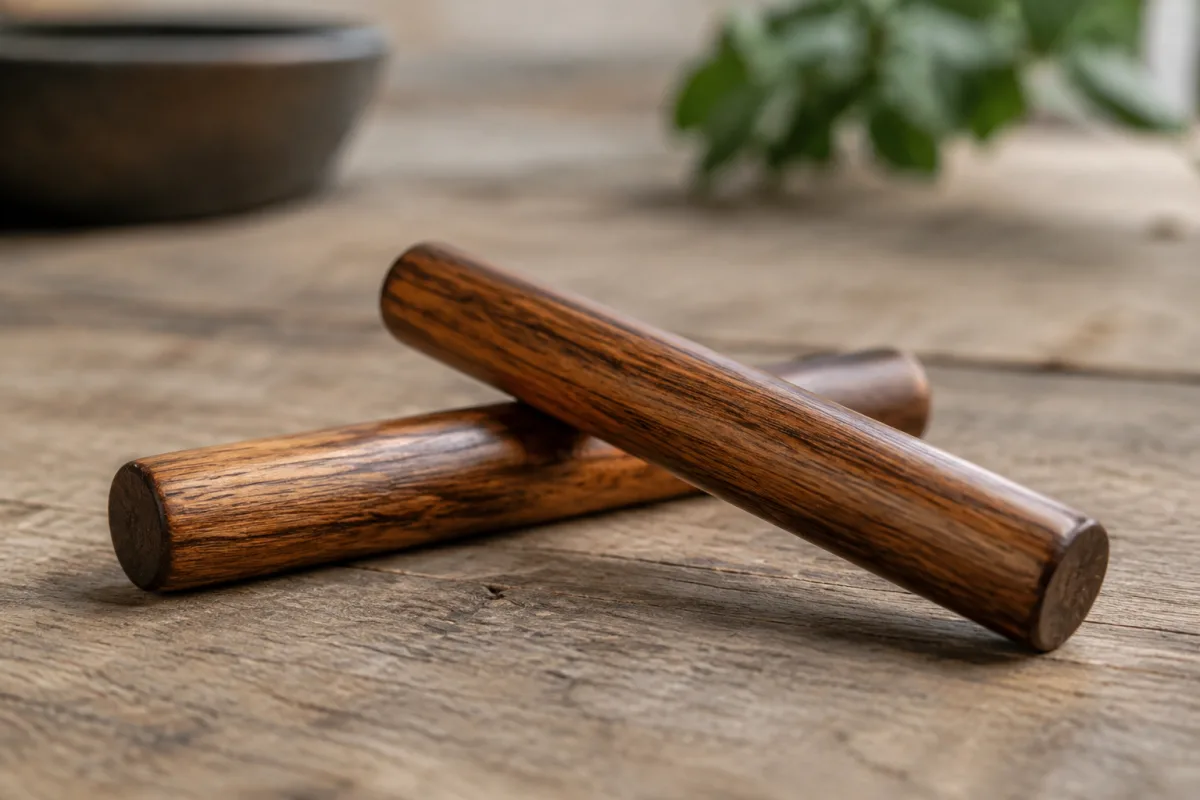
Buying Claves: What Actually Matters
Claves are deceptively simple — two wooden sticks that create crisp, cutting rhythms. Yet quality varies dramatically. A poor pair of claves sounds dull and flat; a good pair produces a bright, resonant crack that cuts through any ensemble. If you're buying claves for performance or teaching, understanding what separates excellent from mediocre is essential.
Wood Type and Tonal Character
The wood used to make claves determines their fundamental sound. Here's what each common wood delivers.
Hardwoods vs. Softwoods
Claves are always made from hardwoods — the density is crucial for producing a clear, defined attack. Softwoods simply don't have the structural integrity to generate the sharp crack you need. Look for woods like rosewood, ebony, Brazilian wood or similar dense hardwoods.
Tonal Variations
Rosewood claves produce a warm, rounded tone — popular in Latin music and jazz contexts. Hardwood claves (sometimes labeled simply as "hardwood") tend to be brighter and sharper, cutting through more easily in a dense mix. Ebony delivers a high-pitched, piercing crack. There's no "correct" choice — it depends on your musical context. For Latin music, rosewood is traditional; for pop and commercial work, brighter hardwoods are more versatile.
Dimensions and Sound Projection
Clave length and diameter affect both the fundamental pitch and how far the sound projects. Standard claves measure around 25 cm long and 1.3 cm in diameter. However, variations exist.
Longer Claves
Longer claves (27–30 cm) have lower fundamental pitches and slightly longer sustain. They project sound well in large acoustic spaces. However, they're less portable and can feel awkward for players with smaller hands.
Shorter Claves
Shorter claves (20–23 cm) produce higher pitches with quicker attacks. They're ideal for portable kits and players with smaller hands. In a recording studio where proximity to the microphone isn't an issue, shorter claves work perfectly.
Finish Quality and Durability
The surface finish protects the wood and affects sound slightly. Higher-quality claves receive hand-finishing — meticulous sanding and sometimes oil or lacquer treatment. This is labour-intensive and drives up cost, but the result is superior playability and durability.
Hand-Finished vs. Machine-Finished
Budget claves are machine-finished quickly, resulting in uneven surfaces that feel rough to the touch and sometimes have micro-splinters. Higher-end claves are hand-finished, with smooth, even surfaces that feel pleasant and last longer. Run your hand down a clave: if it feels smooth and uniform, you've found quality; if it's rough or has slight ridges, it's been machine-finished.
Oil or Lacquer Coating
Some manufacturers oil their claves with linseed oil or finish them with clear lacquer. This protects the wood, enhances the colour and can subtly brighten the tone. Budget claves often receive no coating at all.
Pitch Pairing
Claves always come as a pair — a "clave macho" (male/lower pitch) and "clave hembra" (female/higher pitch). Paired claves should have noticeably different pitches but remain musically compatible. Budget pairs sometimes have claves that are too similar or too different in pitch, making them sound unbalanced.
Testing the Pair
Play both claves against a hard surface (your knee, a table). You should hear a clear difference in pitch — maybe 3–4 semitones. If they sound nearly identical, the pair is unbalanced. If the difference is extreme, they may not blend well in performance.
Common Pitfalls When Buying
Experienced percussionists know which claves deliver value and which represent wasted money.
- Assuming longer claves are always better: Longer isn't automatically superior. Choose based on your hand size and musical context. A 25 cm clave in the right wood sounds far better than an awkward 30 cm clave in poor wood.
- Buying mismatched pairs: Some budget manufacturers don't quality-check pairs. You might receive claves that sound almost identical or jarring different. Always listen to the actual pair you're buying, not just trust the label.
- Confusing price with quality: The most expensive claves aren't always best. Mid-range rosewood or hardwood claves (£15–30) often sound superior to cheap exotic wood marketing. Choose based on sound and finish, not price alone.
- Neglecting the finish quality: A rough, unfinished clave not only feels poor in the hand but may develop splinters under regular use. A smooth, finished pair is an investment in durability.
- Ignoring the playing surface: Some claves have a small groove or indentation where you strike — this focuses the sound. Others are plain cylinders. A thoughtful playing surface design affects tone and ease of playing.
Price Tiers and Value
Clave pricing reflects wood quality, finish work and manufacturing care.
Budget (Under £10 per pair)
Machine-finished, often in unidentified "hardwood". Suitable for students and casual players. The sound is acceptable but lacks the brightness and clarity of higher-end claves. Finish is often rough.
Mid-Range (£10–25 per pair)
Hand-finished rosewood or quality hardwood. This is where you get genuine performance value. The sound is bright and clear, the finish is smooth and durable, and the pitch pairing is reliable. Ideal for gigging musicians and teaching.
Premium (£25+ per pair)
Exotic woods, meticulous hand-finishing and sometimes oil treatment. These claves are investments that last decades and produce exceptional tone. Appropriate for professional musicians and recording sessions.
Testing Claves Before Purchase
Always strike claves before buying if possible. Here's what to listen for.
- Clarity of attack: Does the sound have a sharp, defined crack, or is it dull and flat?
- Pitch pairing: Play both claves and confirm they have distinct, complementary pitches.
- Sustain character: Does the note ring briefly after the strike (good), or does it die immediately (concerning)?
- Consistency: Strike the same clave multiple times. Each hit should produce the same tone and volume (unless you're varying your stroke).
- Finish feel: Run your hand along the length. It should feel smooth, not rough or splintered.
- Tonal blend with your music: If you play Latin music, brighter claves might feel harsh; warmer rosewood might suit better. If you play pop or commercial work, brighter claves cut through better.
Care and Maintenance
Claves are remarkably durable if treated reasonably. Keep them away from extreme heat and humidity (which can crack wood). Occasionally wipe them with a soft, dry cloth. If they're oiled, re-oil every year or so. There's no tuning or adjustment needed — they're ready to play from purchase.
The Bottom Line
Invest in mid-range hand-finished claves in rosewood or quality hardwood. The difference in sound clarity and playability between budget and mid-range is dramatic, whilst the jump from mid-range to premium is less pronounced. Choose based on sound and finish quality, not price or exotic wood marketing. A good pair of claves will serve you reliably for decades, delivering crisp, cutting rhythms in any musical context.


Comments