


Roland Tr article
Roland Tr 909: A Complete Guide
The Roland TR series defined electronic music for decades. Discover their legendary sounds, how to use them, and why they remain essential today.
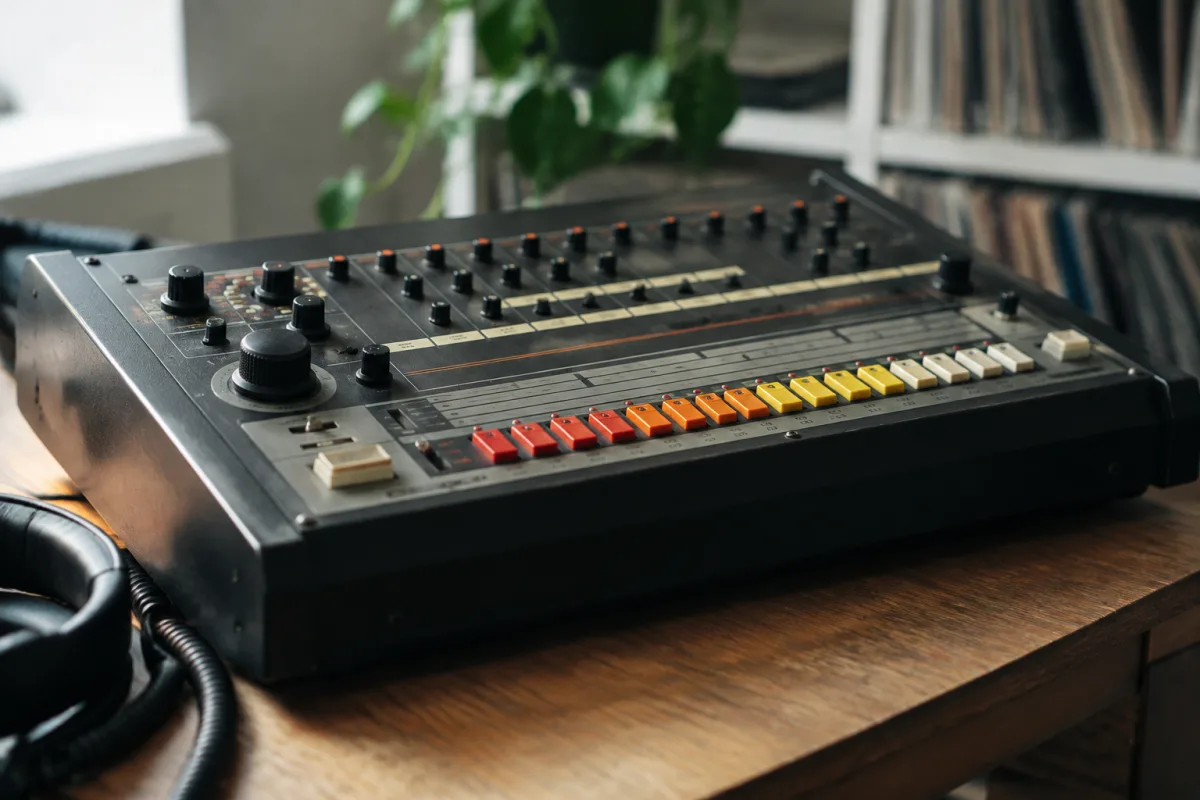
The Roland TR series represents some of music's most influential drum machines. From the TR-808 and TR-909 to modern hardware and software emulations, these instruments defined electronic music for over four decades. Whether you're sampling classic drum sounds, collecting vintage equipment, or exploring modern TR software, understanding the Roland TR lineage and capabilities is essential for electronic producers and musicians.
The Roland TR Legacy
Roland introduced the TR (Tempo Regulator) series in 1980 with the TR-808, a programmable drum machine that became the foundation of hip-hop, electro and electronic music. The TR-909 (1983) added acoustic drum modelling to the formula. Both machines defined generations of music and influenced countless producers. Though Roland discontinued them decades ago, their cultural impact remains profound, and collectors and producers still seek originals.
Iconic Models
| Model | Year | Key Sounds |
|---|---|---|
| TR-808 | 1980 | Deep kick, cowbell, conga; iconic bass drum with pitch sweep |
| TR-909 | 1983 | Acoustic-modelled drums; crisp snare and hi-hat; deep kick |
| TR-808D | 1987 | Digital version of 808 with expanded sound set |
| TR-707 | 1984 | Compact, portable; lighter sounds; perfect for live use |
| TR-727 | 1984 | Latin percussion version of TR-707 |
Sound Character and Aesthetics
Roland TR machines sound distinctive because they model drums mechanically and electrically rather than sample acoustic recordings. The TR-808's famous kick is purely synthetic—a voltage-controlled oscillator dropping in pitch. The TR-909's snare uses complex synthesis to approximate acoustic snare character. This synthetic approach gives Roland TR drums their unique, often non-realistic but deeply musical character.
Electronic producers prize this character precisely because it sounds different from real drums. A TR-808 kick cuts through a mix unmistakably; a TR-909 snare has warmth and personality no sampled snare quite captures. This is why modern DAWs and hardware still emulate these machines decades later.
Using Roland TR Machines Today
Vintage originals command high prices. A working TR-808 costs £3,000–6,000; a TR-909 ranges from £5,000–10,000. For most producers, modern software emulations offer identical sound at a fraction of the cost. Roland's official VST versions and third-party emulations (like Cuckoo and native Instruments recreations) sound virtually indistinguishable from hardware.
Some producers prefer hardware for workflow and tactile satisfaction. Sequencing on buttons and knobs feels different from clicking in a DAW. However, software offers advantages: instant recall, easy integration with other plugins, and zero maintenance.
Sampling and Integration
Many modern producers use TR samples rather than hardware or emulations. Drum libraries include hundreds of TR sounds, individual hits, loops and variations. Layer a Roland TR kick sample with your own drums for instant character. Use TR claps or snares to add crisp definition to soft, processed drum layers.
Live Performance with Roland TR
Hardware TR machines still see regular use in live electronic music performances. DJs and electronic artists value the immediate hands-on control and the tactile joy of knob-twisting and real-time pattern manipulation. Modern Roland has released updated versions—the TR-8 and TR-8S—which add modern workflow features while preserving classic sound.
Contemporary Roland TR Versions
- TR-8 (2015): Hardware emulation of the 808 and 909 with modern sequencing and connectivity.
- TR-8S (2020): Updated version with touch interface and expanded sound library.
- Roland Software VSTs: Official emulations of 808, 909 and 707 for DAW use.
- Third-party emulations: Numerous accurate software recreations of the original hardware.
Collecting and Maintaining Vintage Hardware
Vintage Roland TR machines require care. Batteries in older units corrode and leak, damaging circuits. Have units checked by technicians before purchase. Replacement buttons and encoders wear; professional repair costs money but extends lifespan. Many collectors maintain their machines as investments and creative tools, justifying the expense.
However, for most working producers, software offers better value. You get the sound, workflow flexibility, and zero maintenance at a fraction of the cost.
The Sound in Context
Listen to any classic house record from the 1980s, any hip-hop track from the 1990s and 2000s, and you're hearing Roland TR machines—often layered with other drums and samples, but unmistakably present. The sound is deeply embedded in electronic music culture. Understanding Roland TR machines means understanding modern music itself.
Conclusion
Whether through vintage hardware, modern emulations or sampled sounds, the Roland TR remains essential to electronic and popular music production. These machines proved that synthetic, non-realistic sounds could define entire genres. Every modern drum machine, every drum synthesizer, every electronic music production owes a debt to Roland's TR series. Explore them, learn their character, and you'll deepen your understanding of electronic music itself.


Comments