


Bluetooth to Mixer article
Bluetooth To Mixer for Beginners: A Complete Guide
If you're nervous about connecting your device to your mixer wirelessly, you're not alone. This beginner's guide shows you exactly how to set up bluetooth audio in just a few simple steps.
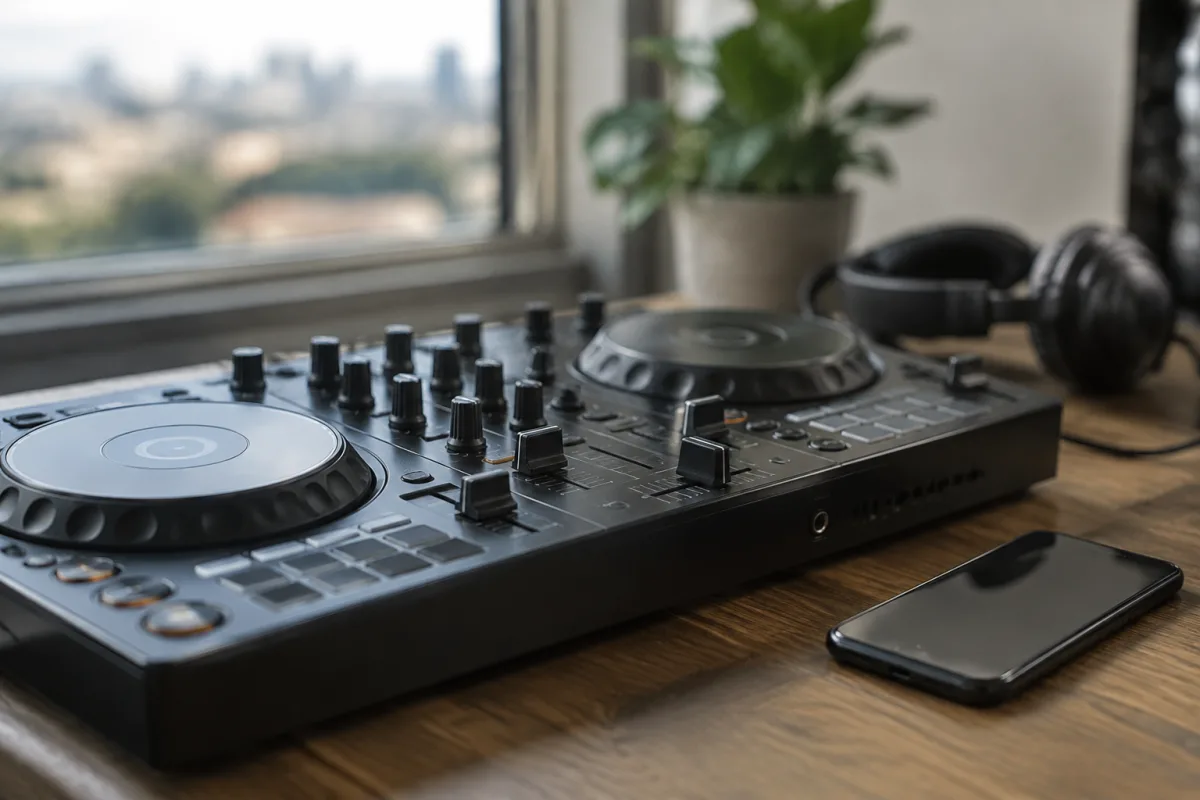
The first time you connect your phone to a mixer wirelessly, you might feel like you're doing something wrong—but honestly, it's simpler than most people think. If you're nervous about getting your device to connect via bluetooth, you're not alone. But here's the good news: once you've done it once, the whole process becomes automatic. This beginner's guide to connecting devices wirelessly walks you through it step by step, in plain language, so you can skip the jargon and just get your music playing.
Why Wireless Connectivity with Your Mixer Matters
Adding wireless connectivity to your mixer gives you the ability to play music from your phone, laptop, or tablet without tangling cables or hunting for aux ports. For bedroom DJs, casual streamers, and anyone just starting out, learning to use your device with your mixer via bluetooth opens up a whole new workflow. You can queue up tracks on your phone, adjust levels from your mixer, and suddenly you've got a genuine setup that feels professional—because it is.
The beautiful thing about modern wireless audio is that equipment just works. Your mixer either supports it or it doesn't, and if it does, there's usually nothing to configure beyond the first pairing. Once you've connected your device, you press play on your phone and the signal flows straight into your mixer. No mystery, no waiting around.
Does Your Mixer Support Wireless Connectivity?
Before you spend twenty minutes searching for settings that don't exist, let's check: does your mixer actually have wireless capability built in? The simplest way to confirm this is to flip through the manual (yes, really). Look for "bluetooth to mixer" or "wireless" in the contents. If the manual doesn't mention either, your equipment probably doesn't have this feature built in—and that's fine, because there are workarounds.
Most modern DJ mixers marketed as "beginner-friendly" or "home studio" equipment include wireless connectivity. Higher-end professional equipment sometimes skips it (because pro engineers use cables). Budget mixers occasionally include it. If you're just starting out and considering a new mixer, asking whether it supports this wireless capability is a perfectly legitimate buying question—and it's worth asking before you commit to a purchase.
Can't find the manual? Check the manufacturer's website or search "[Your Mixer Model] bluetooth" and see what comes up. A quick YouTube search for your mixer model often shows real people connecting their devices wirelessly, which is surprisingly reassuring to watch before you try it yourself.
The First-Timer's Checklist: What You'll Need
Getting your phone connected to your mixer wirelessly doesn't require anything fancy:
- A mixer that supports bluetooth or wireless audio
- A device with bluetooth—phone, tablet, or laptop (you almost certainly have one)
- Your mixer powered on and ready to go
- A willingness to spend maybe two minutes on pairing
That's genuinely it. You don't need special cables, adapters, or software. If your mixer has this feature built in, it's ready to use from the day you unbox it.
Setting Up Your Wireless Connection: The Actual Steps
Here's where nervous beginners often overthink things. Connecting via bluetooth to mixer is genuinely straightforward:
- Turn on your mixer. Power it up and let it settle for a moment.
- Find the wireless input. Many mixers have a dedicated button or a menu option for pairing. Press it. Your mixer is now looking for a device to pair with (usually this lasts about 30 seconds, so move quickly to the next step).
- Enable bluetooth on your phone, tablet, or laptop. Open settings, flip on the wireless feature, and wait for your mixer to appear in the available devices list.
- Tap your mixer's name in the list. It might be called something like "DJ Mixer," "[Brand] Speaker," or just the model name. Select it and confirm the pairing.
- Done. Your device is now connected. Open Spotify, YouTube Music, Apple Music—whatever you use—and press play. The audio flows straight through your mixer.
The first time you hear your phone's audio come through your mixer speakers, it's genuinely satisfying. You've just taken a major step forward. From now on, whenever your phone and mixer are both powered on and in range, they'll reconnect automatically—no re-pairing needed every single time.
Troubleshooting Your Wireless Connection
Nine times out of ten, connecting via bluetooth to mixer works immediately. But if you're in that one time, here's what to check:
Your mixer doesn't appear in the device list. The mixer might not be in pairing mode—look for a bluetooth button and hold it down for a few seconds. Some equipment requires you to navigate a menu; check the manual for the exact button combination. If it mentions "wireless pairing mode," that's what you're hunting for.
You see the mixer listed but can't connect. Try "forgetting" the device on your phone and pairing again from scratch. On iPhone, go Settings > Bluetooth, find the mixer, tap the info icon, and hit "Forget This Device." On Android, long-press the mixer's name and select "Forget." Now try pairing once more—this clears out any confused connection info and usually solves the problem.
The devices connect but you hear no audio. Check your mixer's input routing. Many mixers have multiple inputs, and wireless audio might be routed to a channel you haven't enabled. Look for the channel that corresponds to the wireless input and make sure it's not muted or faded all the way down. Also check that your playback device isn't muted—it sounds obvious, but it happens to everyone.
The connection keeps dropping. Move your device closer to the mixer. Wireless range is typically 10 metres, but interference from Wi-Fi routers or microwave ovens can weaken it. If you're in a very crowded radio environment (some clubs, for instance), a wired connection might be more reliable—but for home and casual use, this setup should stay solid.
Making This Setup Feel Like a Professional Workstation
Once everything is connected and working, you might feel like you need to do more. You don't. But here are some genuinely helpful next steps if you want to refine your workflow:
Label your mixer channels. If you're using the wireless input alongside other sources (like a turntable or aux cable), mark which channel is which so you don't accidentally fade out your wireless connection mid-set.
Keep your device charged. A dead phone in the middle of a session is frustrating. Keep it plugged in nearby, or at least make sure the battery's solid before you start playing.
Organise your playlists before you mix. Having your tracks queued up and ready keeps you focused on the mixing, not hunting through your music app.
Learn your mixer's volume levels. Audio levels can vary depending on your source device. Spend time finding the sweet spot where everything sounds balanced—not so loud that the mixer clips, not so quiet that you're wrestling with the volume fader constantly.
Common First-Timer Mistakes to Avoid
Having helped beginners set up wireless connectivity, here are the stumbles I see most often:
Forgetting to turn the mixer on. Seems silly, but it happens. Your mixer needs power before it can pair with anything.
Assuming your mixer has this feature when it doesn't. Before you spend an hour troubleshooting, double-check the specs. If your mixer genuinely doesn't support wireless audio, a USB bluetooth adapter (plugged into any available input) can work as a workaround—it's not ideal, but it's something.
Playing audio from multiple devices at once. Once connected, your device is paired—and if someone else tries to connect their phone, it might interrupt your connection. Keep the mixer paired to one device at a time for reliability.
Ignoring firmware updates. Some mixers receive improvements via firmware updates. If wireless connectivity feels unstable, check the manufacturer's website to see if there's an update available. A ten-minute update can make a massive difference.
What's Next After Getting Connected?
Once you've got this wireless setup working smoothly and it's second nature, you might want to explore other connection options. Many beginners discover that wired connections (aux cables or USB) offer slightly lower latency and more reliable range—useful if you're playing live or recording. But honestly, for practice, home sessions, and casual streaming, a bluetooth to mixer connection is plenty good enough.
If you want to dive deeper into how your mixer works, the manual is genuinely your friend. It sounds dusty, but it contains answers to almost every question you'll have about routing, channel assignments, and all the other settings. YouTube tutorials specific to your mixer model are brilliant too—watching someone else do it often makes everything click into place.
The wonderful thing about getting bluetooth to mixer working is that you've just unlocked a piece of real functionality. You're not just learning settings; you're building a workflow. That mixer sitting in front of you isn't just a box anymore—it's an instrument you can actually use. And mastering the basics of bluetooth to mixer connectivity? It's one of those practical skills that only gets easier with practice. You've got this.


Comments