


Brass Trombone for Sale Buying guide
Brass Trombone For Sale: A Complete Buyer's Guide
Buying a trombone requires knowing which specs matter. Learn what to look for to avoid frustrating choices and find an instrument that serves your playing.
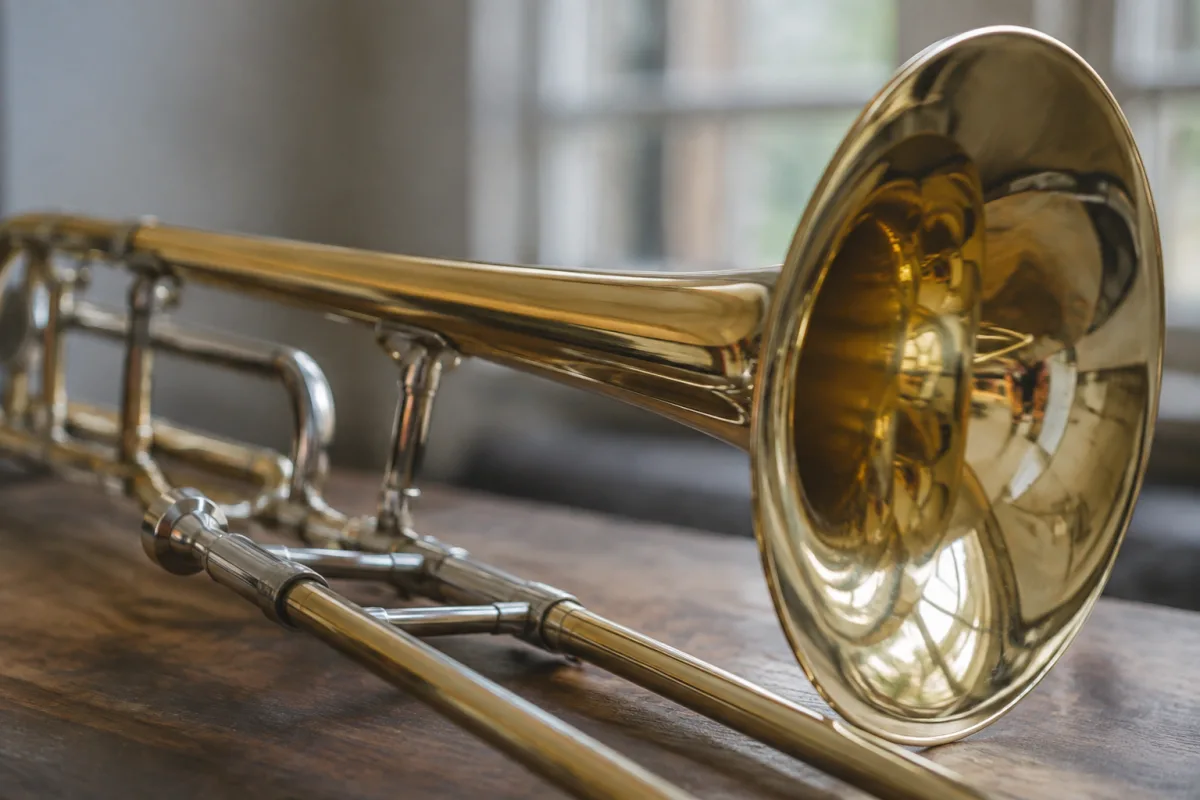
Buying a Brass Trombone: What Matters When You're Choosing
Buying a trombone is a significant decision. A good trombone opens musical possibilities; a poor one frustrates your playing and stalls your progress. Whether you're starting out or upgrading, knowing which specs genuinely matter — and which are marketing — prevents expensive regrets.
Understanding Trombone Types and Price Tiers
Tenor trombones are the standard. They're versatile, suitable for jazz, orchestral, and classical music. Valve trombones have valves like trumpets, offering different mechanics. Bass trombones are larger for deeper tones. For your first trombone, a tenor is almost certainly the right choice.
Price reflects genuine differences in quality and playability. Budget trombones (£400–£700) suit beginners learning fundamentals. The slide mechanism works, sound projection is acceptable, but tuning can be inconsistent and the bore (internal diameter) is often poorly designed. You'll outgrow these relatively quickly if you progress seriously.
Mid-range instruments (£700–£1,500) represent genuine jumps in quality. Tuning is more stable, slides move smoothly, and the bore is properly engineered for consistent tone. Most serious amateur and gigging trombone players land here. This tier delivers honest value.
Professional instruments (£1,500+) add refinement: superior materials, hand-finished slides, custom bore options, and tonal nuance. Are they worth triple the price of mid-range? For professionals and serious students, genuinely yes. For hobbyists, mid-range offers better value.
The Slide: Your Most Critical Component
The trombone slide is everything. A stiff, sticky slide frustrates your playing and tires your arm quickly. A smooth, responsive slide is a joy. Before buying any trombone, work the slide yourself — feel how easily it moves and returns.
Budget trombones often have poorly fitted slides that stick or rattle. You'll spend months fighting mechanical problems rather than developing your playing. Mid-range trombones have properly fitted, smooth slides that respond immediately to your control.
Inner and outer slide tubes must fit precisely. Even microscopic debris or misalignment creates problems. Quality trombones have tighter tolerances and better craftsmanship. Cheap trombones sometimes have slides that rattle or bind unpredictably.
Test the slide's return speed. A good slide returns quickly when you release pressure. A sluggish slide means poor inner/outer tube fit or inadequate bearing surfaces. This affects your ability to move between positions quickly and accurately.
Bore and Bell: Tone Foundation
Bore size (the slide's internal diameter) determines tone possibilities. Larger bores (0.547"+) produce warmer, darker tones and suit jazz and classical music. Smaller bores (0.500"+) are slightly brighter and easier to control for beginners. Most intermediate trombones use standard bore (0.525").
Bore consistency matters. Poor quality control results in slides that taper incorrectly, affecting tone uniformity across registers. Quality manufacturers maintain tight tolerances — your tone stays consistent whether you're in second position or seventh.
The bell (the flared section) impacts tone and projection. Thicker, heavier bells produce richer tones and project further. Budget bells are often thin. Mid-range and professional bells have proper thickness and weight.
Bracing and Construction: Durability Matters
Bracing (the metal supports connecting various sections) affects durability and tone resonance. Poorly braced trombones crack or develop leaks. Well-braced instruments last decades.
The connection between slide and bell must be absolutely solid. Loose connections create rattles, affecting tone and frustrating your playing. Quality instruments have solid connections; budget versions sometimes rattle despite appearing fine.
Check for dents and repair work. Dents in the bell or slide affect tone and slide movement. A trombone with old repairs is often fine, but verify the repairs are solid — a loose solder joint will fail again under performance pressure.
Tuning Slide Position: What Pros Understand
The tuning slide (near the bell) lets you adjust overall pitch. On quality trombones, when fully in, it leaves room for adjustment up or down. Poor instruments often have tuning slides that are either fully extended (can't go flat enough) or fully in (can't go sharp enough).
This matters hugely. Your trombone must tune to A=440Hz (standard pitch). If the tuning slide positions awkwardly, you'll struggle with consistent tuning throughout your playing career.
New vs Used: When Each Makes Sense
New trombones come with warranty and certainty of proper setup. You'll pay retail prices but know what you're getting. Used trombones can be superior if well-maintained — an older quality instrument often outperforms a cheaper new one.
When buying used, inspect carefully. Listen for rattles, work the slide multiple times, and check for dents or solder repairs. Ask the seller about maintenance history. A used trombone with documented care beats an unknown bargain.
If you're a beginner, new mid-range trombones offer simplicity and warranty support. If you're upgrading from a budget instrument, quality used trombones often deliver more value than new budget ones.
Common Buying Mistakes to Avoid
Buying based on appearance rather than playability. A shiny trombone that plays poorly is worse than a less glamorous one that feels fantastic in your hands. Play multiple instruments before deciding.
Choosing budget because you're "only learning." A poor trombone makes learning harder. Your embouchure (lip technique) develops poorly on instruments that are difficult to play. Invest in mid-range even as a beginner — the improved playability pays dividends in your progress.
Ignoring the slide. The slide is the most important component. A beautiful bell and bore mean nothing if the slide sticks or rattles. Always test slides thoroughly before committing.
Buying without trying it first. Trombones vary in feel and response. One instrument might be effortless; another might feel clumsy. If you must buy unseen (online), ensure the seller has a return policy.
Evaluating Before Purchase
Play a full range: low B-flat, middle B-flat, high F. Notice tone consistency and ease of playing. Work the slide from first to seventh position multiple times — feel for smoothness and resistance.
Play a scale you know well. This familiarises you with the instrument's response and personality. Every trombone plays slightly differently — find one that speaks to you.
Ask established trombone players for opinions. Local brass teachers often know which instruments hold up and which develop problems. Their experience is invaluable.
Making Your Final Decision
Budget £700–£1,500 for your first trombone. Prioritise smooth slide action, solid construction, and consistent tuning over cosmetics. Test multiple instruments. Choose the one that feels best to play, not the cheapest or the shiniest.
Your trombone will be your musical partner for years. Invest in quality, prioritise playability, and avoid budget instruments that frustrate your progress. The difference between a £500 and £1,000 trombone isn't just tone — it's playability, reliability, and the joy of having an instrument that responds to your intentions.
For deeper context on trombone types, history, and their role in different musical genres, read our complete guide to brass trombones for sale.



Comments