


Preamps for Guitar article
The Complete Guide to Preamps For Guitar
A guitar preamp shapes your tone before it reaches a power amplifier. Discover how tube, solid-state, and digital preamps for guitar work, and how to choose the right one for your style.
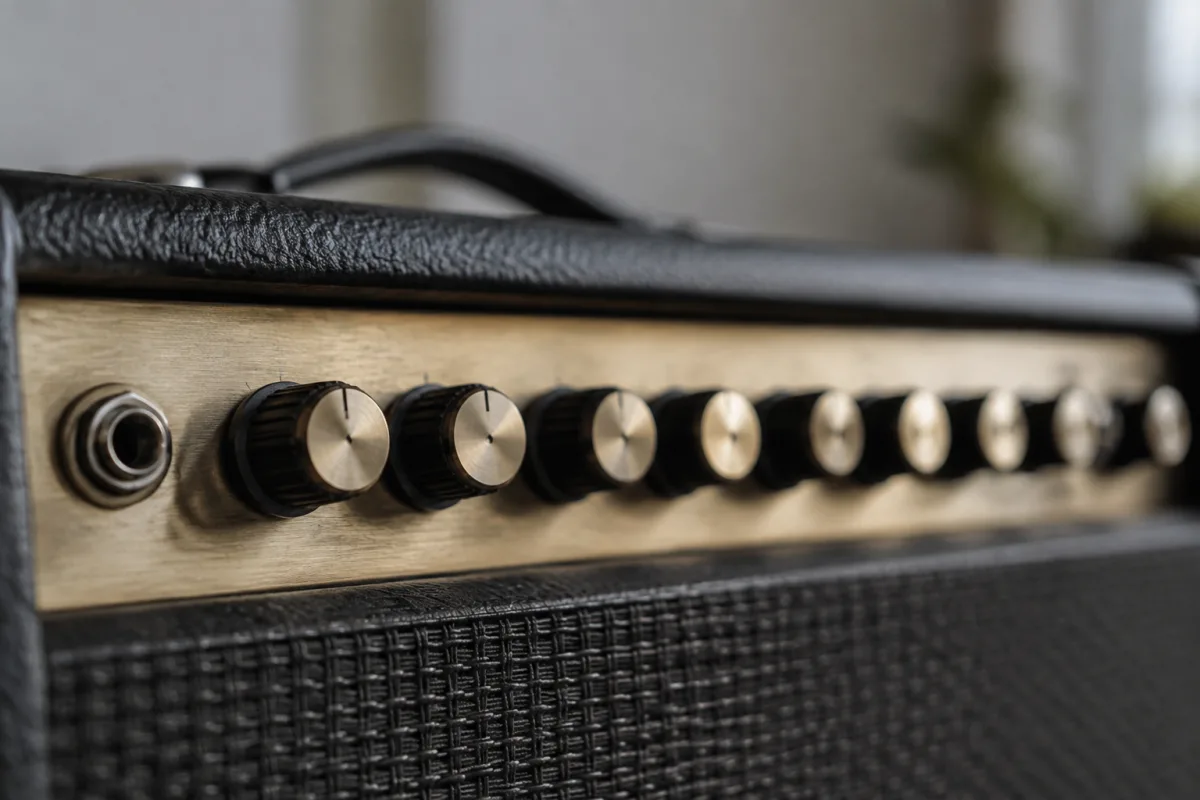
A guitar preamp shapes your tone before it ever reaches a power amplifier or audio interface. Whether you're tracking clean recordings at home, dialling in thick overdrive for live gigs, or sculpting vintage warmth in the studio, understanding how preamps for guitar work unlocks possibilities that a standard amp can't quite deliver. The good news? A quality preamp for guitar isn't a luxury—it's a practical tool that transforms how your instrument sits in a mix and how you interact with your signal chain.
What Does a Preamp for Guitar Actually Do?
A preamp for guitar is the first stage of amplification in your signal chain. It takes the tiny signal from your pickup—measured in millivolts—and boosts it to a usable level whilst applying gain and often EQ shaping. Think of it as your tone's first decision-maker. Before your signal reaches a power amp, a mixing desk, or an audio interface, the preamp for guitar has already coloured the sound, adding compression, saturation, or the warmth of tube circuitry.
Many guitarists confuse preamps for guitar with power amps. Here's the simple distinction: the preamp for guitar shapes and boosts your tone; the power amp delivers the volume. A decent amp combo includes both. If you're using a modelling unit, software, or a standalone interface, you're relying on a digital or solid-state preamp for guitar to establish your baseline tone.
Tube Preamps for Guitar: Why They Matter
Tube preamps for guitar remain the gold standard in studios and on professional stages because tubes introduce a natural harmonic richness that solid-state circuits can't quite replicate. When a tube preamp for guitar is pushed hard, it compresses gracefully, adding sustain and musicality rather than harsh distortion. That's why classic rock tones, from Hendrix onwards, rely on tube preamps for guitar.
The downside? Tube preamps for guitar are maintenance-heavy. Tubes wear out and need regular replacement. They generate heat and require ventilation. For touring, they demand roadies and spares. But if you prioritise tone above convenience, a tube preamp for guitar is worth the fuss. High-quality examples from brands like Mesa Boogie and Friedman deliver warmth and responsiveness that justifies their cost.
Solid-State Preamps for Guitar: Reliable and Neutral
Solid-state preamps for guitar offer consistency, affordability, and low maintenance. They don't colour your tone as aggressively as tubes, which makes them ideal if you want transparency or if you're managing your tone with pedals. A quality solid-state preamp for guitar sits invisibly in your chain, adding clean gain without colouration—or delivering crisp breakup when driven hard.
Modern solid-state preamps for guitar have narrowed the tonal gap with tubes considerably. Digital modelling has advanced to the point where many touring musicians use hybrid setups—perhaps a solid-state preamp for guitar paired with a power amp, with modelling handling specific tones. The flexibility is undeniable, and if reliability matters more than vintage warmth, solid-state preamps for guitar get the job done professionally.
Choosing Between Rack and Combo Preamps for Guitar
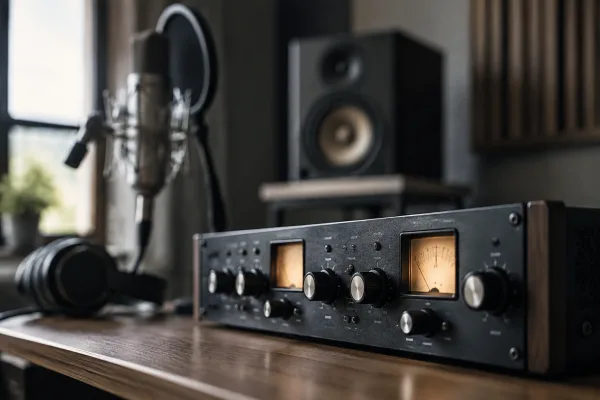
Rack preamps for guitar live in flight cases, paired with separate power amps and effects chains. They're modular, letting you build exactly the rig you want. A quality preamp for guitar in a rack setup might share a case with a power amp, compressor, and reverb—complete control, complete responsibility. They suit session players and touring professionals who demand flexibility.
Combo amps, where the preamp for guitar and power amp live together, are simpler. You buy one unit, plug it in, and play. Most gigging musicians favour this straightforward approach. The downside is less modularity—if you want to upgrade just the preamp for guitar, you're replacing the whole amp. But if simplicity and proven reliability matter, a good combo with a solid preamp for guitar is all you need.
Preamps for Guitar in Your Pedalboard and Effects Chain
Pedalboard-mounted preamps for guitar are becoming increasingly popular. Units like the Boss ME-80 or Kemper Stage integrate a full preamp for guitar into your effects ecosystem, letting you switch tones mid-gig alongside your delay and reverb. These digital preamps for guitar are remarkably sophisticated—they model classic tube amps, add effects processing, and record your settings for instant recall.
For bedroom musicians and home recordists, a solid software preamp for guitar—whether inside your DAW or as a plugin—handles tracking beautifully. You get unlimited tonal options, instant comparisons, and no valve replacement costs. The trade-off is that most software preamps for guitar lack the tactile immediacy of hardware, which some players miss.
How to Get the Best From Your Preamp for Guitar
Gain structure is crucial. Set your preamp for guitar so it clips the input stage at a healthy level—not barely moving, not crushed. A good preamp for guitar with proper gain staging will respond dynamically to your playing: pick harder and you get more natural saturation; play gently and it stays clean. This responsiveness is what separates a good preamp for guitar from a lifeless one.
Understand your EQ controls. A basic preamp for guitar might offer only a three-band (bass, mid, treble). Better preamps for guitar add a mid sweep, allowing you to sculpt problematic frequencies. Parametric preamps for guitar let you target exact frequencies with surgical precision—essential in professional settings where your tone needs to sit perfectly in a dense mix.
Don't ignore the tone stack. Even a simple preamp for guitar can sound radically different depending how you voice its EQ. Many guitarists set a preamp for guitar flat and wonder why it sounds dull—they're missing the entire point. Spend time with the controls. A preamp for guitar's character often lies in how its EQ colours the midrange.
Portable Preamps for Guitar: Travel and Recording
If you're recording at home or gigging frequently, a compact preamp for guitar offers genuine advantages. Lightweight, USB-interfaced preamps for guitar like the Kemper Player or Helix LT slip into a gig bag. They're not compromises—they deliver serious tonal depth in a form factor that travels as easily as your guitar itself. Many touring bands now use a single pedalboard-based preamp for guitar as their entire front end, eliminating the need for multiple amp heads.
For studio work, a high-quality preamp for guitar—whether hardware or software—becomes your secret weapon. Layer multiple preamps for guitar on the same take, panning and blending them to create width and richness. A single guitar with three different preamps for guitar settings, printed as separate tracks, can sound like an ambitious arrangement.
Building Your Ideal Signal Chain With a Preamp for Guitar
A thoughtful preamp for guitar sits early in your chain, after your guitar but before time-based effects like reverb and delay. Gain-staging from preamp for guitar into your effects means the effects receive a strong, stable signal. Many seasoned players use a dual-preamp for guitar setup—one handling clean tones, the other managing overdriven sounds—switching between them as songs demand.
Consider the preamp for guitar as the character of your tone; everything after it is seasoning. A great preamp for guitar with minimal effects will beat a mediocre preamp for guitar buried under layers of processing. Invest properly here, and you'll find yourself needing fewer effects to achieve professional results.
Getting Started With Preamps for Guitar
If you're upgrading your setup, prioritise finding the right preamp for guitar. Whether you choose a valve model for warmth, a solid-state preamp for guitar for transparency, or a digital preamp for guitar for versatility, the choice should reflect your actual needs. A bedroom guitarist needs something different from a touring musician or a studio session player.
A quality preamp for guitar is an investment that pays dividends across every genre and setting. Once you've heard how the right preamp for guitar shapes your tone—adding dimension, responsiveness, and character that feels uniquely yours—you'll wonder how you ever played without one. That's the moment you understand: the preamp for guitar isn't an add-on. It's the foundation of everything else.





Comments