


Jupiter Saxophone article
Everything You Need to Know About Jupiter Alto Saxophone
Jupiter saxophones balance affordability with genuine playability. Learn which model suits your level—from student 500 Series to the professional 1100 range.
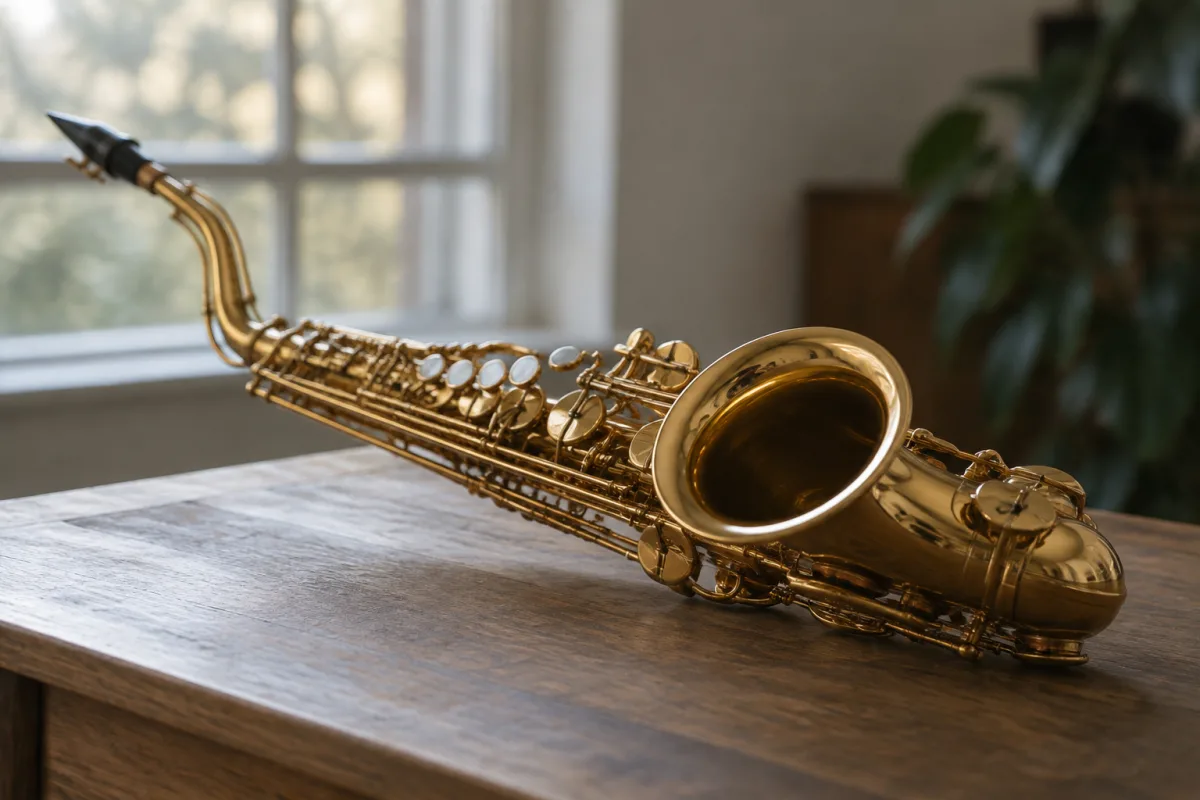
Jupiter is a Taiwanese manufacturer known for crafting saxophones that balance affordability with genuine playability—a formula that has made their instruments popular in school music programmes and advancing-student hands across the world. If you're shopping for an alto saxophone and haven't considered what Jupiter offers, you're missing a range of thoughtfully designed instruments at several price points.
The brand's strength lies in its straightforward model hierarchy: a 500 Series for beginners, a 700 Series for progressing students, and a 1100 Series for advanced players who want customisation and refinement. Each line builds on its predecessor, but you don't automatically need to buy up the ladder; the right choice depends on your playing level, ergonomic preferences and budget.
Understanding the Model Range
Jupiter saxophones are pitched in E♭, the standard alto-saxophone pitch, and they're available in several series, each defined by its intended audience and mechanical specification.
500 Series (JAS510): The entry point. Gold-lacquered brass body, neck and keywork, high F♯ key, stainless-steel springs and plastic tone boosters. It comes with a mouthpiece, ligature and cap, usually in a hard or backpack case depending on the region. The 500 is straightforward to maintain, approachable for a first-time buyer and competent enough for a teenager or adult beginner to progress steadily. If you're a school band director outfitting a programme, the 500 Series is often a practical choice: it won't break your budget and it will hold up to daily use.
700 Series (JAS700): The step up. Same gold-lacquered brass construction, but with adjustable palm keys and thumb rest, blue-steel springs (which may feel slightly different than stainless steel), PISONI pads with plastic resonators and more adjustment screws for regulation. The 700 is designed for players who've moved past the absolute basics and who benefit from ergonomic tweaks. If your hand size is unusual or your playing technique is established enough that you want a technician to fine-tune the feel, the 700 offers more opportunities than the 500.
1100 Series (multiple variants): The professional-oriented tier. It introduces a "Sona-Pure" neck—a Jupiter design that emphasises neck taper and resonance characteristics—plus even more adjustment options, separate stack adjustment screws, and your choice of finishes and resonator materials. The 1100 models include variants like the silver-plated JAS1100SQ, the mixed-finish JAS1100SGQ (silver plate with gold-lacquered keys), the distinctive Gilded Onyx JAS1100GOQ, and the Stellar edition JASSTRQ with a rose-brass neck and floral-engraved bell. This is where Jupiter starts offering personality and choice beyond pure performance.
Choosing Your Model: A Practical Roadmap
The right model depends less on the series number than on where you are as a player and what you need from an instrument:
- Beginner or school musician: Start with the 500 Series. It's uncomplicated, affordable and sufficient for learning fundamentals. Don't feel you need to invest more until your technique justifies it.
- Advancing student or casual performer: The 700 Series is the sweet spot for many players. The adjustable features and upgraded mechanical details pay dividends if you're playing multiple times a week, and the price jump is manageable.
- Advanced player seeking customisation: The 1100 Series offers the broadest range of finishes, neck designs and mechanical refinement. If you have established preferences about how an instrument should feel and respond, the 1100 line rewards your specificity.
- Player prioritising aesthetics: The Stellar and Gilded Onyx editions provide distinctive visual character without representing fundamentally different saxophones. They're for players who care how their instruments look as well as how they sound.
Construction, Finishes and Keywork
Most Jupiter models use brass bodies and necks with various finishes. Gold lacquer is standard across the 500 and 700 lines; the 1100 Series offers silver plate, mixed finishes and specialty lacquers. Finish affects appearance and feel more than sound—player technique and mouthpiece choice have far greater impact on tone than whether your bell is gold or silver.
Common mechanical features include the high F♯ key (standard on all modern altos), a detachable bell, adjustable thumb rest, and increasingly elaborate adjustment systems as you move up the series. The 1100 Series adds separate stack-adjustment screws on several key combinations, giving a repair technician more leverage during regulation and setup—which matters if you have specific ergonomic needs or if your playing style is developed enough to benefit from fine-tuning.
Keywork across the range uses either plastic or metal tone boosters (resonators). This is a component detail rather than a simple sound ranking. A well-maintained plastic resonator may perform identically to a metal one; what matters is that pads seat cleanly and regulation stays precise.
How Jupiter Compares
The immediate comparison set includes Yamaha (particularly their student YAS line), Selmer, Yanagisawa and Keilwerth. Yamaha's student models and Jupiter's 500 and 700 Series typically occupy the same price bracket and audience. Selmer instruments generally cost more and are often considered the standard reference for professional-level tone, though price and availability can vary by region. Yanagisawa and Keilwerth sit at a premium and tend to attract players with very specific ergonomic or sonic preferences.
Jupiter's strategy is straightforward: solid construction, sensible pricing and enough mechanical adjustability to grow with a player. It's not the most famous name in the saxophone world, but nor is it a bargain-basement brand. Think of it as the reliable middle path—especially at the 700 level, where you get genuine mechanical refinement without the expense of true professional-tier instruments.
Setup, Maintenance and Long-term Care
Any saxophone's playability depends heavily on setup and regulation. Jupiter instruments are delivered with factory setup, but as-new setups vary—some dealers undertake a pre-sale check and adjustment, whilst others do not. When you're evaluating a new or used instrument, ask whether it has received professional setup. If not, budget for an experienced technician to inspect pads, regulation, octave mechanism and post alignment before you commit to heavy use.
Once you own one, routine maintenance means swabbing the bore after playing, checking that springs remain responsive, keeping pads dry and having pads replaced when they no longer seal. A good technician will charge £30–50 per pad replacement (often you'll need several), and regulation—fine-tuning the keywork—typically runs £50–150 depending on complexity and how badly the instrument has drifted. These are not Jupiter-specific costs; they apply to any saxophone.
If you're buying used, inspect low B♭ and palm-key notes carefully to check for leaks, test octave-key transitions around middle D through G, and listen for sticky keys and noisy rods. Budget for a full pad job and regulation if the instrument hasn't seen professional care recently.
The Bottom Line
Jupiter saxophones are competent instruments that don't pretend to be what they're not. The 500 Series is a solid entry point; the 700 Series is where many players find real value; and the 1100 Series rewards players who've developed enough taste and technique to appreciate customisation. They won't sound like a £4,000 Selmer, but they'll support your playing far better than a bargain-basement knock-off, and they'll hold value reasonably well if you decide to upgrade later. For a beginner, a school programme or a player hunting for a reliable stepping stone, that's a compelling offer.





Comments