


SSL Mixer Console Buying guide
Ssl Mixer Console: A Complete Buyer's Guide
Investing in an SSL mixer console requires careful consideration of budget, space, and workflows. This guide helps studio owners assess whether SSL equipment makes financial sense for their situation.
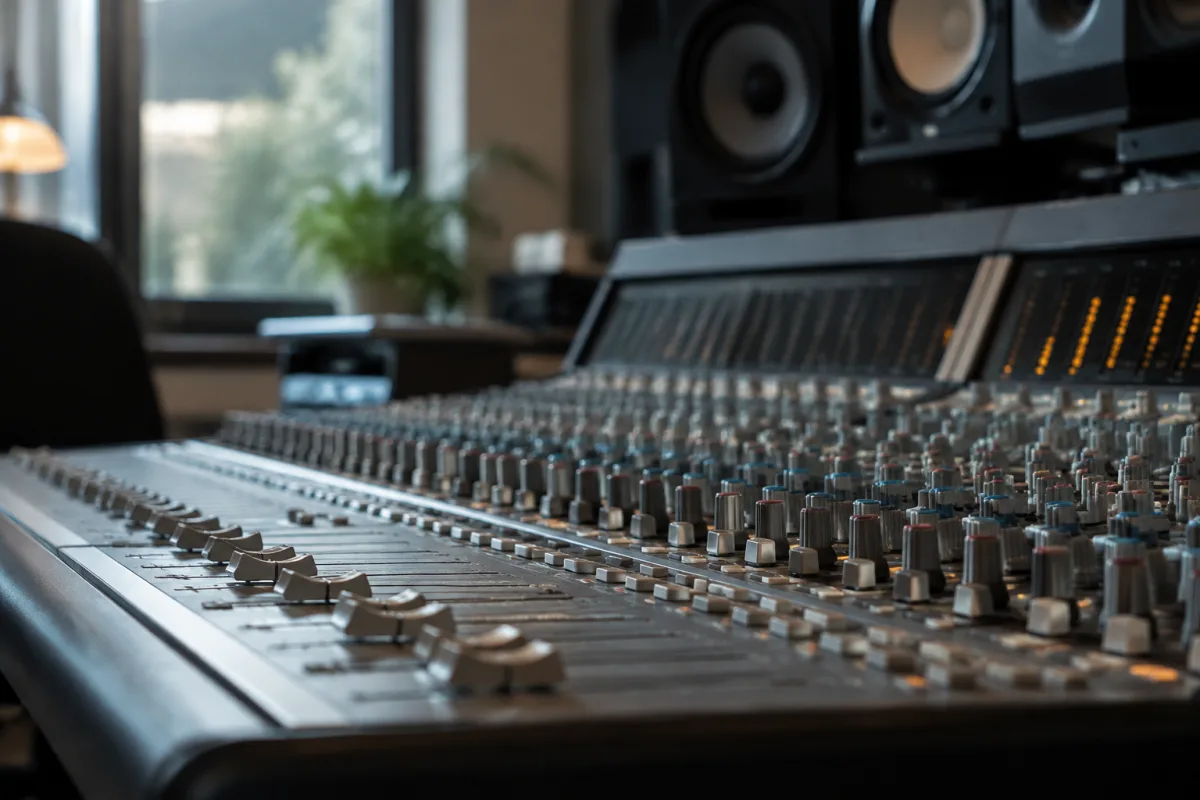
Investing in an SSL mixer console represents one of the most significant equipment decisions a professional studio faces, requiring careful consideration of budget, space constraints, desired workflows, and long-term facility goals. SSL consoles have shaped the sound of popular music for decades, with their distinctive topology, signal path, and summing stack becoming reference standards across the industry. This buying guide helps serious studio operators and facility owners assess whether an SSL console makes financial and operational sense for their situation and which model matches their specific needs.
Understanding SSL's Positioning in Studio Mixing
SSL mixer consoles occupy a distinct market position: they're not entry-level equipment, and they're not designed for every studio scenario. These are instrument-class tools deployed in major studios, broadcast facilities, and professional mixing environments where the console's sonic characteristics directly influence the character of recordings made on it. Understanding this positioning prevents wasting time considering SSL equipment for applications where more modest mixing solutions would deliver better value.
SSL manufactures several console series designed for different studio applications and budgets. The classic E and G series large-format consoles define the 1980s-forward sound of rock, pop, and hip-hop productions. Modern consoles like the UltraViolet and previous-generation AWS combine digital flexibility with SSL's legendary sonic character. Control surfaces and DAW controllers offer SSL workflows integrated with modern production techniques. Each category serves distinct professional needs.
Classic Large-Format SSL Consoles: The 4000 E/G Series
The SSL 4000 E (1980s) and 4000 G (1990s onwards) represent the foundation of SSL's reputation, appearing in virtually every major studio on Earth. These large-format analogue consoles deliver exceptional mixing capabilities, iconic sound processing, and workflow efficiency that remains relevant decades after manufacture.
Their primary advantage is proven track record: countless grammy-winning recordings demonstrate their sonic capabilities. Their summing topology, SSL's distinctive equalisers, and legendary SSL compressor characteristics have become reference standards. Many major studios maintain these consoles because the tonal signature clients expect is literally embedded in the equipment.
The practical drawback of classic SSL consoles is their size, maintenance requirements, and lack of modern digital capabilities. A 4000 G series console occupies significant studio real estate and requires regular servicing from specialists. They operate purely in the analogue domain—there's no built-in digital I/O or DAW integration without external converters. These factors make them impractical for many contemporary production scenarios despite their legendary credentials.
Modern SSL Console Options and Their Applications
The SSL UltraViolet represents the company's flagship modern console, delivered as a large-format mixing surface combining SSL's traditional topology with comprehensive digital integration. It accepts audio across multiple protocols, integrates with modern DAWs, and delivers the distinctive SSL character modern producers expect whilst offering capabilities classic consoles cannot provide.
The SSL AWS (Analog Warmth and SSL Synthesis) bridges analogue and digital workflows by providing classic SSL topology in a hardware surface with integrated digital engine. This console appeals to studios balancing traditional mixing approaches with modern production requirements. It occupies less physical space than classic consoles whilst delivering comparable mixing experience.
SSL's control surfaces and DAW controllers extend their workflow philosophy into studios already committed to digital production infrastructure. These solutions provide hands-on mixing control and SSL processing without requiring the substantial investment and physical footprint of full-sized consoles.
Critical Budget Realities and Financial Considerations
| Console Type | New Purchase Price | Used Market Price | Operating Costs | Lifespan Expectation |
|---|---|---|---|---|
| Classic 4000 G (used) | N/A | £40,000-120,000 | £2,000-5,000 annually (maintenance) | 40+ years (with service) |
| SSL UltraViolet (new) | £250,000+ | Rarely available | £1,000-3,000 annually (service) | 30+ years (expected) |
| SSL AWS (new) | £80,000-150,000 | £50,000-90,000 | £500-1,500 annually (service) | 30+ years (expected) |
| SSL Control Surface | £15,000-40,000 | £8,000-25,000 | £200-800 annually (service) | 20+ years (expected) |
Space, Infrastructure, and Installation Requirements
Large-format SSL consoles demand significant studio real estate. A 4000 G series console occupies roughly 24-32 square metres when you account for mixing position, equipment racks behind the console, and working space around it. Studios lacking this space cannot accommodate classic SSL consoles regardless of budget.
Electrical infrastructure matters as well. Large consoles require dedicated power circuits and proper grounding to function optimally. Studios with aging electrical systems may require significant upgrades before installing legacy equipment. Modern consoles impose less stringent requirements but still need professional installation ensuring proper grounding and cable routing.
Physical delivery and installation present logistical challenges. Large consoles require specialised transportation and installation by experienced technicians familiar with SSL equipment. Budget £5,000-15,000 for professional installation, delivery, and setup when acquiring used large-format consoles.
Workflow and Integration Considerations
Classic analogue SSL consoles operate in isolation from modern DAW workflows. This creates a workflow decision: do you run your mixing session entirely through the console, or do you attempt to integrate it into a DAW-based workflow? Each approach has practical implications.
Running sessions entirely through the console requires returning to analogue mixing approaches—you live with the console's routing, recall capabilities, and workflow paradigms. This appeals to traditionalists valuing the mixing experience but challenges producers accustomed to DAW-centric workflows.
Integrating legacy consoles into DAW workflows requires external digital converters, routing matrices, and control integration solutions that substantially increase complexity and cost. This hybrid approach can work but rarely feels as seamless as a purpose-designed system.
Modern SSL consoles solve this integration challenge by designing digital workflows into the platform. The UltraViolet and AWS both integrate smoothly with contemporary production environments whilst preserving SSL's distinctive mixing experience.
The Cost-Per-Hour Analysis: Real-World Financial Perspective
A professional SSL console is a capital asset that must generate revenue through billable studio time to justify its investment. Calculate realistically: if you purchase a £100,000 console and your studio operates 1,000 billable mixing hours annually, you're amortising roughly £50-100 per hour purely through equipment cost (across a 20-30 year lifespan), before accounting for maintenance, electricity, insurance, or other operating costs.
Studios with limited utilisation cannot justify SSL ownership financially. A console sitting idle between sessions generates no revenue whilst consuming capital and maintenance costs. Conversely, heavily-booked studios with premium hourly rates can justify SSL investment through enhanced facility capabilities and the sonic characteristics clients expect.
When SSL Console Ownership Makes Economic Sense
Studio ownership or management scenarios make SSL console ownership practical: when you're operating a professional facility with reliable client flow and premium hourly rates, when you're recording your own projects and will use the console regularly, or when you've calculated that console ownership yields better economics than outsourcing mixing to commercial studios.
Individual producer or engineer scenarios rarely justify SSL ownership unless you've reached the income level where a £100,000+ equipment investment is trivial relative to your annual revenue. Most successful producers rent console time at established facilities rather than purchasing their own consoles.
Expertise and Support Requirements
Operating professional SSL consoles at their full capability requires genuine expertise. Purchasing equipment doesn't automatically grant proficiency with its capabilities. Budget time learning the console thoroughly, potentially training with experienced SSL operators, and building competence before attempting critical projects.
Classic consoles require access to experienced service technicians familiar with their maintenance. As these consoles age, finding qualified repair services becomes increasingly challenging. Establish relationships with repair specialists before purchasing, confirm they service your region, and verify spare parts availability.
Modern consoles include manufacturer support and regular software updates. This ongoing support relationship represents genuine value differentiating new equipment from legacy systems maintained through third-party technicians.
Evaluating Your Studio's Specific Needs
Honestly assess whether an SSL console genuinely improves your studio's capabilities or simply represents equipment aspiration. Will clients specifically demand mixing on SSL equipment, justifying premium rates? Can you reliably book the console at utilisation levels justifying ownership costs? Are you purchasing because you genuinely need its capabilities, or because it represents a milestone acquisition?
These questions matter because SSL console ownership represents a significant long-term financial commitment. A £100,000 purchase represents roughly 1,000 hours of billable work at £100/hour studio rates—equivalent to a full year of operation before breaking even.
Further Resources and Information
For comprehensive information about SSL mixer consoles, their capabilities, and professional applications, explore our complete guide to SSL mixer console, covering detailed technical specifications, classic deployments in legendary studios, and the history of SSL's influence on modern recording.
Making Your Console Investment Decision
SSL consoles represent professional tools requiring serious financial analysis, not impulse acquisitions. Calculate genuine utilisation, verify realistic revenue generation, assess your technical capabilities, and honestly evaluate whether ownership beats alternatives. When the numbers support console ownership and your studio has the infrastructure to support it properly, SSL equipment delivers exceptional mixing capabilities and sonic characteristics justifying their legendary reputation.


Comments