


SSL Audio Console Buying guide
Ssl Audio Console: A Complete Buyer's Guide
Selecting an SSL audio console requires understanding channel configuration, architecture, processing, and workflow fit. This guide covers essential buying considerations.
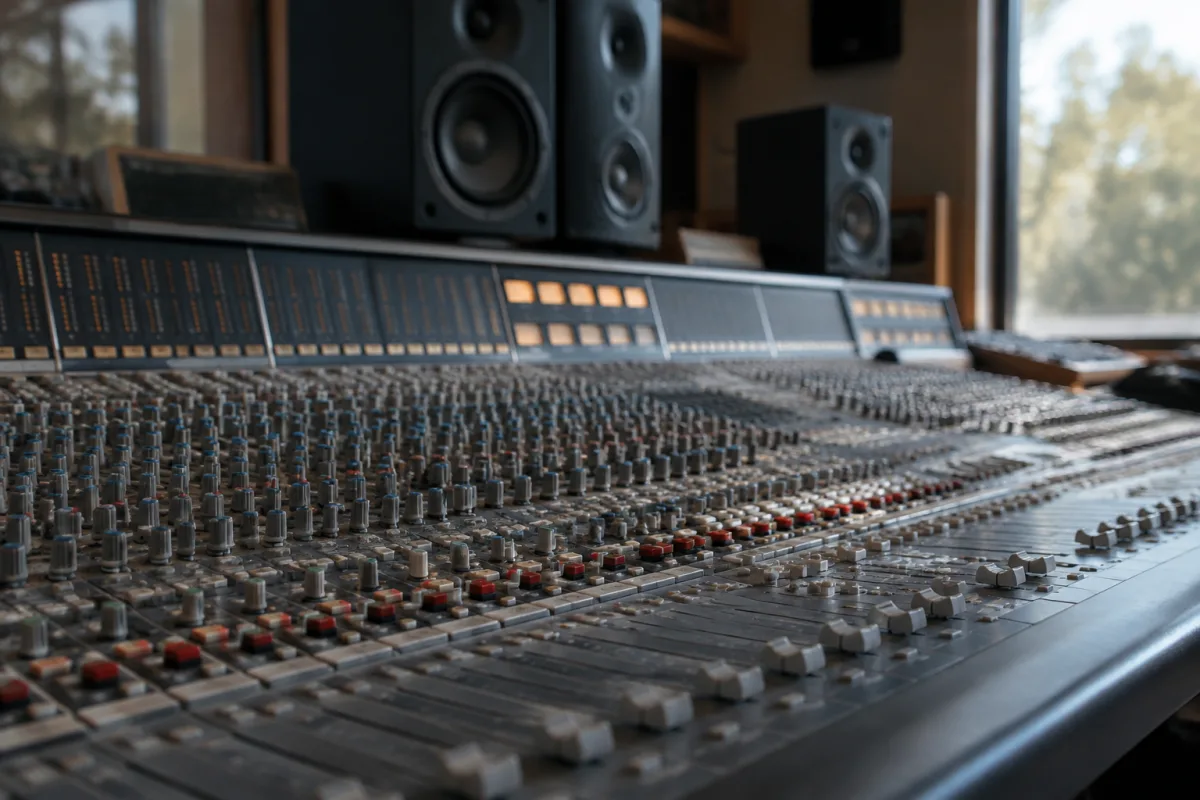
Choosing the right SSL audio console is a significant investment in any studio or live venue. The range spans from professional compact formats to sprawling live sound installations, and understanding which features matter for your workflow is essential. This guide focuses on practical buying considerations: what specs to prioritise, what to check in person, and how to match your needs to the right model.
Understanding SSL Audio Console Models and Categories
SSL manufactures several audio console lines targeting different users. The Duality and AWS Delta are popular in larger recording studios and broadcast facilities, offering analogue warmth with digital precision. The AWS (Axiom Wireless System) series, particularly the AWS 900, suits smaller studios and post-production suites. For live sound, the L-series (L8, L20) dominates medium to large venues and touring rigs. Each category sits in a different price bracket and serves a distinct workflow, so matching your application comes first.
Identify your primary use before comparing specific models. Are you recording music, mastering, broadcasting, doing live sound, or a hybrid? This decision narrows the field significantly. A mastering room requires different channel architecture than a tracking room, which differs from a touring live console. Each SSL audio console type is designed for a specific application, so intentionality saves time and money.
Channel Count and Configuration: The Foundation
Channel count is typically the first specification you'll examine when evaluating an SSL audio console. These models range from 32 to 128 channels (sometimes more with expansions); live sound options commonly feature 32, 40, or 64 channels of input. Your decision depends on the maximum session complexity you'll handle simultaneously.
Don't over-specify your purchase. Many studios and venues buy more channels than they actually use, inflating price and physical footprint unnecessarily. A 72-channel SSL audio console sits in your space whether you're using 40 channels or all 72. Instead, choose a count that covers 80% of your typical sessions, leaving headroom for occasional complex projects or large events. Dante networking allows most modern systems to expand channel count dynamically, so future scaling is possible without purchasing an entirely new desk.
Analogue vs. Digital Architecture
SSL audio console models fall broadly into analogue and hybrid architectures. Pure analogue consoles (like the Duality) route audio through analogue circuits, offering the warm, compressed character many engineers prefer for mixing. Hybrid designs (like the AWS series) use digital mixing engines with analogue summing or analogue ins and outs, combining benefits of both worlds.
For recording and mixing, the analogue circuitry found in SSL audio consoles is valued for its harmonic colouration and natural saturation. If colour and character are central to your sound aesthetic, prioritise analogue designs. For live sound, digital architecture offers flexibility and recall accuracy, making it the practical standard. Consider your sonic priorities and workflow expectations before deciding which architecture suits your SSL audio console application best.
DSP, Plug-ins, and Onboard Processing
Modern consoles include significant onboard processing: EQ, compression, reverb, and effects. Some come with plug-in compatibility, allowing you to expand the sonic palette. Check what's included out of the box versus what requires additional licensing or purchase.
The depth and quality of onboard EQ and dynamics processing vary significantly. SSL's legacy 4000 E and 9000 E channel strips set an industry standard — if those are your reference, confirm that newer models match or exceed their capabilities in the areas you care most about. Some engineers prioritise SSL's Stereo Image Processor, others the Master Fader or bus compression. Audit the specific processors you'll rely on daily before committing.
Automation: Depth of Control
Automation depth separates affordable consoles from professional-grade installations. Entry-level models typically offer fader automation on major parameters (level, pan). Premium models extend automation to nearly every knob, switch, and parameter — a game-changer for complex mixes and live event management.
For recording and mixing, comprehensive automation is a quality-of-life upgrade but not essential if you're disciplined with technique. For live sound or broadcast, parameter automation (recall of exact fader positions, effects settings, routing between scenes) is often non-negotiable. Define what you'll automate regularly, then check that the console supports it without limitation.
Connectivity and Networking
Modern systems support multiple audio networking standards: Dante (most common in professional audio), AES67, or proprietary protocols. Dante offers excellent range, reliability, and ecosystem maturity. When evaluating your SSL audio console options, check whether the model integrates Dante and whether it's optional or standard.
Consider your wiring infrastructure. A system with 32 channels of Dante offers enormous flexibility — you can position stage microphones or outboard gear anywhere within your venue and route them over networked cables. Older console designs using analogue XLR or AES digital I/O require physical wiring runs, limiting scalability. For any venue or studio expecting future growth, Dante-enabled SSL audio consoles are more future-proof.
Ergonomics and Workflow
Spend time behind each console model you're seriously considering. Console design profoundly affects your working speed and comfort during long sessions. Check fader resolution (are they smooth and responsive?), button placement (can you work intuitively without hunting?), and monitor screen visibility and responsiveness (is the interface legible and quick?).
Channel strip layout matters. Some consoles dedicate one fader and processing section per channel; others use a more compact layout with a split screen or secondary control surface. Both approaches work, but one will align better with your muscle memory and workflow style. A console that feels awkward in the first hour often remains frustrating months later.
Mixing Capabilities: Busses, Sends, and Routing Flexibility
Examine the auxilliary send and bus architecture. Recording consoles typically feature 4–8 stereo auxes for effects returns or stems; live consoles feature more sends for monitor mixing. Count the matrix outputs and subgroup busses — these define how flexibly you can route audio and build complex mixes.
For live sound, confirm monitor send count per channel. A mixing engineer managing a 12-piece band needs at least 6–8 independent monitor mixes, ideally with tap points before or after the channel fader. Recording consoles rarely offer this depth because mixing monitoring is not the application.
Price, Lease, and Total Cost of Ownership
New models range from approximately £50,000 (compact digital mixers) to £500,000+ for large analogue desks with full redundancy. Used SSL audio consoles offer significant savings — a decade-old but well-maintained unit often performs identically to a new model at half the price.
Beyond purchase price, factor in installation, cable runs, networking infrastructure, ongoing maintenance, and eventual upgrades. Many venues and studios lease consoles for major events or temporary setups, spreading cost over time. Understand your total budget including these factors before selecting your SSL audio console.
Support and Spare Parts Availability
SSL provides solid support and maintains spare parts for older models, which is rare in pro audio. Before buying used or selecting any model, confirm that local support and parts availability match your geographic region and expectations. A console without accessible support becomes a liability if it requires service.
Try Before You Buy: The Essential Step
If possible, arrange a hands-on session with your target model. Many vendors and rental houses allow demos or trial periods. Spend at least a few hours actually mixing or operating the console, not just observing. The experience will reveal ergonomic details, workflow fit, and sonic character that specs alone cannot convey. This step has prevented countless regretted purchases in professional audio.
The Choice: Matching Needs to Reality
SSL audio consoles are designed for professionals who demand reliability, sonic quality, and workflow efficiency. Selecting the right model is about matching your specific application, budget, and working style to SSL's product range. Channel count, architecture, networking, and ergonomics are your primary decision drivers. Take time with each consideration, audit potential models in person, and prioritise long-term workflow fit over superficial feature count. A well-chosen SSL audio console will serve your studio or venue for many years, delivering professional results consistently.


Comments