
Speakers for Studio article
The Complete Guide to Speakers For Studio
Quality speakers for studio are your window into what recordings actually sound like—they reveal problems and ensure mixes translate accurately to professional-quality sound.
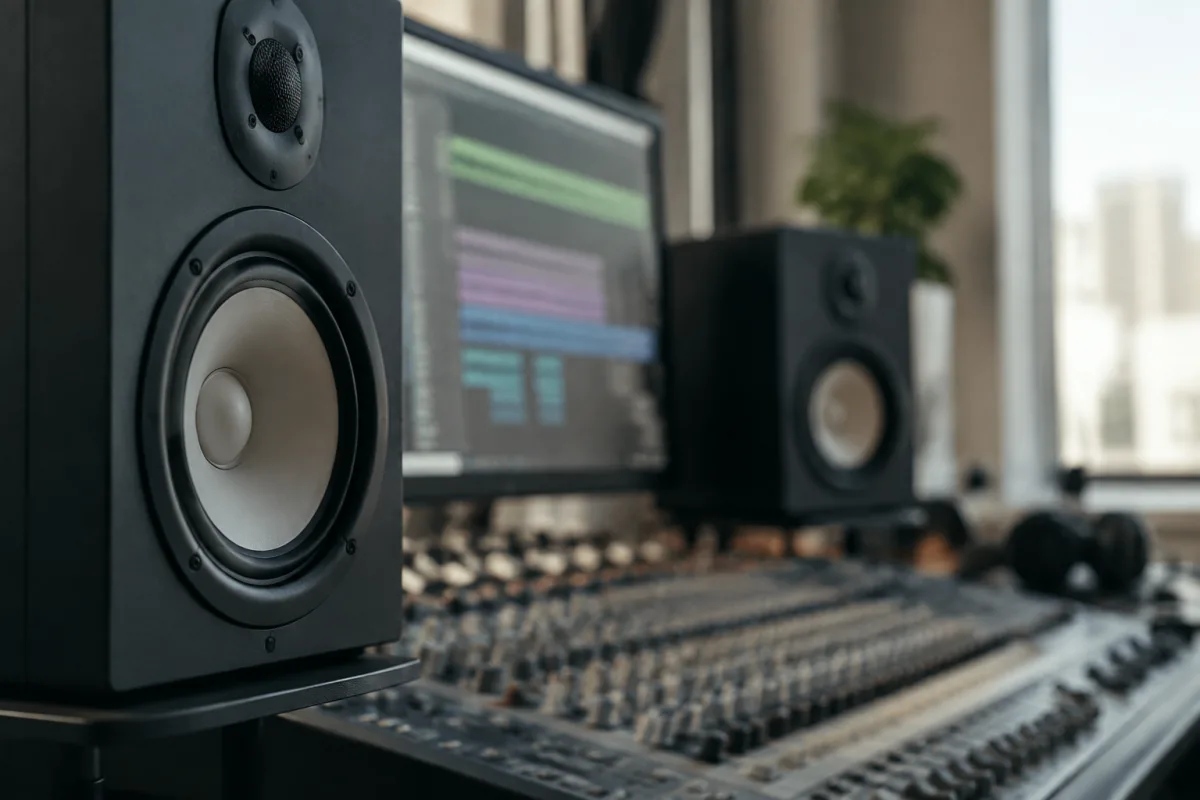
Quality speakers for studio are the difference between making confident mixing decisions and second-guessing everything. Your monitor speakers are your window into what your recordings actually sound like—they reveal problems masked by bedroom boom or laptop speaker coloration. Investing in proper speakers for studio transforms your ability to produce mixes that translate to professional-quality sound on other systems. Understanding what separates quality studio speakers from consumer alternatives helps you make investment decisions that pay dividends for years.
Understanding Studio Monitor Speakers
Speakers for studio serving as monitors differ fundamentally from consumer audio speakers. Studio monitor speakers prioritise accuracy over excitement—they reveal what's actually in your recording without colouring it. Consumer speakers might emphasise bass or treble to sound impressive; speakers for studio maintain flat response, showing you precisely what's there. This honesty matters tremendously when mixing. If bass is overemphasised in your monitoring speakers, you'll mix bass too quietly, and your mixes will sound thin everywhere else.
Active speakers for studio (with amplifiers built-in) dominate professional environments. They're easier to set up than passive speakers requiring separate amplifiers, and they're optimised for their specific speaker design. Most quality speakers for studio are active models, particularly for home and small studio applications.
Speaker Placement and Room Treatment
Quality speakers for studio deserve proper placement. Positioning them at ear level when seated, creating an equilateral triangle between you and the speakers, optimises stereo imaging. Speakers for studio should sit on dedicated stands or monitor wedges, not shelves—isolation prevents reflections from the mounting surface affecting sound. Distance from walls matters significantly—placing speakers for studio too close to walls boosts bass unnaturally, creating false low-end perception.
Room treatment affects speakers for studio performance more than many recognise. Without basic acoustic treatment (bass traps, absorption panels), room reflections muddy the sound, making speakers for studio seem less accurate than they actually are. Proper treatment reveals the true potential of quality monitors.
Frequency Response and Monitoring
Quality speakers for studio offer extended frequency response, typically 40Hz to 20kHz or beyond. This range covers the audible spectrum plus some ultrasonics. However, more important than frequency extremes is accurate mid-range reproduction—that's where most musical content lives. Colourised response in midrange (presence peaks or scooped mids) makes speakers for studio misleading rather than revealing.
Some speakers for studio emphasise nearfield monitoring—they're designed for close listening distances (typically 1-2 metres), making room acoustics matter less and direct sound domination more. Nearfield speakers for studio suit small rooms where treating the entire space isn't practical. Farfield monitors work better in larger, properly treated spaces.
Power Rating and Volume Headroom
Power rating on speakers for studio indicates amplifier capacity, typically rated in watts. For bedroom studios, 50-100 watts per speaker suffices. Professional studios might employ 200+ watt monitors. More power provides headroom—ability to reach reference levels without distortion. Adequate power ensures your speakers for studio can handle peaks without compression or distortion, allowing accurate mixing at comfortable listening levels.
Mixing at consistent reference levels is essential. Quality speakers for studio allow you to maintain -20dB to -18dB peak levels (industry standard), at which most mixing decisions are made reliably. Insufficient power forces mixing at low levels, compromising mix accuracy.
Types of Drivers and Crossovers
Quality speakers for studio often use multiple driver types: woofers for low frequencies, midrange drivers, and tweeters for highs. This multi-way design allows each driver to operate in its optimal frequency range. Crossovers (electronic circuits dividing frequencies between drivers) critically affect how speakers for studio sound. Quality crossovers blend drivers seamlessly; poor ones create audible transitions between drivers, muddying speaker response.
Single-driver speakers for studio exist and can be impressive, offering seamless response across their frequency range. However, true wideband accuracy often requires multi-way designs handled by quality crossovers.
Budget Considerations
Quality speakers for studio don't require bankruptcy-inducing investment. Respected brands offer professional monitors starting around £150-200 per speaker. This entry-level tier delivers genuine accuracy and suits most home studios. Mid-range speakers for studio (£300-600 per speaker) add refinement and extended bass response. Professional studio monitors (£1000+ per speaker) provide near-mastering-quality monitoring.
Mixing on unreliable monitors is genuinely harmful—your mixes translate poorly everywhere else, creating frustration and wasted time. Investing in quality speakers for studio (even modest versions) is worthwhile sooner than upgrading to expensive microphones or preamps that reveal problems your monitoring speakers hide.
Acoustic Correction Technology
Modern speakers for studio often include room correction features—equalisers compensating for known acoustic problems. Some include boundary EQ switches accounting for wall proximity. These tools help speakers for studio maintain accuracy despite imperfect room treatment. However, they're supplements to, not replacements for, proper placement and basic acoustic treatment.
Headphone Alternatives
Professional headphones can supplement (but shouldn't replace) quality speakers for studio. Headphones offer isolation from room acoustics but introduce ear-related colourisation. Mixing exclusively on headphones produces mixes that sound wrong on speakers—and vice versa. Best practice uses both: rough mixing on speakers, detailed work potentially involving headphones for spotting specific issues, final decision-making always on speakers.
Maintenance and Cable Quality
Quality speakers for studio deserve proper care. Keep them clean, avoid extreme temperatures, and use quality cables connecting them to your interface. Cheap cables introduce noise and colourisation undermining speaker accuracy. XLR cables from respected manufacturers cost little and protect your investment in speakers.
Speakers for studio are long-term investments. Quality monitors last 10+ years with minimal maintenance. That longevity makes investment in quality worthwhile—amortised across years of use, quality speakers for studio become affordable professional tools rather than luxury items.


Comments