
Speaker for Mic article
The Complete Guide to Speaker For Mic
The right speaker for mics reveals exactly what your microphone captures. Explore studio monitors, placement strategies, and how to select accurate speakers for your microphone work.
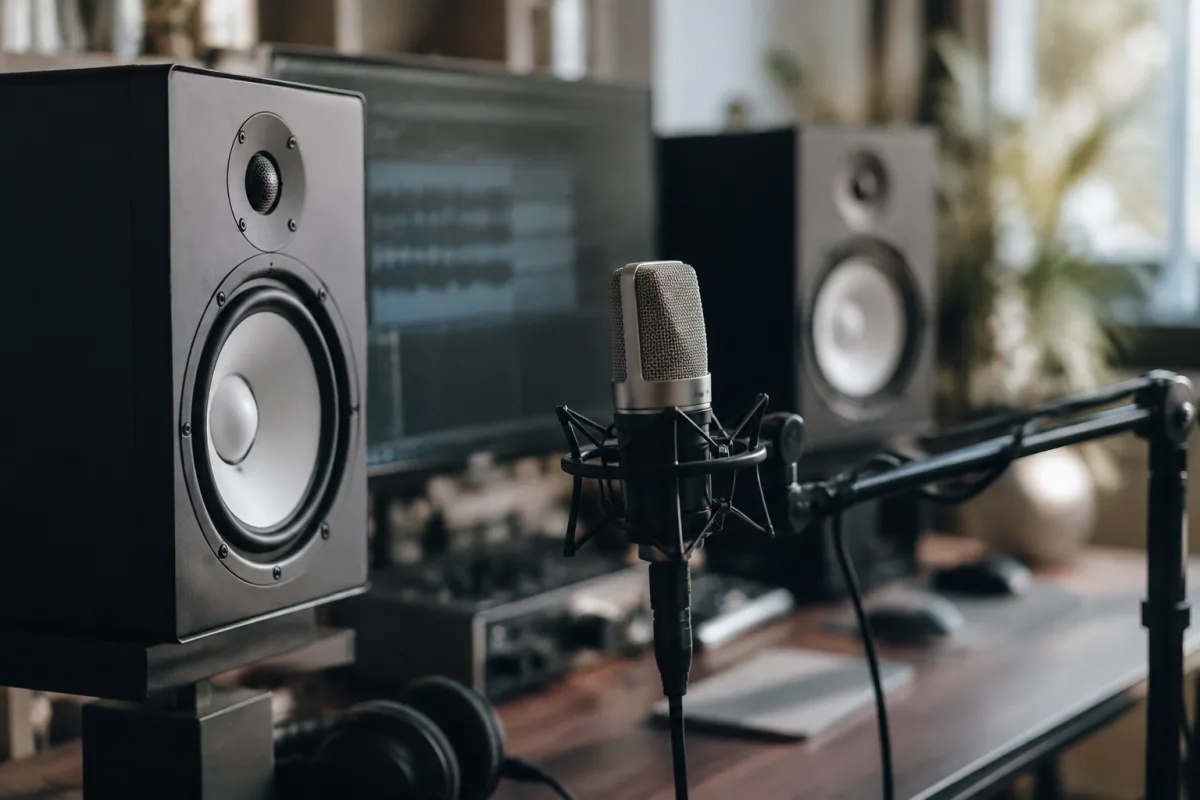
When you're recording vocals or working with microphones in any setting, the speakers you hear through matter profoundly. Whether you're monitoring a live performance, recording in a bedroom studio, or setting up a public address system, speakers for mics need to do something specific: let you hear exactly what the microphone is actually capturing, nothing more and nothing less. This guide explains what makes the right speaker for mic work essential, and how to choose one that serves your needs.
Why Speakers Matter in Microphone Work
A speaker for mic monitoring is fundamentally different from a hi-fi speaker designed for musical enjoyment. When you're working with a microphone—recording, performing, or presenting—you need speakers that reveal the uncoloured truth. A good speaker for mic lets you hear plosives you need to fix, proximity effects that need managing, and feedback frequencies that need avoiding. A speaker for mics prioritises accuracy over excitement. That means flat frequency response, honest midrange, and zero artificial enhancement.
Studio Reference Monitors: The Professional Standard
In recording studios, active speaker systems designed as reference monitors are the gold standard. A quality speaker for mic recording gives you accurate stereo imaging and a flat frequency response from roughly 50 Hz to 20 kHz. Studio monitors—powered speakers with built-in amplifiers—let you evaluate microphone tone without guesswork. The best studio monitor options use multiple drivers: a woofer for bass, a midrange driver for the crucial 200 Hz–2 kHz range where voices live, and a tweeter for brightness.
The difference between casual playback speakers and a genuine speaker for mic monitoring is dramatic. A studio monitor will reveal harsh sibilance a cheap speaker smooths over. It'll show you exactly how proximity affects bass response with your microphone placement. A speaker for mics in professional settings typically costs significantly more than consumer audio speakers, but that cost is recouped in faster recording decisions and better-quality takes.
Powered vs. Passive Speakers for Microphone Work
For microphone monitoring, powered speakers—those with built-in amplifiers—dominate. A powered speaker for mic work connects directly to your audio interface or mixer with just a single cable. No separate amp needed. This is why most studio monitors and live sound systems use powered designs. A passive speaker for mic work would require an external amplifier, adding complexity and cost without real benefit.
Powered speakers designed as speaker solutions for mics are more convenient and often deliver better integration between driver and amplifier. The manufacturer voices them together, so the amp's characteristics match the speaker's design perfectly. A speaker for mics should be powered unless you have specific reasons to prefer passive designs—and in microphone work, those reasons are rare.
Near-Field and Mid-Field Monitoring
Studio monitor sizing matters enormously for accurate speaker listening. Near-field monitors—small studio speakers sitting right in front of you—excel at revealing microphone detail. These speaker options for mic recording use small woofers (typically 4–5 inches) and are designed to work close to your ears. You sit 3–4 feet away, and you hear mainly direct sound from the speakers, not room reflections. A small speaker for mics in a bedroom studio is often perfect.
Mid-field monitors—larger speaker systems with 6–8 inch woofers—work better in treated control rooms where acoustic treatment manages reflections. These bigger speaker options for mic work give you more bass extension and work further from your listening position. Choose a speaker for mics based on your actual listening distance and room size, not based on aesthetic preference.
Frequency Response and Speaker Selection
For any speaker for mic monitoring, flat frequency response is essential. This means the speaker doesn't artificially boost treble, midrange, or bass. A truly flat speaker for mics might not sound immediately pleasant—it'll reveal flaws you'd prefer not to hear. That's the point. Some speakers marketed for mics claim near-flat response but add subtle brightness that makes everything sound good. Real monitoring requires absolute honesty.
Budget speaker options often have presence peaks around 3–5 kHz, making vocal recordings sound more impressive than they actually are. A genuine studio monitor used as a speaker for mic work avoids this flattery. Expect to hear a speaker for mics that sounds slightly duller than consumer speakers, particularly in the high frequency range. That dullness is accuracy.
Room Acoustics and Speaker Placement
A speaker for mic recording is only as good as its environment. Even excellent speakers will mislead you in an untreated room. Reflections from walls colour what you hear, making it impossible to make good mixing decisions with your speaker for mics. Professional studios use acoustic treatment—bass traps in corners, absorption panels on walls—to control reflections.
If you're using a modest speaker for mics in a home studio, position it carefully. Place your speaker for mics at ear level, centred between your listening position and the door. Keep it away from corners where bass accumulates. Don't push your speaker for mics against walls—they're designed to work with air space behind and around them. Even basic positioning care dramatically improves what you hear through your speaker for mics.
Speaker Size and Your Space
Bedroom studios work best with small speaker options—5–6 inch woofers maximum. These deliver adequate bass definition without overwhelming a small room. Larger speaker systems for mic monitoring need bigger spaces to work properly. A speaker for mics with an 8-inch woofer produces frequencies that need several metres to develop their character. In a cramped space, you'll hear only bloat.
Match your speaker for mics to your actual room dimensions. A bedroom studio with walls just 3 metres apart needs a compact speaker solution. A dedicated studio room with good dimensions can accommodate larger speaker systems. The best speaker for mics is one you can position properly and hear objectively in your actual space.
Live Sound and PA Speaker Speakers for Microphone Performance
In live settings, a speaker for mics serves a different purpose than studio monitoring. Rather than accuracy, you need coverage and intelligibility. Live monitor speakers positioned on stage let performers hear themselves with their microphone. These speaker solutions for mics are often wedge-shaped for floor placement, and they're typically more coloured than studio monitors—they're designed to sound engaging under performance conditions.
A quality speaker for live mic monitoring cuts through stage noise and delivers presence. These speaker options emphasise presence peaks (around 3–5 kHz) that make microphone vocals punchy and audible. Whilst these speaker characteristics would be wrong for critical studio work, they're exactly right when you need a performer to hear their microphone clearly over drums and other instruments.
Budget Speaker Options for Microphone Work
Not every setup needs high-end monitoring. Many bedroom recordists and podcasters work perfectly well with budget active speakers designed for speech and podcast recording. These speaker solutions for mics are often smaller and cheaper than studio monitors, but they deliver reasonable accuracy for voice-focused work. A budget speaker for mics—£150–300—can be genuinely useful if you understand its limitations.
Budget speaker options rarely deliver the bass extension or treble clarity of professional monitors, but they often provide sufficient accuracy for speech recording and basic vocal monitoring. A budget speaker for mics from a reputable brand is preferable to using consumer stereo speakers, which will mislead you consistently.
Making Your Choice: Selecting a Speaker for Microphone Work
Choose a speaker for mics based on actual use case. Studio recording demands flat-response monitors. Live performance needs present, engaging sound. Podcast recording benefits from a compact, accurate speaker solution. Home voiceover work suits small near-field monitors. Your speaker for mics should match your real workflow, not your aspirations.
Listen before you buy if possible. A speaker for mics that sounds honest to you is better than one with impressive specs you'll regret owning. Read genuine user reviews from people doing your type of work. A speaker for mics is an investment in hearing the truth about your microphone recordings—and that truth-telling is worth the cost.


Comments