


Dante Digital Audio Buying guide
Dante Digital Audio: A Complete Buyer's Guide
Dante has revolutionised professional audio networking, enabling studios and live sound systems to transmit pristine digital audio over standard network infrastructure.
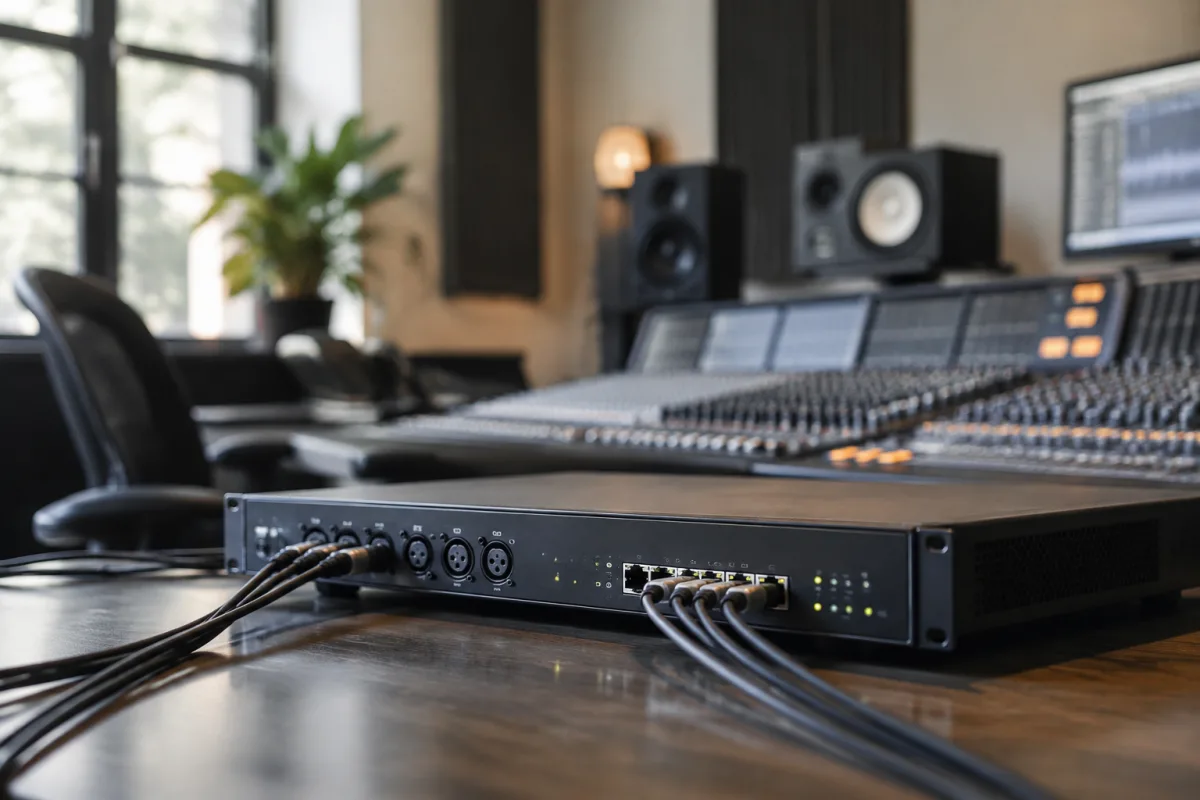
Dante has revolutionised professional audio networking, enabling studios, live sound systems, and broadcasting facilities to transmit pristine digital audio over standard network infrastructure. If you're considering incorporating Dante digital audio into your professional setup, understanding Dante's capabilities, compatible equipment, and practical implementation requirements ensures you invest wisely. This guide breaks down everything you need to evaluate before purchasing Dante-compatible gear.
Understanding Dante Digital Audio Technology
Dante is an audio-over-Ethernet protocol developed by Audinate that transmits professional-quality digital audio across standard network cables and switches. Unlike older audio networking protocols requiring specialised infrastructure, Dante leverages familiar IT networking technology, dramatically reducing installation complexity and cost. Dante delivers low latency (under 1 millisecond), multiple independent audio flows on a single network connection, and redundancy options for mission-critical installations. The technology appeals to studios seeking flexible signal routing, live sound professionals requiring remote equipment placement, and broadcast facilities needing distributed audio management. Dante supports standard network switching and synchronisation, meaning your audio infrastructure integrates seamlessly with existing IT systems.
Dante Equipment Categories
Dante-compatible products span numerous categories, each serving specific professional needs. Dante interfaces convert analogue or digital audio signals into Dante network format; these range from simple two-channel devices to complex multi-channel units. Network audio players and recorders allow audio files to be transmitted across Dante networks. Mixing consoles with integrated Dante connectivity eliminate separate interface purchases. Dante-enabled microphones and speakers represent the latest technology, embedding Dante directly into audio devices. Dante network devices like switches, converters, and diagnostics tools support Dante infrastructure. Dante software applications (controllers, monitoring tools) manage Dante networks on computers. Understanding which product categories solve your specific workflow needs prevents buying unnecessary gear or overspending on features you won't use.
Evaluating Dante Interface Quality and Features
Dante interfaces vary significantly in channel count, I/O options, and build robustness. Entry-level Dante interfaces (£200–£500) typically offer 2 to 8 channels of audio I/O with basic analogue and digital connectivity. Mid-range interfaces (£500–£1,500) provide 16 to 32 channels with extensive connectivity options and sophisticated metering. Professional-grade interfaces (£1,500–£5,000+) deliver massive channel capacity, redundant network connections for reliability, and robust build quality for touring environments. Assess your actual channel requirements—overbuying capacity wastes money whilst undersizing necessitates future replacement. Examine input/output options: analogue XLR connections suit traditional audio equipment, digital ADAT or S/PDIF inputs support external converters, and USB connectivity enables computer integration. Build quality matters for touring or permanent installation; robust interfaces withstand repeated transport and provide years of reliable service.
Network Infrastructure Considerations
Dante's biggest advantage—running over standard Ethernet—also requires thoughtful planning. Your network infrastructure must support Dante's bandwidth requirements; a single Dante flow at 48 kHz with 8 channels requires approximately 10 Mbps, whilst high-channel-count, high-sample-rate flows demand more bandwidth. Standard Gigabit Ethernet (1000 Mbps) easily handles dozens of simultaneous Dante flows, making it suitable for most professional applications. Network switches must support Dante's requirements; not every cheap network switch is suitable. Redundant network connections (dual Dante flows on separate networks) ensure mission-critical reliability, doubling cost but eliminating single points of failure. Professional Dante installations often employ managed switches with quality-of-service (QoS) features prioritising audio traffic. Budget for proper network infrastructure; cheap switches and inadequate cabling create dropouts and unreliability that undermine Dante's advantages.
Audio Quality and Latency Evaluation
Dante's reputation rests partly on transparent audio quality and minimal latency. Audio transported via Dante retains the quality of your original source—pristine audio remains pristine, whilst compromised signals stay compromised. Dante doesn't improve or degrade audio inherently; it simply transports it accurately. Latency is typically 1 millisecond or less, suitable for real-time monitoring and performance use. Some applications (particularly wireless microphone systems integrating with Dante) require sub-millisecond latency; verify your specific equipment meets these requirements. Test Dante audio quality through your ears—connecting Dante gear to monitoring systems and listening critically reveals whether audio quality meets your standards. Most professional installations report that Dante audio quality is indistinguishable from direct connections, a testament to the protocol's transparency.
Common Dante Digital Audio Purchasing Mistakes
Avoid these frequent errors when investing in Dante equipment:
- Assuming all Ethernet switches support Dante: Not all network switches are created equal. Cheap consumer switches might introduce latency or dropouts. Specify Dante-compatible switches and managed switches with QoS support for professional installations.
- Neglecting redundancy planning: Critical installations require redundant Dante flows and dual network connections. Mission-critical systems cannot tolerate single points of failure; plan redundancy from the beginning.
- Overlooking bandwidth requirements: Calculate total bandwidth for all your Dante flows before purchasing equipment. Saturating your network with excessive audio flows causes instability.
- Mixing incompatible Dante devices: While Dante is a standard protocol, devices from different manufacturers don't always integrate perfectly. Research compatibility before purchasing diverse gear.
- Ignoring proper cabling and network infrastructure: Dante transmission quality depends on network health. Cheap cabling, improper installation, or inadequate switching causes problems attributed incorrectly to Dante itself.
- Buying professional Dante gear without proper setup support: Complex Dante installations benefit from expert configuration. Budget for professional setup and consultation if you're not confident managing network audio.
Dante Compatibility and Ecosystem Evaluation
Before purchasing specific Dante gear, verify that equipment from different manufacturers works together reliably. Dante itself is an open standard, but individual manufacturers implement it slightly differently. Visit the Dante Manufacturer Alliance website for compatibility databases and certified product lists. Contact manufacturers directly if you're unsure whether your intended purchases integrate properly. Read user forums and reviews for real-world integration experience; some combinations work seamlessly whilst others require workarounds or firmware updates. Professional installations sometimes require custom configurations; don't assume that multiple Dante devices will "just work" without verification.
Backup and Failover Strategies
Professional Dante installations require backup planning. Redundant network connections allow the Dante network to continue functioning even if one connection fails. Secondary backup paths use alternative network routing to maintain audio flow. Some Dante systems support automatic failover, switching to backup pathways instantaneously when problems arise. Assess how much downtime is acceptable for your application—broadcast or live performance environments require instantaneous failover, whilst studio recording sessions might tolerate brief interruptions. Redundancy costs money; determine whether your application justifies the expense. Mission-critical installations typically incorporate multiple redundancy layers; casual studio use might forego elaborate backup infrastructure.
Making Your Dante Digital Audio Investment
Investing in Dante digital audio represents commitment to professional-grade, networked audio infrastructure. Clearly assess your specific needs—how many channels, what integration requirements, how many simultaneous flows. Research compatible equipment across multiple manufacturers. Calculate network bandwidth requirements and plan infrastructure accordingly. Evaluate whether redundancy is necessary for your application. For comprehensive context about Dante digital audio applications and deeper technical exploration, visit our complete guide to Dante digital audio. Invest thoughtfully in equipment compatible with your needs and infrastructure, and Dante will deliver years of professional-grade audio networking capability.


Comments