
Audio Jack Converter article
The Complete Guide to Audio Jack Converter
An audio jack converter bridges incompatible connector types, transforming frustrating equipment incompatibilities into seamless signal flow in your recording setup.
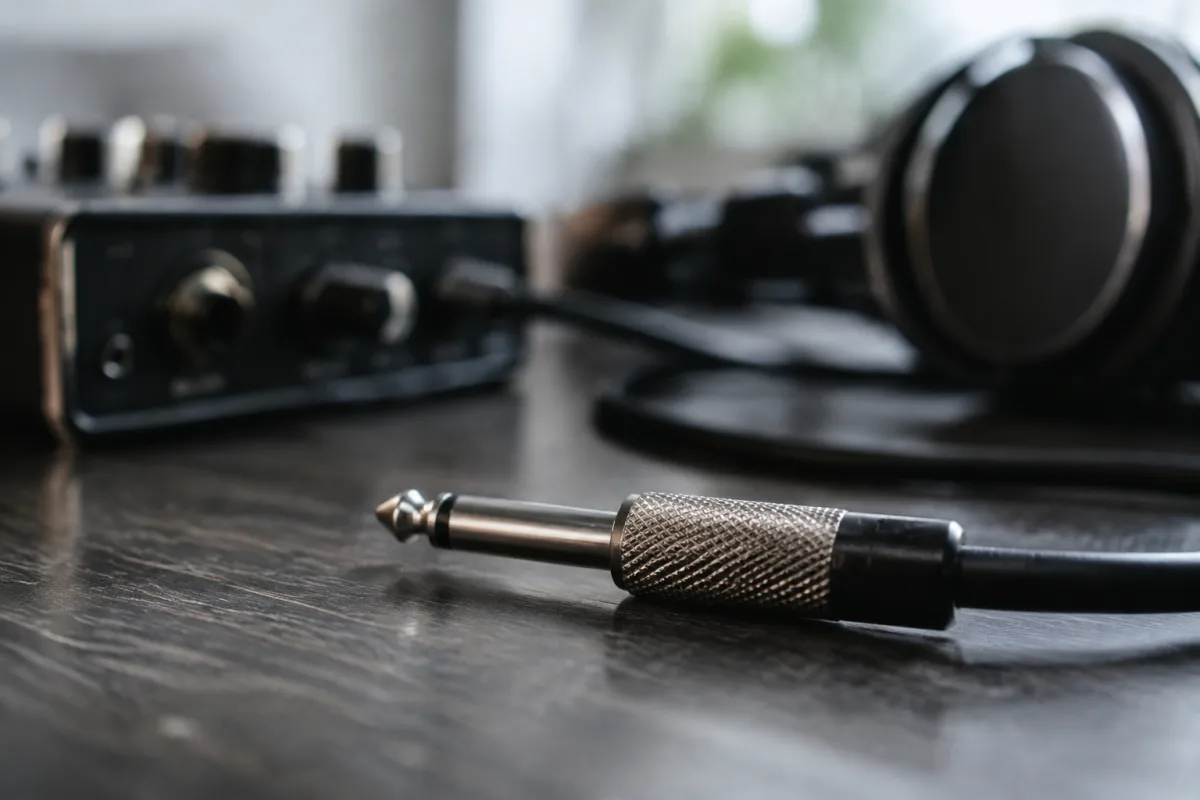
An audio jack converter is an essential studio tool that bridges incompatible connector types, allowing you to connect gear that would otherwise not work together. In modern recording setups where equipment spans decades and manufacturers, audio jack converters transform frustrating incompatibilities into seamless signal flow.
Understanding Audio Jack Converters
Audio jack converters are small adapters that change one type of audio connector to another. They're passive devices—no batteries or electronics required—making them reliable and long-lasting. Whether you're connecting vintage microphones to modern interfaces, routing unbalanced signals into balanced inputs, or adapting threaded XLR connections to standard jacks, an audio jack converter solves the problem instantly without signal loss or audio quality degradation.
Every studio and live setup encounters this scenario: perfect gear that won't connect to your system because the connectors don't match. An audio jack converter is the low-cost solution that every recording engineer and musician needs in their kit.
Common Audio Jack Converter Types
Different connector standards require different converters. Understanding which you need prevents purchasing mistakes:
| Converter Type | What It Does | Common Use |
|---|---|---|
| XLR to 1/4" Jack | Converts 3-pin XLR to 1/4" (6.35mm) mono or stereo jack | Connecting microphones to guitar amps; legacy gear integration |
| XLR to RCA | Converts XLR (pro audio) to RCA (consumer level) | Connecting studio gear to consumer audio equipment |
| 1/4" to 1/8" (3.5mm) Jack | Converts larger 1/4" jacks to standard headphone jack size | Connecting studio headphone outputs to portable devices; adapting consumer gear |
| Balanced to Unbalanced | Converts balanced signals (XLR or TRS) to unbalanced (TS or RCA) | Connecting professional preamps to consumer interfaces; vintage gear compatibility |
| USB Type-C to Audio | Converts USB-C digital connection to analogue audio jack | Connecting modern smartphones and tablets to audio interfaces; adapter-free headphone monitoring |
| Phono Connector | Converts standard jack to turntable phono input | Integrating turntables into modern audio systems |
Quality Matters: Choosing the Right Audio Jack Converter
Not all audio jack converters are created equal. Professional studio converters differ from cheap alternatives in build quality, shielding, and durability. A quality audio jack converter should feature gold-plated connectors that resist corrosion and improve conductivity, solid machined bodies that withstand repeated connection cycling, and proper internal shielding to reject interference.
Cheap converters made from thin plastic degrade quickly, develop intermittent connections, and can introduce hum or noise into your signal path. Professional-grade converters cost slightly more but perform flawlessly for years. When choosing an audio jack converter, prioritise brands known for studio reliability; the small additional cost is worthwhile for consistent, interference-free performance.
Balanced vs Unbalanced: Why It Matters
Understanding balanced and unbalanced signals helps you select the right audio jack converter for each situation. A balanced connection (typically XLR or TRS jack) carries the audio signal on two internal conductors within a shielded cable, making it immune to interference and suitable for long cable runs. An unbalanced connection (standard 1/4" TS or RCA) uses a single conductor and is prone to noise when cables exceed 20 feet.
If you're converting from balanced to unbalanced—for instance, connecting a professional preamp to a consumer audio interface—use a converter that properly handles impedance differences. A passive audio jack converter works fine for short runs, but longer cable runs (over 20 feet) benefit from active conversion or amplification to maintain signal strength.
Installation and Connection Tips
Using an audio jack converter correctly ensures clean audio and long component life. Always insert connectors fully until they click or seat firmly—loose connections introduce crackling, intermittent audio, or unwanted noise. Avoid leaving adapters connected under stress; if possible, support cables near the connector to prevent physical strain on the internal connections.
For microphone cables and phantom power applications, ensure your audio jack converter is rated for the voltage and current your equipment uses. When routing multiple cables, label your adapters to quickly identify which converts what signal type. Store converters carefully in a dedicated kit—disorganised cables and loose adapters create system noise and frustration during critical sessions.
Troubleshooting Common Issues
Despite their simplicity, audio jack converters can occasionally cause problems. A crackling sound usually indicates a loose connection; re-seat the connector firmly. If you experience intermittent audio dropouts, clean both the converter and the jack connector with an appropriate cleaner designed for electronics—oxidation or dust can break continuity. For persistent hum or buzz after connecting via an audio jack converter, check that your converter is shielded and properly rated for balanced connections if you're converting a balanced signal.
If audio level drops noticeably after connection, you may be converting from balanced to unbalanced with an overly long cable run; consider an active converter or shorter cables. Never force converters or cables into connectors; if something doesn't fit smoothly, stop and recheck—forcing can permanently damage both the adapter and your equipment's connector socket.
Building Your Audio Jack Converter Kit
Every studio should include a small collection of quality converters. A starter kit for a home or project studio includes: at least two XLR-to-1/4" converters (for situations like connecting a condenser microphone to a guitar amplifier), one XLR-to-RCA converter (for connecting professional gear to consumer playback systems), one or two 1/4" to 1/8" converters (for headphone monitoring on portable devices), and ideally a balanced-to-unbalanced converter with proper impedance handling for complex routing situations.
Professional studios maintain larger kits with multiple examples of each common type, allowing quick reconfiguration and backup adapters if one fails or goes missing during a session. Invest in a dedicated small cable box or pouch to organise converters; this saves time and prevents gear damage from searching through drawers for the right adapter.
When to Upgrade Beyond an Audio Jack Converter
For occasional incompatibilities, a quality passive audio jack converter solves the problem indefinitely. However, some situations demand more than simple adaptation. If you frequently need to convert balanced professional signals to unbalanced consumer levels over long cable runs, an active audio interface or preamp with multiple output formats eliminates the need for adapters. For complex studio rewiring where multiple audio jack converters would be needed, a larger mixing console with integrated conversion provides cleaner signal flow.
But for the 90 percent of situations—connecting unusual gear combinations, troubleshooting one-off incompatibilities, integrating legacy equipment, or handling occasional cross-format routing—a quality audio jack converter is the ideal, permanent solution.
Conclusion
A good audio jack converter is one of the most underrated tools in audio production. By understanding the different adapter types, prioritising quality construction, and building a small kit of essentials, you'll navigate almost every connector incompatibility your studio encounters. Keep a collection of quality converters on hand, and you'll never again be frustrated by equipment that won't connect. They're affordable, reliable, and indispensable for modern recording and performance work.



Comments