
Wireless Earbud Monitors article
The Complete Guide to Wireless Earbud Monitors
Wireless earbud monitors provide personalised audio mixes to performers during live shows, enabling confident performance and precise ensemble timing without cable encumbrance.
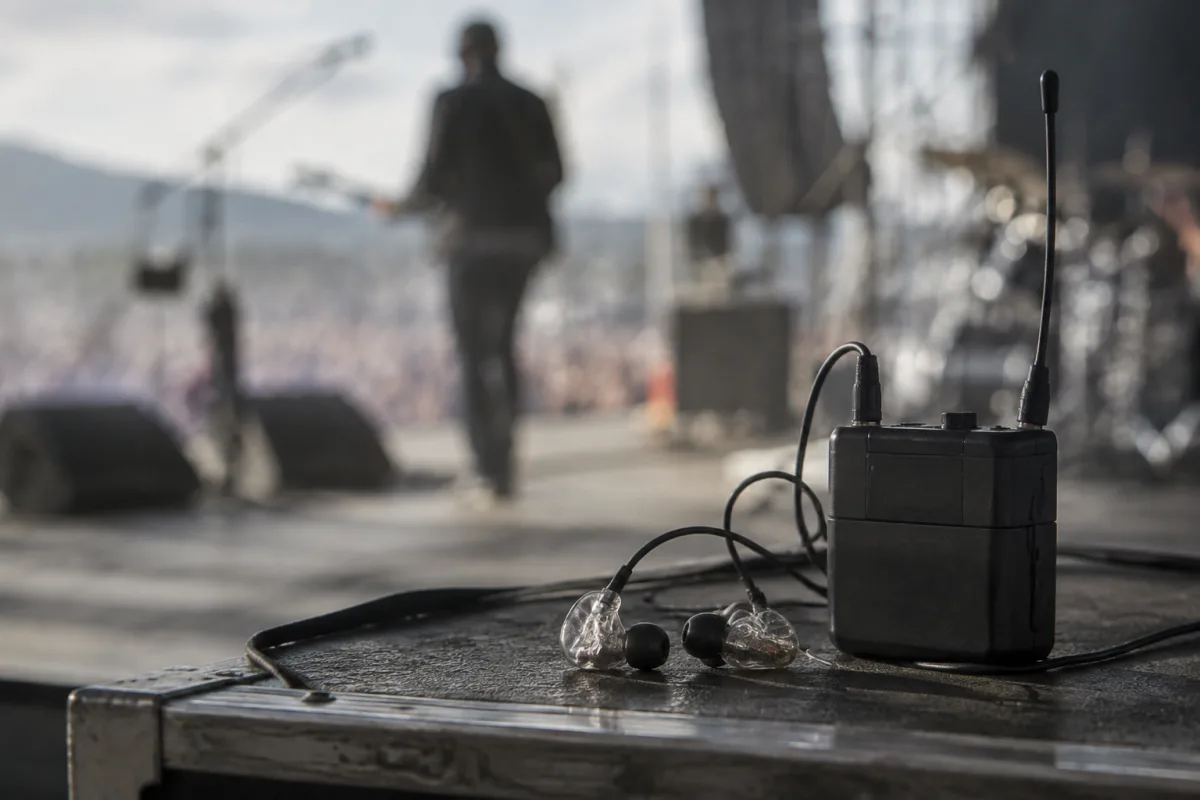
Wireless earbud monitors have revolutionised how musicians perform on stage and in studios, providing personalised audio mix monitoring without the encumbrance of cable-tethered systems. Whether you are a vocalist needing click tracks and harmony references, a bassist requiring locked timing cues, or a bandmate wanting your own customised mix, wireless earbud monitors deliver professional-grade in-ear monitoring with freedom of movement. This complete guide explores wireless earbud monitor systems, their advantages over wired alternatives, and how to select the right system for your performing needs.
What Are Wireless Earbud Monitors?
Wireless earbud monitors are personal audio systems that deliver customised audio mixes directly to performers' ears without cable connections. A central transmitter sends audio signals to individual wireless receivers (typically built into earbuds or worn on a belt), allowing each performer to receive a personalised mix—different from what the audience hears through main speakers. Vocalists might want more of their own voice and rhythm reference; musicians might want isolated instruments for timing or specific harmony parts.
Professional wireless in-ear monitoring systems are ubiquitous in modern live performance, used by touring artists, orchestras, theatre productions, and working bands. Wireless earbud monitors make professional in-ear monitoring accessible to performers at any scale, from intimate venues to massive festivals.
Types of Wireless Earbud Monitor Systems
Wireless monitoring systems vary significantly in sophistication, frequency band, and cost:
Personal Wireless Monitor Systems
These compact systems (£200–800) provide one or two wireless channels, ideal for small bands or solo performers. Each performer receives one personalised mix through earbuds. Personal systems are portable, affordable, and sufficient for rehearsals, small venues, and semi-professional performances. Drawbacks include limited channel capacity and lower audio quality than professional touring systems.
Professional Wireless IEM Systems
Touring-grade systems (£3000–20,000+) provide 6–12+ wireless channels with professional-grade reliability, encrypted digital audio, redundant transmitters, and broadcast-quality sound. Major tours, orchestras, and large productions use professional systems. These systems offer exceptional reliability and audio fidelity but represent significant investment suited only to serious professionals.
Hybrid Wired/Wireless Systems
Some systems combine a wired mixer sending audio to wireless pack transmitters. This setup (£500–2000) provides good flexibility; performers can use wired earbuds for rehearsal or backup, then switch to wireless during performance. Hybrid systems suit mid-level touring and professional theatre work.
App-Based Wireless Systems
Emerging technology allows smartphones or tablets to function as wireless monitor receivers via WiFi or proprietary low-latency protocols. These systems (£100–1000) are affordable and practical for rehearsals but introduce latency issues unsuitable for live performance relying on split-second timing.
Key Components of Wireless Monitor Systems
Understanding system components helps with selection and troubleshooting:
Mixer/Mixing Console
A dedicated mixer creates individual mixes for each wireless channel. Basic systems might accept stereo input; professional systems accept multiple input channels (microphones, instruments, click tracks, click click references) allowing unlimited customisation per performer.
Wireless Transmitter
The transmitter broadcasts audio to all wireless receivers simultaneously. Professional systems use redundant transmitters (if one fails, the other seamlessly takes over). Quality transmitters operate on stable frequencies (2.4GHz, UHF, or licensed bands depending on system and region) with minimal interference.
Wireless Receiver/Earbuds
Individual performers wear receivers connected to earbuds. Quality receivers fit comfortably, offer battery life sufficient for performances (8–12+ hours), and allow individual volume adjustment. Professional earbud designs provide secure fit preventing dislodgement during active performing.
In-Ear Monitors (IEMs)
The actual earbuds determining audio quality and comfort. Professional IEMs (£200–500 per pair) provide superior sound isolation, comfort, and durability compared to consumer electronics. Wireless systems often include quality earbuds; aftermarket professional IEM replacements upgrade audio quality.
Advantages of Wireless Earbud Monitors
Wireless systems offer compelling benefits over wired monitoring:
- Freedom of Movement: Performers move freely across stages without cable management concerns. This enables natural, confident performances without tripping hazards or tangled cables limiting movement.
- Personalised Mixes: Each performer receives a customised mix meeting their specific needs, enabling confident performance and consistent timing.
- Scalability: Adding additional performers simply involves adding more wireless receivers and creating additional mixes. Wired systems become increasingly complex with each performer added.
- Professional Sound: Quality wireless systems deliver professional audio fidelity adequate for critical timing-dependent performances.
- Reliability: Modern systems offer redundancy and fail-safes preventing complete system failure during critical performances.
Limitations and Considerations
Wireless systems have notable drawbacks:
- Latency (Delay): Audio is transmitted wirelessly and decoded by receivers, introducing 15–100ms latency depending on system. For timing-critical performance, even small latency is problematic. Professional systems minimise latency; budget systems often exhibit noticeable delay.
- Frequency Coordination: Wireless systems operate on specific frequencies; interference from competing systems can disrupt performance. Larger venues require professional frequency coordination.
- Cost: Wireless systems represent significant investment, particularly professional touring-grade systems.
- Battery Dependence: Wireless receivers depend on batteries. System failure occurs if batteries are overlooked or depleted during performance.
- Comfort and Fit: Wireless receiver packs or earbuds must remain secure and comfortable throughout entire performances. Improper fit or comfort issues distract performers.
Choosing Wireless Earbud Monitors
Selection depends on performance context:
For Rehearsal and Small Venues
A personal wireless system (£200–600) with 1–2 channels serves perfectly. Focus on latency (seek under 50ms), battery life (8+ hours), and audio quality sufficient for hearing yourself and timing cues.
For Professional Touring
Professional systems (£3000+) with redundancy, multiple channels, and broadcast-quality sound justify investment. Hire professional systems from established rental companies rather than purchasing, as technology rapidly evolves and rental ensures latest capabilities.
For Theatre or Orchestral Work
Dedicated theatre monitoring systems optimised for music theatre or orchestra work are available from specialised manufacturers. These systems emphasise reliability and ease-of-use rather than performer mobility.
Conclusion
Wireless earbud monitors represent essential technology for modern performance, enabling confident, precisely-timed performances and personalised audio monitoring for each ensemble member. Whether performing in rehearsal, small clubs, touring venues, or large festivals, a wireless monitoring system appropriate to your context improves performance confidence and enables tighter ensemble playing. Invest in a system matching your performance needs and audio quality expectations, and you will benefit from the freedom and precision wireless earbud monitors deliver to modern musical performance.



Comments