


Mastering Headphones article
Mastering Headphones for Beginners: A Complete Guide
Mastering headphones are analytical tools that reveal mixing problems, but only as part of a broader listening system. This guide demystifies mastering for beginners and builds your confidence.
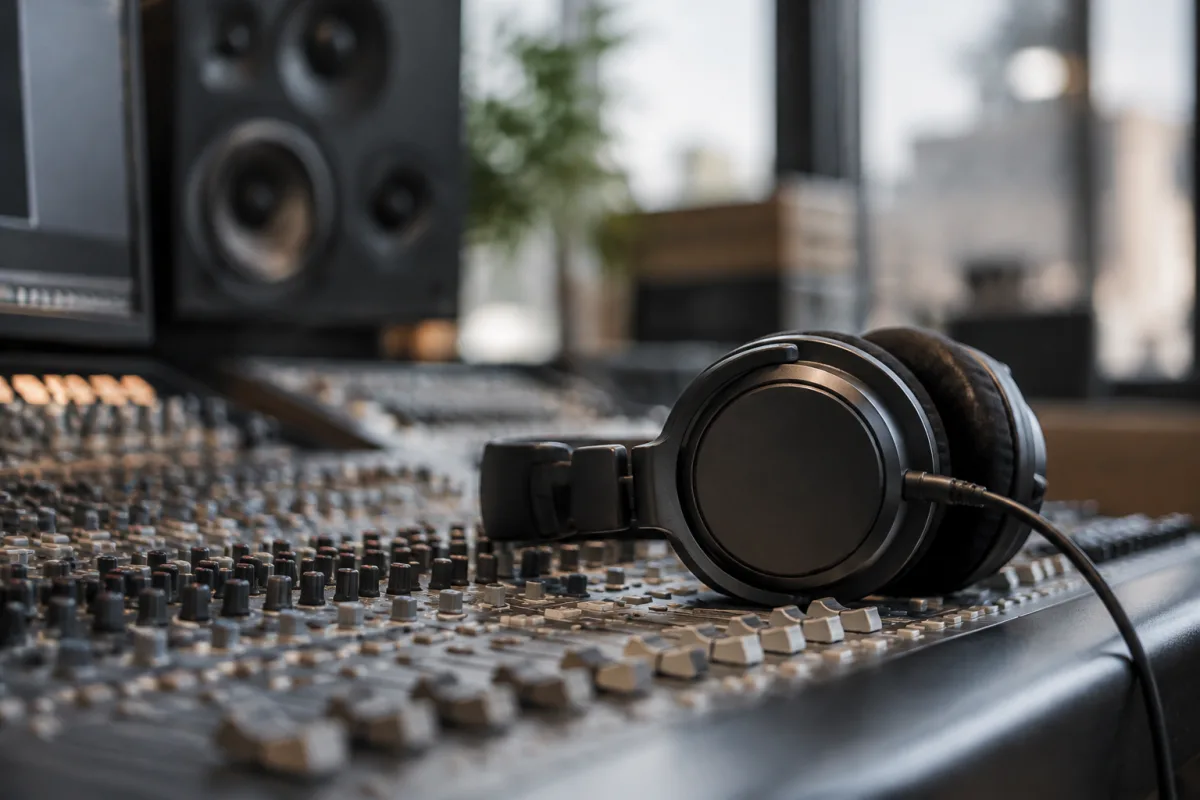
Mastering feels like an intimidating mountain when you're starting out. You've finished mixing your track and now you need to optimise it for all playback systems—but can you really trust headphones for this critical final stage? The honest answer is yes, but with important caveats. This beginner's guide walks you through understanding mastering headphones, using them effectively without overwhelming yourself, and avoiding the mistakes that make beginners give up before they truly master their craft.
Understanding What Mastering Headphones Actually Do
First, let's demystify mastering headphones. They're not magic; they're listening tools that reveal problems you missed during mixing. Mastering headphones prioritise flatness and neutrality so you hear exactly what's in your mix without colouration. Unlike consumer headphones that flatter the sound, or mixing headphones that aim for detail, mastering headphones are ruthlessly honest. They expose harsh frequencies, imbalanced stereo fields, and subtle mixing mistakes that sound fine in your mixing environment but terrible on car stereos and phone speakers. This honesty feels brutal at first—your carefully mixed track might suddenly sound problems everywhere—but that's exactly why mastering headphones matter. They're your quality-control checkpoint.
Mastering Headphones vs. Mixing Headphones: What's the Difference?
Beginners often ask whether they should buy separate mastering headphones or use their existing mixing headphones for both jobs. The practical answer: good mixing headphones work acceptably for mastering, especially when you're starting out. However, mastering headphones have even stricter frequency response requirements and are designed for the specific task of critical listening across extended sessions. The most noticeable difference is neutrality—mastering headphones aim for absolute flatness, whilst mixing headphones might have slight character to help you identify problems. For your first mastering work, don't rush to buy new headphones; use your best available mixing headphones and focus on developing your listening skills. Once you're comfortable with the mastering process, investing in dedicated mastering headphones becomes worthwhile. This prevents spending money on gear you don't yet know how to use effectively.
Your First Mastering Session: Start Small and Controlled
Before making any mastering decisions, create a reference system. Your mastering headphones are just one perspective; you need multiple playback sources to make confident decisions. Ideally, listen to your master on: • Your mastering headphones (detail and honesty) • Your car stereo (real-world bass response and mid-range presence) • Phone speakers (harsh clarity and volume limitations) • Cheap earbuds (how the poorly equipped will hear your mix) This multiple-reference system prevents over-correcting in one frequency range because it sounded wrong on headphones alone. Beginners often make catastrophic mastering choices because they're working entirely through one lens. A quick car test prevents most of these mistakes. Your mastering headphones provide the analytical perspective; your other references keep you grounded in reality.
Room Treatment and Mastering Headphone Accuracy
Mastering headphones eliminate room acoustics from the equation—you hear the audio directly in your ears without your studio space colouring the sound. This is both a strength and a potential trap for beginners. The strength: you can work anywhere without expensive acoustic treatment. The trap: you lose the spatial reference that room acoustics provide. Professional mastering engineers often use headphones in treated rooms precisely to combine both perspectives. For your first mastering work in a bedroom or small office, don't worry about room treatment; your mastering headphones handle that. However, understand that what sounds perfectly balanced in headphones might not translate perfectly to a treated mastering suite. This is a limitation of the medium, not a failure on your part.
Avoiding Common Mastering Headphone Mistakes
The biggest beginner mistake is mastering at loud volumes through headphones. Monitoring levels matter enormously—loud levels fatigue your ears, skew your perception of frequency balance, and lead to over-compressed, dull-sounding masters. Aim for monitoring levels around 83–85 dB SPL (measured with a sound pressure level meter) or roughly the volume of comfortable conversation. If you can't measure SPL, work at whatever level allows you to speak clearly without raising your voice. After 30 minutes at this level, your ears should feel fresh; if they're fatigued, you're too loud. Lower the volume and continue. Another mistake: trusting headphones as your sole reference for mastering decisions. Headphones are analytical tools; they're not how most listeners experience music. After mastering on headphones, always test on multiple other systems before finalising anything. This prevents the embarrassing experience of uploading a master only to discover it sounds wrong in the real world.
Beginners also often mistake mastering for additional mixing. Mastering is subtle enhancement and optimisation; it's not fixing problems that mixing should have solved. If you find yourself making major EQ cuts or re-balancing elements during mastering, stop and return to the mix. Mastering is 10% of what needs to happen; mixing is 90%. Using your mastering headphones to identify mix problems is fine; using them to fix those problems is asking mastering to do mixing's job.
Developing Your Listening Skills
Your mastering headphones are only as good as your ability to use them. Developing mastering listening skills takes time—several months of regular practice. Start by comparing your masters against commercial reference tracks in your genre, listening through your mastering headphones. Notice frequency balance, dynamic range, stereo width, and overall clarity. How does the vocal sit relative to the instruments? Does the bass feel present without overwhelming? These observations build your critical listening vocabulary. Keep a notebook of observations as you master tracks; over time, you'll develop pattern recognition that guides mastering decisions. This gradual skill-building is normal and necessary. No one masters expertly in their first week.
Preventing Ear Fatigue During Long Mastering Sessions
Mastering requires intense, critical listening that can fatigue your ears after 2–3 hours. Once you're fatigued, your perception deteriorates and your decisions become unreliable. Take breaks: work for 90 minutes, then step away for 15–20 minutes. During breaks, don't listen to music; give your ears genuine rest. This isn't laziness; it's essential technique that prevents fatigue-induced mistakes. Some professionals step outside briefly or listen to white noise to reset their hearing. These practices aren't wasted time—they're investments in accurate mastering decisions. Your mastering headphones can't help you if your ears are too tired to judge accurately.
Choosing Your First Mastering Headphones: Practical Guidance
When you're ready to invest in dedicated mastering headphones, follow similar logic to mixing headphone selection: look for neutral frequency response (±3 dB across the audible range), comfortable fit for extended sessions, and professional build quality. Mastering headphones typically cost more than mixing headphones because they demand even stricter frequency response accuracy. Start in the £200–£400 range for professional-grade options. Listen to references in your genre through candidate headphones before buying. This real-world testing is far more valuable than any specification sheet. Professional mastering engineers often prefer specific headphone models that have earned reputation through years of use; research those recommendations before spending money on brand-new technology.
Building Confidence in Your Mastering Decisions
Your first few masters will feel uncertain. You'll question every EQ adjustment, second-guess your compression, and worry that something's wrong. This is completely normal. The antidote is multiple references: test your master everywhere, gather feedback from trusted listeners on multiple playback systems, and refine based on patterns you notice. If everyone says the bass is too loud, trust that feedback regardless of how it sounds on headphones. Your mastering headphones are one tool; your network of listening perspectives is your actual quality control. Learn more about mastering workflows and the full process by exploring everything you need to know about mixing and mastering headphones.
Conclusion
Starting with mastering headphones means embracing them as analytical tools, not miracle devices. They reveal mixing problems you missed, but they're only one perspective in a multi-reference listening system. Start your mastering journey using your best available mixing headphones, develop listening skills through practice and comparison, and avoid the mistake of trusting headphones as your sole mastering reference. Build confidence gradually through multiple playback systems and trusted feedback. When you're ready to invest in dedicated mastering headphones, choose neutral, professional-grade options and use them as part of a broader mastering workflow. With time and practice, your mastering headphones become an extension of your ears, helping you create masters that translate accurately to every playback system your listeners will use.


Comments