
Big Knob Mackie article
The Complete Guide to Big Knob Mackie
The Mackie Big Knob stands out as a practical monitoring solution for producers and engineers working in compact spaces. This desktop control surface manages speaker monitoring and reference switching without consuming significant desk space.
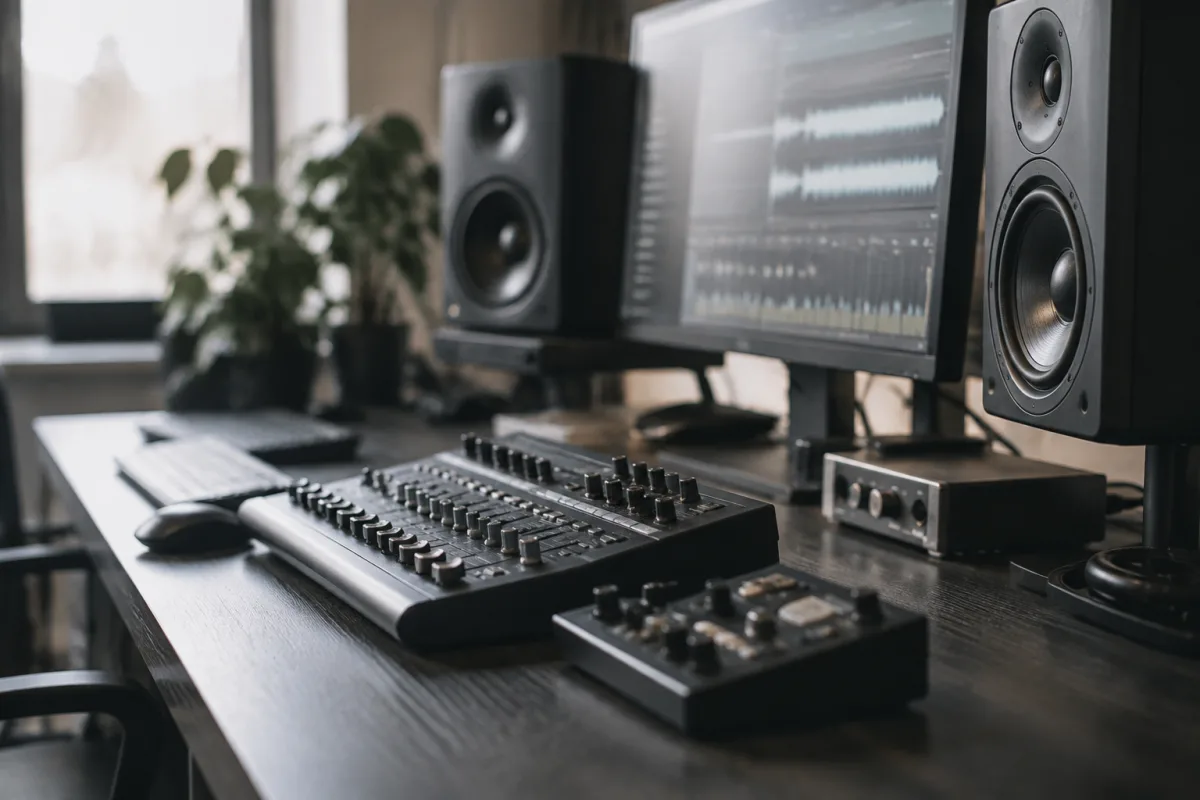
For music producers and audio engineers working in compact spaces, the Mackie Big Knob stands out as a practical solution that simplifies monitoring while adding essential functionality. This desktop control surface manages speaker monitoring, reference switching and audio routing without consuming significant desk space. Whether you're mixing in a bedroom studio or managing a professional control room, understanding what this device offers helps determine if it suits your workflow.
What Is the Mackie Big Knob?
The Mackie Big Knob functions as a monitor controller—essentially a hub managing audio routing between your digital audio workstation and studio monitors. The device sits between your computer interface output and your nearfield speakers, providing intuitive volume control plus speaker selection capabilities. The prominent oversized knob—hence the distinctive name—gives easy hands-on level adjustment without requiring mouse interaction with mixing software.
Beyond simple volume control, this device incorporates reference switching functionality allowing rapid comparison between different speaker setups. Professional mixing often requires checking how mixes sound on multiple monitoring systems—expensive car-speaker simulations, cheap portable speakers, headphones—to ensure your work translates across diverse playback systems. The Mackie Big Knob streamlines this comparative listening process.
Key Features and Connectivity
The interface supports multiple speaker configurations through dedicated output pairs. Most models include two stereo speaker outputs, supporting simultaneous monitoring of primary speakers and secondary reference monitors. XLR balanced connections ensure audio integrity across professional studio environments. Headphone outputs with separate volume control facilitate silent listening without affecting main speaker levels.
Audio input connectivity spans multiple sources—typically including stereo line inputs for summing external audio sources, helping integrate hardware synthesisers, effect units or external instruments into the mixing environment. USB connectivity on newer models enables integration with digital audio workstations, supporting both audio streaming and MIDI control functionality.
The Interface and User Experience
The namesake large diameter knob dominates the front panel, offering satisfying tactile control. Unlike clicking volume adjusters in software, the physical knob's resistance and smooth operation feel responsive and intuitive. This hands-on interaction with mixing parameters encourages engagement with the monitoring process rather than reducing it to abstract digital values.
Illuminated buttons and LED indicators provide visual feedback about active sources, speaker selections and signal levels. The layout encourages quick reference switching without menu diving. For experienced engineers developing muscle memory, this tactile workflow accelerates session management and allows attention focus on audio content rather than interface navigation.
Monitor Speaker Selection and Comparison
The ability to rapidly switch between different monitoring sources represents one of this device's strongest features. Professional audio demands mixing verification across multiple playback scenarios. A mix sounding excellent through expensive nearfield speakers might sound thin, harsh or boomy through different reference systems—issues invisible until the mix reaches real-world playback devices.
The interface manages this comparative listening efficiently. Buttons control which speakers receive signal, allowing A-B comparison between primary monitors and alternatives. Some models include speaker compensation curves attempting to EQ monitoring to reference curves, though many experienced engineers distrust automatic compensation, preferring to train their ears to accommodate particular speaker characteristics.
Speaker Protection and Level Management
Built-in safety features protect expensive monitor speakers from damage. Input gain staging options prevent excessive signal levels that could damage speakers or amplifiers. Mute buttons and output dim switches allow rapid volume reduction without manually adjusting the main knob. These controls prove essential when unexpected loud signals appear—important both for speaker protection and ear safety during extended mixing sessions.
Many models include polarity inversion switches for each output, addressing phase alignment between multiple speakers or correcting speaker wiring mistakes. Proper polarity ensures speaker drivers work together constructively rather than cancelling frequencies destructively. The availability of polarity correction at the monitoring point proves more convenient than rewiring speakers or recabling connections.
Practical Studio Integration
Studio space constraints often challenge optimal speaker placement. Compromise positions sometimes introduce acoustical problems—too much bass from a speaker positioned near room corners, for example. Some models include basic room correction curves attempting to compensate for known acoustical issues, though acoustic treatment typically outperforms electronic correction.
The device facilitates late-night monitoring through headphone outputs with independent volume control. This proves essential for apartment dwellers or anyone working outside conventional business hours. The ability to toggle between speaker monitoring and silent headphone listening streamlines workflow for diverse sessions.
Integration with Modern Workflow
USB connectivity on current models enables integration with digital audio workstations beyond simple audio monitoring. Some implementations support MIDI control, allowing hardware buttons controlling software parameters—adjusting plugin settings without reaching the mouse, for instance. This integration supports hands-on workflows that many engineers feel produce superior mixing decisions compared to purely mouse-driven interfaces.
The device's simplicity belies sophisticated audio engineering. Rather than attempting to include extensive mixing capabilities, the interface focuses on the fundamental task of monitoring management. This specialisation creates a reliable, fast performer at its core function, though users requiring extensive routing or mixing functionality need additional equipment.
Considering the Mackie Big Knob
This device suits studios requiring straightforward monitoring control and speaker selection. Bedroom producers, audio engineers and professional facilities all represent viable applications. The primary use case remains efficiently managing multiple speaker configurations and enabling comparative reference listening without software intervention.
Budget considerations favour the approach of purchasing dedicated monitoring controllers rather than relying on software mixing tools. A focused hardware controller typically costs less than premium mixing plugin suites whilst offering superior hands-on interaction. For producers valuing tactile feedback and intuitive workflow, this comparison often proves compelling.
Conclusion
The Mackie Big Knob addresses a genuine workflow need—providing intuitive physical control over monitoring setup without requiring dedicated control room space. Whether managing a compact bedroom studio or a professional facility, this device simplifies the essential task of monitoring management. The combination of hands-on volume control, speaker selection capabilities and practical safety features makes it a worthwhile consideration for any serious audio producer.


Comments