


KRK Speakers roundup
Krk Speakers: A Complete Buyer's Guide
Not every KRK suits every room or every engineer. Here's how to match the right model to your room size, budget and mixing needs.

Choosing between KRK speakers comes down to three variables: room size, budget and what kind of monitoring you need. The range is organised clearly enough that, once you know those three things, the right model is fairly easy to identify. The harder question for some buyers is whether KRK is the right choice at all — and the honest answer is that it depends on your genre and what you value in a reference monitor.
Is KRK Right for You?
KRK speakers are not the most neutral monitors available at their price points. They have a characteristic slightly enhanced bass response that makes them popular in hip-hop, EDM, pop and bass-heavy electronic music production. If you are mixing in these genres, that characteristic can genuinely help — you hear the bass content more clearly and can make better-informed low-end decisions.
If you are mixing classical, jazz or acoustic music where a completely flat response is more important, or if you are planning to do critical mastering work, you may find that more neutral alternatives — Genelec, Adam Audio, Yamaha HS series — suit your needs better. KRK is not the wrong choice for these contexts, but it is worth knowing the character before you buy.
Choosing a Rokit Model by Size
The Rokit G4 series is the most widely recommended starting point within KRK speakers. The three size options differ primarily in low-frequency extension and maximum SPL:
- Rokit 5 G4: 5-inch woofer, suitable for small rooms (10 x 10 feet or less), lower maximum SPL, bass response down to approximately 43Hz. The standard recommendation for a first studio monitor in a small home studio.
- Rokit 7 G4: 7-inch woofer, suitable for medium-sized rooms, better bass extension and headroom than the Rokit 5. A good step up for producers who have outgrown the Rokit 5 or who have a larger room.
- Rokit 8 G4: 8-inch woofer, for larger rooms with proper acoustic treatment. Deeper bass extension and higher SPL capability. Not appropriate for small untreated rooms where the added bass output will cause more problems than it solves.
Classic Series: The Alternative
The Classic 5 and Classic 7 are positioned as slightly warmer alternatives in the KRK speakers catalogue. They share the Kevlar driver design but have fewer onboard DSP controls and a different voicing that some producers prefer. The Classic series is typically priced below the equivalent Rokit G4 model, making it a budget-conscious option that doesn't sacrifice the fundamental KRK character.
The choice between Classic and Rokit comes down to whether you want more onboard room correction capability (Rokit G4) or prefer simplicity and a potentially warmer character (Classic). Both are competent monitors.
V Series: When to Step Up
The V series is the professional tier — more expensive, more capable, with advanced DSP including a graphic EQ display that allows detailed room response adjustment. For serious mixing engineers working in acoustically treated dedicated studios, the V series offers a level of accuracy and flexibility that the Rokit range doesn't match. For a home studio producer, the Rokit G4 delivers the same fundamental character at a more appropriate price.
Room Treatment and Monitor Placement
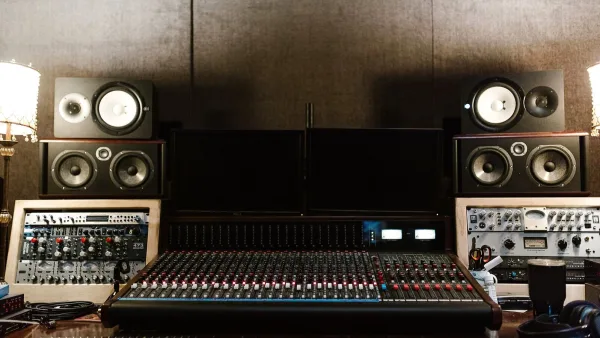
No studio monitor sounds its best in an untreated room, and KRK speakers are no exception. The most important things to address before buying are placement and basic treatment:
- Monitors should be placed symmetrically, at ear height when seated, forming an equilateral triangle with the listening position — typically at approximately 60 degrees.
- Avoid placing monitors directly against a wall, in corners, or near hard parallel surfaces where possible.
- The onboard EQ trim controls on the Rokit G4 allow compensation for boundary effects — use them if needed rather than leaving them at flat.
- Even basic acoustic treatment (corner bass traps, wall panels behind the listening position) makes a significant difference to what you hear and trust from any studio monitor.
For a full breakdown of what each model offers, the complete guide covers the range. For specific value recommendations, the best for the money article has the picks. And for new studio owners, the beginner's guide covers first setup.





Comments