


Focal Subwoofer article
Focal Subwoofer for Beginners: A Complete Guide
Adding a Focal subwoofer to your studio setup is simpler than you think. Learn the easiest setup path, avoid common beginner mistakes, and build confidence with low-end mixing in your first month.
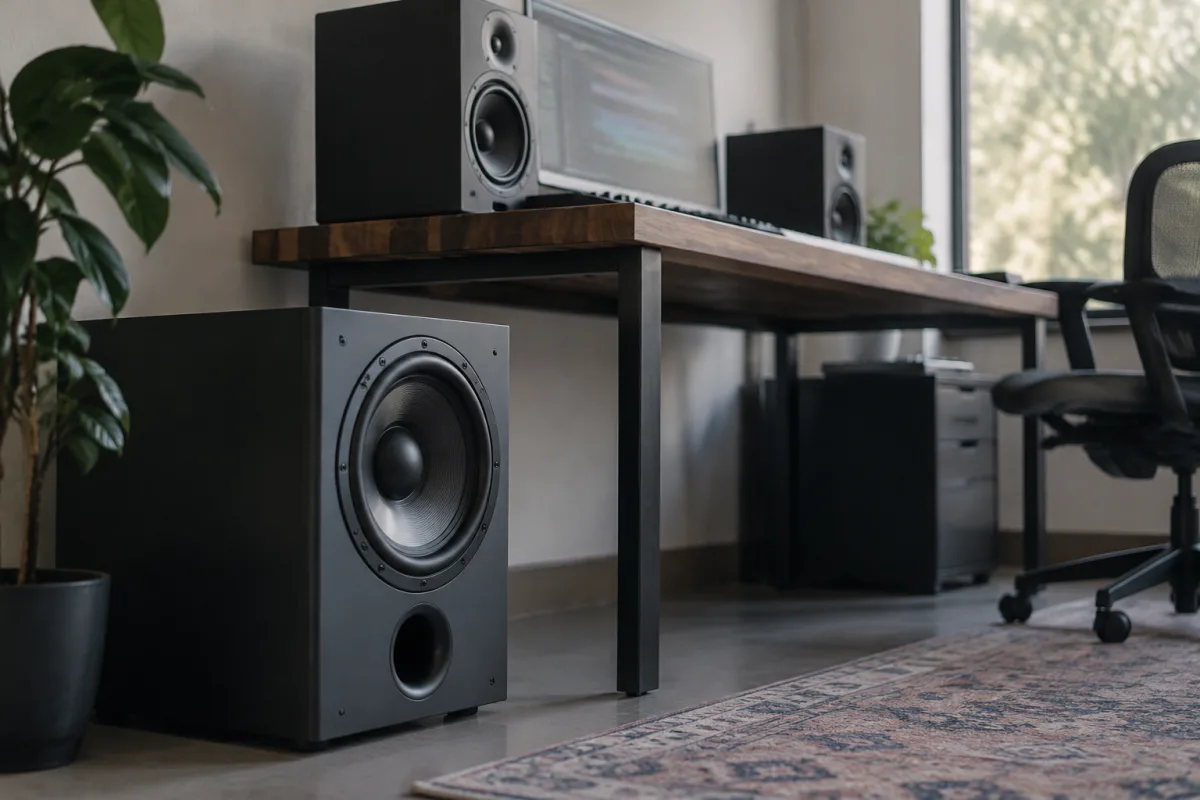
Adding a Focal subwoofer to your studio setup might feel daunting if you've never worked with one before. You might worry about complexity, cost, or whether it's even necessary. The good news: integrating a beginner-friendly Focal subwoofer into your monitoring system is simpler than you think, and it will genuinely improve your mixing decisions. This guide walks you through your first steps without the jargon.
Why Start with a Focal Subwoofer as a Beginner?
Your regular studio monitors, no matter how good, likely can't reliably reproduce frequencies below 60 Hz. That's where a subwoofer comes in. Focal specialises in professional monitoring, and their subwoofers are designed specifically for studios. Starting with a Focal model means you're investing in equipment built by engineers who understand mixing and mastering. You'll hear low-end detail you've been missing—and that changes everything about how you make decisions on recordings.
The Easiest Focal Subwoofers for Beginners
Focal offers several entry-level models that don't require advanced setup knowledge. The Focal CMS subwoofer range includes compact, powered designs perfect for small to medium studios. These units arrive ready to use: plug them in, adjust a few simple controls, and you're mixing. No external amplifiers to buy, no cables to puzzle over. That straightforward approach is exactly what beginners need—you can focus on listening and learning rather than troubleshooting equipment.
Setting Up Your First Focal Subwoofer: The Straightforward Path
Begin by placing your new subwoofer somewhere in your room—most beginners worry endlessly about perfect placement, which leads to paralysis. Don't. Get it into your studio first, then refine later. Connect it to your existing monitor controller using an XLR cable (or RCA if that's what your setup uses). Turn on the subwoofer and your monitors. Slowly increase the subwoofer level until you feel the bass blend naturally with your monitors. That's genuinely it. You've now integrated professional bass monitoring into your workflow.
Essential Controls for Beginners (and What to Ignore)
Your Focal subwoofer has a few key controls: level, crossover frequency, and sometimes a phase switch. For now, ignore most of them. Set the level to where you feel bass is adding information without dominating the mix. Leave the crossover at its default setting—usually around 80 Hz, which is perfect for most studios. The phase switch? Most beginners never touch it. As you gain confidence, you can experiment. For the first month, trust the factory settings. They work.
Room Placement: Don't Obsess, Just Experiment
A common beginner mistake is assuming subwoofer placement requires precise measurement and calibration. Not true. Try placing your Focal subwoofer in different corners, against walls, or near your mixing position. Spend a few days in each location. Your ears will tell you where it sounds best. Bass response varies wildly by room, so what works perfectly in one studio might sound wrong in another. Professional placement comes later—start by listening and trusting your instincts.
Learning to Trust Your New Focal Subwoofer
When you first add a subwoofer, you might feel overwhelmed. Suddenly you're hearing the low end of every kick drum, bass line, and ambient rumble. That's not a problem—that's information. Spend the first week simply listening to mixes you know well, hearing what was always there but hidden. Rediscover favourite songs and notice their bass character. This familiarisation period builds your confidence and develops your ear. You're not broken; you're learning.
Common First-Timer Mistakes and How to Avoid Them
Many beginners make predictable errors when introducing a subwoofer. First: setting the level too loud. You want to add the subwoofer, not overwhelm your mix. If it dominates, lower it. Second: assuming your mixing will instantly improve. Subwoofers are tools—they show you information you need to learn to use. Third: forgetting that room acoustics matter. Bass response changes with room size, furniture, and walls. Your Focal subwoofer can't fight physics, but it can show you what's actually there. Fourth: switching back and forth obsessively. Give each placement and setting at least a few days before changing it. Your ears need time to adapt.
When to Upgrade Beyond Your First Focal Subwoofer
Don't worry about this yet. Get six months of mixing experience with your entry-level Focal subwoofer before considering upgrades. You'll learn what you value, what your room needs, and what your workflow actually requires. Many professional engineers mix on surprisingly modest subwoofers because they know them intimately. Familiarity matters more than horsepower.
Building Confidence with Your New System
Start mixing on a single track with lots of low-end content—a bass-heavy song or electronic track works well. Notice how your Focal subwoofer reveals information. Mix it, take a break, listen with fresh ears. Repeat on several tracks. Over weeks, you'll build instinctive knowledge about what proper bass response feels like. That confidence becomes your mixing superpower.
For deeper information on Focal subwoofer models, specifications, and advanced setup techniques, read our complete guide to Focal subwoofers, which covers the full range and technical details as your expertise grows.
Your First Month: Expected Progress
By the end of your first month with a Focal subwoofer, expect to hear bass information you've been missing. Your mixes might feel less polished at first—that's because you're now seeing problems you couldn't hear before. That's progress. Stick with it. By month three, you'll mix with significantly more confidence in the low end. By month six, you'll wonder how you ever mixed without one. Thousands of engineers have taken this exact path. You're in good company.
Next Steps as You Grow
Once you're comfortable with your Focal subwoofer, you can explore advanced placement techniques, calibration tools, and room treatment. For now, focus on listening and building experience. The most important thing isn't equipment specifications—it's developing your ear and trust in what you're hearing. Your Focal subwoofer is your partner in that journey.



Comments