
Focal Monitoring article
The Complete Guide to Focal Monitoring
Focal monitors deliver accurate, transparent audio monitoring that reveals truth in your mixes, enabling professional-quality recording and mixing results.
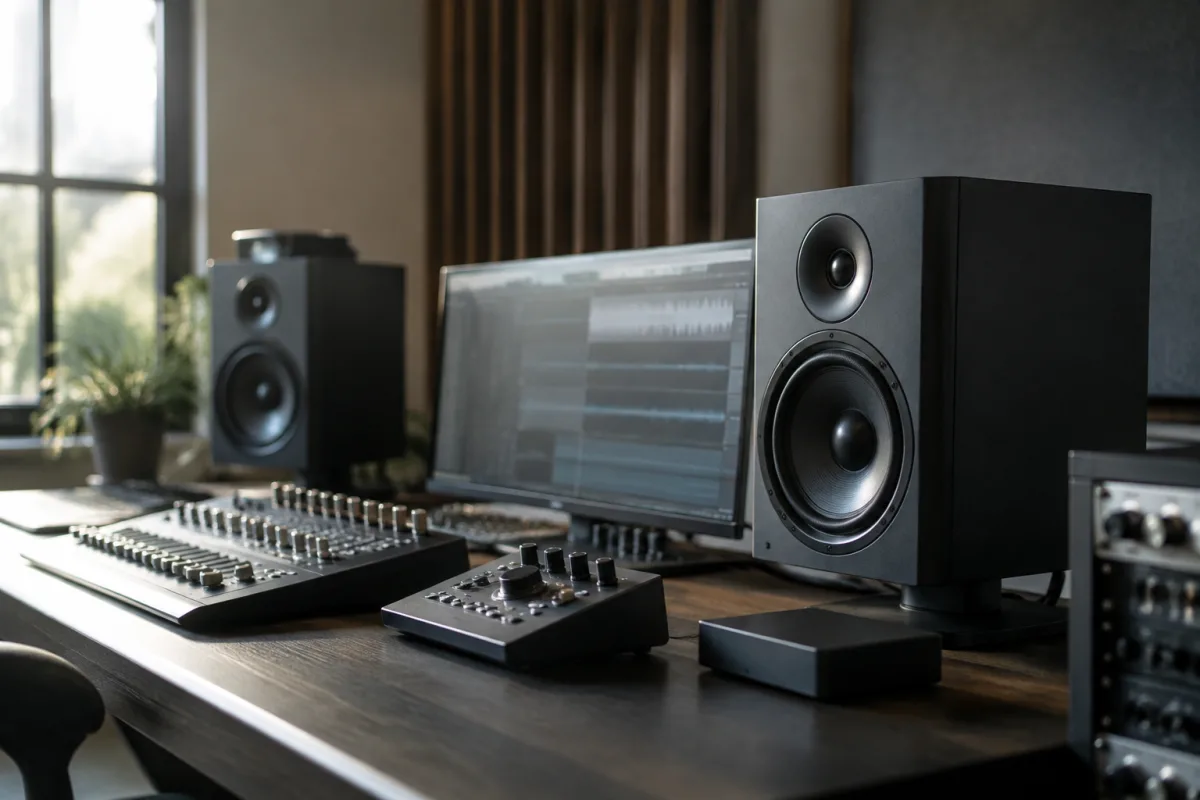
Focal studio monitors have become synonymous with professional audio monitoring, trusted by mixing and mastering engineers worldwide for their accuracy, transparency and reliability. Whether you're setting up a home recording studio, establishing a professional mixing suite, or upgrading your current monitoring system, Focal offers speaker solutions that translate mixes accurately to other playback systems—a critical requirement for any serious recording work. This guide explores why Focal monitors matter, what defines their sound signature, and how to choose the right model for your budget and space.
Why Focal Monitors Matter in Professional Audio
Studio monitors exist to reveal truth—not to flatter, not to add character, but to present audio as accurately as possible. A recording that sounds good on expensive studio monitors should translate well to car stereos, earbuds, laptop speakers and consumer playback systems. Focal has built its reputation on honest, transparent reproduction that doesn't add coloration or fatigue. This neutrality is essential because any monitor colouration—excessive bass, hyped treble, scooped mids—misleads mixing decisions, resulting in mixes that sound wrong outside the studio.
Focal's professional monitor lines are engineered to reveal problems, highlight opportunities and support critical listening over extended sessions. This is very different from consumer speakers, which often emphasise flattering characteristics that tire the ear during long work sessions.
Focal Monitor Technology and Design
Woofer and Tweeter Precision
Focal monitors typically feature polymer or composite woofers (for low and midrange frequencies) and inverted dome tweeters (for high frequencies). This combination has proven remarkably accurate across decades of professional use. The woofer material resists resonance and breakup, maintaining clarity even at high playback levels. The inverted dome tweeter provides smooth, detailed treble without aggressive peaks that would cause listening fatigue.
Amp Design and Power Handling
Most Focal studio monitors feature Class D amplification, a modern topology that delivers efficient power with minimal heat generation. Built-in amplification (active monitors) eliminates the need for separate power amplifiers, simplifying studio setups and reducing component count that could introduce distortion. The amplifiers are carefully calibrated to match each speaker's acoustic characteristics, ensuring reliable performance across frequency ranges.
Cabinet Design and Acoustic Treatment
Focal puts considerable engineering into cabinet materials and internal bracing to minimise resonances that would colour the sound. Front-ported designs (vents on the front of the cabinet) reduce room interaction compared to rear-ported designs, making them more forgiving in untreated or small rooms. The cabinet geometry is optimised for controlled dispersion—sound projects accurately to a listening position without excessive room reflections.
Focal Monitor Product Lines
| Line | Price Range | Best For | Key Characteristics |
|---|---|---|---|
| Shape Series | £400–1200 | Home studios, project studios, budget-conscious professionals | Compact, accurate, forgiving in small rooms, excellent entry point |
| Trio6 Be / Solo6 Be | £800–2000 | Dedicated home studios, mixing professionals | Midrange accuracy, beryllium tweeter technology, professional sound |
| Alpha Series | £1200–3000 | Professional studios, mastering suites, critical listening | High-resolution reproduction, exceptional accuracy, larger format |
| Twin6 Be / Trio6 Be | £2000–5000+ | Professional mastering rooms, flagship studio applications | Exceptional imaging, beryllium tweeters, authoritative bass |
Beryllium Tweeters: What Makes Them Special
Many professional Focal monitors feature beryllium tweeters, a premium material that has become synonymous with high-resolution audio. Beryllium is incredibly rigid and lightweight, allowing the tweeter to respond to minute signal changes without deformation or resonance. The result is detailed, fatigue-free treble that reveals subtle recordings nuances that lesser speakers miss. This technology is particularly valuable in mixing and mastering, where catching subtle problems and opportunities is essential. Beryllium models cost more than conventional designs but deliver noticeable advantages for critical work.
Choosing the Right Focal Monitor for Your Space
Room size is the primary consideration. Small home studios (guest bedrooms, closets converted to studios) benefit from compact Focal monitors like the Shape series, which deliver impressive accuracy in confined spaces without overwhelming the room. Larger professional rooms accommodate bigger monitors with extended bass response, enabling accurate bass mixing that translates to consumer systems. A common mistake is choosing oversized monitors for small rooms—the woofers struggle to perform efficiently, resulting in boomy, inaccurate bass.
Also consider treated vs untreated rooms. An acoustically untreated room benefits from front-ported designs, which reduce boundary problems. Professional mastering suites with full acoustic treatment can exploit rear-ported designs, which offer extended bass response and more dramatic imaging.
Setting Up Focal Studio Monitors
- Position monitors at ear level — tweeters should align with your ear height when seated. This ensures accurate off-axis response and proper imaging
- Create an equilateral triangle — position monitors and listening position so distances are equal, creating a proper stereo imaging sweet spot
- Isolate from vibration — use isolation pads or stands to decouple monitors from the mixing desk and floor, preventing vibration transmission that clouds the mix
- Keep monitors away from boundaries — position them at least 60cm from walls to minimise bass buildup and acoustic reflections
- Use the control panel options — most Focal monitors include room treatment controls (high-frequency and bass adjustments); experiment to optimise for your space
- Allow adequate calibration time — monitors require 30+ minutes to warm up before critical listening; always allow warm-up before important mixing decisions
Monitoring versus Headphones
Focal also manufactures professional monitoring headphones, but speakers remain essential in any serious recording environment. Headphones provide isolation for recording vocals and overdubs, but speakers reveal the spatial relationships, stereo field and room acoustics that headphones cannot. The best approach is using both—tracking and recording on headphones, mixing on monitors, and referencing on consumer systems to ensure translation.
Investment and Budget Guidance
The Shape series (£400–1200) offers excellent value and suits most home and small professional studios beautifully. The Alpha and higher lines (£1200+) serve engineers with higher accuracy demands and larger budgets. For many recording professionals, one pair of Focal Shape monitors and quality headphones represent an excellent foundation—accurate, reliable and professional without excessive cost.
Maintenance and Longevity
Focal studio monitors are engineered for longevity. Built to professional standards, they often perform reliably for a decade or more. Occasional cleaning of the cones and tweeters keeps them looking and sounding fresh. Unlike consumer speakers, professional monitors rarely fail before their acoustic characteristics drift with age and use—even well-used Focal speakers from years past usually sound remarkably good.
Conclusion
Focal studio monitors deliver the accuracy, transparency and reliability that professional recording demands. Whether you're starting your first home studio, upgrading an established mixing space, or seeking mastering-grade accuracy, Focal offers proven solutions at reasonable price points. The fundamental truth remains: accurate monitoring transforms mixes, catches problems early and builds confidence that your work will translate to consumer systems. Focal monitors represent a professional-grade foundation for serious audio work.


Comments