


Focal Monitor Buying guide
Focal Monitor: A Complete Buyer's Guide
Selecting a focal monitor for your studio requires understanding specs, room acoustics, and your actual mixing needs. This buying guide cuts through marketing noise to help you make an informed choice.
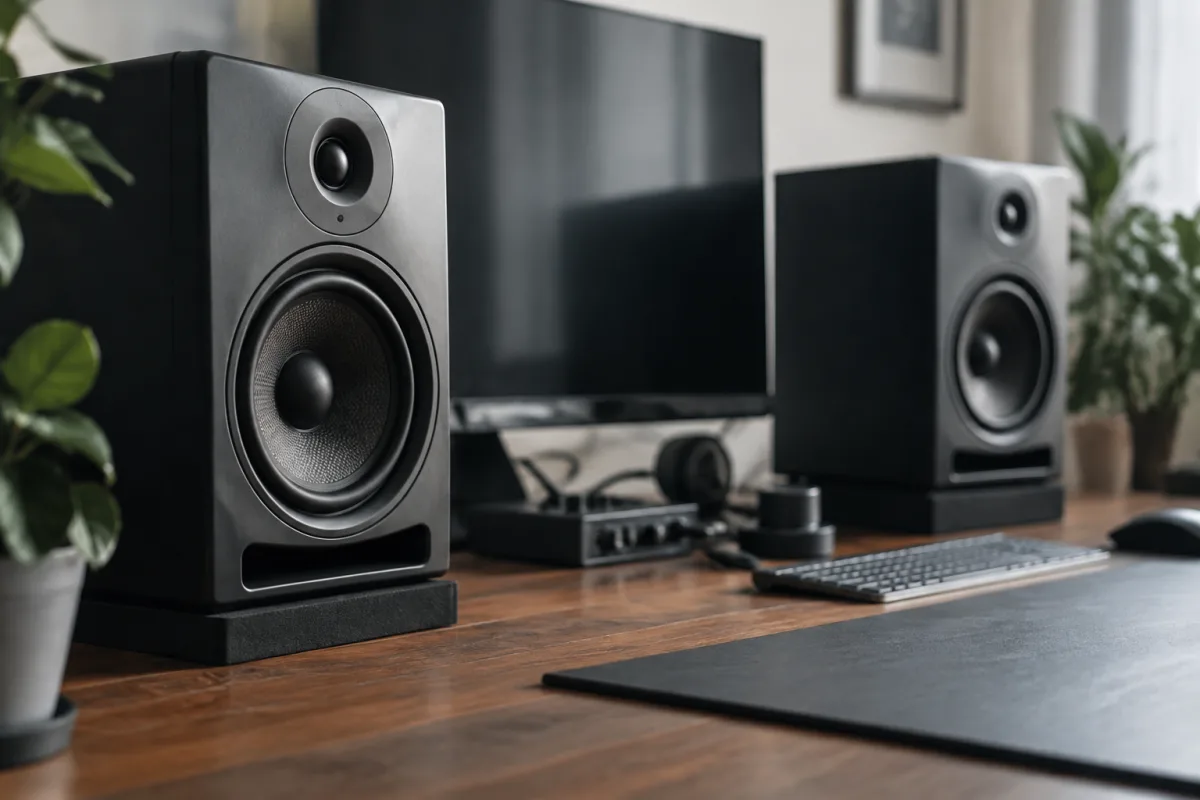
Selecting a focal monitor for your studio is one of the most consequential equipment purchases you'll make. Unlike flashy gear that promises magic, studio monitors are the transparent middleman between your mix and the world—they need to be as honest as possible. But honesty doesn't come cheap, and understanding what separates a £500 focal monitor from a £3000 model isn't just about bragging rights. It directly affects how well your mixes translate across playback systems. This buying guide cuts through the marketing noise to help you make an informed choice based on your room, budget, and actual mixing needs.
Understanding Focal Monitor Types and Sizes
Focal manufactures monitors across several product lines, each targeting different studio environments and budgets. The key distinction is size, measured by woofer diameter in inches. A 5-inch focal monitor sits at the entry point for serious mixing, offering reasonable nearfield performance for smaller rooms and project studios. The 6-inch and 8-inch models represent the sweet spot for most professional environments, delivering extended bass response and superior imaging in mid-sized spaces. Active focal monitors come amplified internally, eliminating the need for a separate amplifier—a practical consideration for most home and commercial studios.
Focal's product ranges typically include the CMS (budget-conscious), Shape series (prosumer), and Professional line. Each represents a substantial leap in component quality, acoustic treatment, and manufacturing precision. Don't assume a larger monitor always suits your space better; a cramped bedroom acoustics will punish an 8-inch focal monitor far more than a 5-inch would benefit from them. The room matters as much as the speaker itself.
Critical Specifications to Evaluate
When comparing focal monitor models, focus on these technical attributes:
- Frequency response: A flatter, wider range (e.g., 40Hz–24kHz) lets you hear problems in the bass and high-end that you'd otherwise miss. Beware of specs without a tolerance margin; ±3dB is honest, ±6dB masks significant colouration.
- Power output (watts): Measured per driver, this affects headroom and peak clarity. A focal monitor with 150W total power handles louder sessions and transient-heavy material better than a 50W model. For mixing, adequate power matters more than sheer volume capability.
- Acoustic design: Focal monitors typically employ rear-ported or sealed enclosures. Rear-ported designs extend bass but require more space from back walls; sealed designs suit cramped corners better. Check whether your room matches the intended placement distance.
- Crossover frequency: The point where the tweeter and woofer hand off to each other shapes the critical midrange. Focal monitors in the Professional line split this responsibility more precisely than budget models, reducing phase inconsistencies that blur transient definition.
- Distortion rating: Ask for THD (total harmonic distortion) at nominal operating levels, not just the headline spec. A focal monitor claiming 0.05% THD at 85dB is more useful than one boasting 0.02% at 75dB.
Room Acoustics and Placement Considerations
Your focal monitor purchase arrives into a room with its own acoustic personality. Bass trapping and reflection management don't change when you unbox your new speakers, but they absolutely determine whether your investment pays dividends. A poorly treated room will make even expensive focal monitors sound muddy and unreliable in the bass, creating mixes that fail elsewhere.
Before committing to a larger focal monitor, assess your current space. Can you treat the first reflection points on the walls? Do you have any bass absorbers, or will the room boom destructively? A 5-inch focal monitor in a treated room will serve you far better than an 8-inch model in a reflective, untreated space. Many engineers make the mistake of buying bigger speakers as a shortcut to better bass response when the real issue is room modes and boundary reflections.
Placement matters equally. Near-field monitoring (sitting 0.5–1.5 metres from your speakers) minimises room influence and is the standard in modern studios. Focal monitors are designed for this working distance, but if your desk is against a wall with monitors pushed into corners, you're fighting the acoustic environment and negating the precision Focal built into them.
Price Tiers and Value Assessment
Focal monitors span a wide price spectrum, and understanding what each tier delivers helps you avoid overbuying or underbuying:
| Price Range (per pair) | Typical Model | Best For | Trade-offs |
|---|---|---|---|
| £800–£1500 | CMS/Shape 5-inch | Bedroom studios, content creators, learning engineers | Limited bass extension, moderate driver quality, standard amplification |
| £1500–£3000 | Shape/Professional 6-inch | Project studios, semi-professional rooms, small labels | Better driver precision and amplification; still room-dependent for sub-100Hz |
| £3000–£6000 | Professional 8-inch | Commercial studios, broadcast post-production, serious mixing engineers | Excellent imaging and bass control; requires treated space; significant investment |
| £6000+ | Professional high-end models | Mastering suites, flagship studios, audio reference work | Diminishing returns unless room treatment and isolation are exceptional |
Value concentrates in the £1500–£3000 band where Focal's engineering excellence meets reasonable pricing. Below £1500, you're making significant acoustic compromises; above £3000 per pair, returns diminish unless your room and setup are professional-grade.
Avoiding Common Buying Mistakes
Several pitfalls catch even experienced engineers when purchasing focal monitors:
- Mistaking loudness for accuracy: A focal monitor with high SPL output is not inherently more accurate. Volume preference is personal, but accuracy—how faithfully it reproduces the mix—is measurable. Prioritise flat response over peak loudness.
- Ignoring the break-in period: New focal monitors sound harsh and unbalanced for the first 50–100 hours. If you purchase monitors and judge them immediately, you're listening to behaviour that'll vanish with use. Give them proper running-in time.
- Buying without listening: Online specs are incomplete. If possible, audition focal monitors in treated listening environments before committing. A spec sheet can't tell you if the tweeter balance suits your ears or if the bass response feels bloated in your room.
- Underestimating room treatment costs: A £4000 focal monitor purchase often necessitates another £1500–£3000 in acoustic panels and bass traps. Budget accordingly, or you're wasting money on expensive speakers in an untreated room.
- Pairing mismatched monitors: If you replace one focal monitor, replace both. Using a newer 6-inch alongside an older model creates phase and frequency response inconsistencies that destroy mix coherence.
Making Your Decision
Your focal monitor choice should reflect three factors: your room's acoustic treatment level, your mixing experience, and your budget realism. A beginner in an untreated 12 by 15 foot room will find more value in a 5-inch focal monitor paired with £2000 in room treatment than in an 8-inch model alone. An experienced engineer in a treated space might justify 8-inch monitors because they'll leverage the precision Focal engineered into them.
Before purchasing, read detailed reviews from mixing engineers you respect—not hi-fi hobbyists, but people who mix commercially. Also refer to our complete guide to focal monitors for broader context on these speakers' role in studio setups.
Remember that focal monitors are tools, not status symbols. The best focal monitor is the one that lets you make mixes that sound right everywhere else. That's worth the research investment.


Comments