


Adam Audio Studio Monitors article
Adam Audio Studio Monitors: A Complete Guide
Adam Audio studio monitors deliver professional-grade accuracy for serious producers and mixing engineers. Discover their innovative technology, specifications and how to optimise them in your studio.
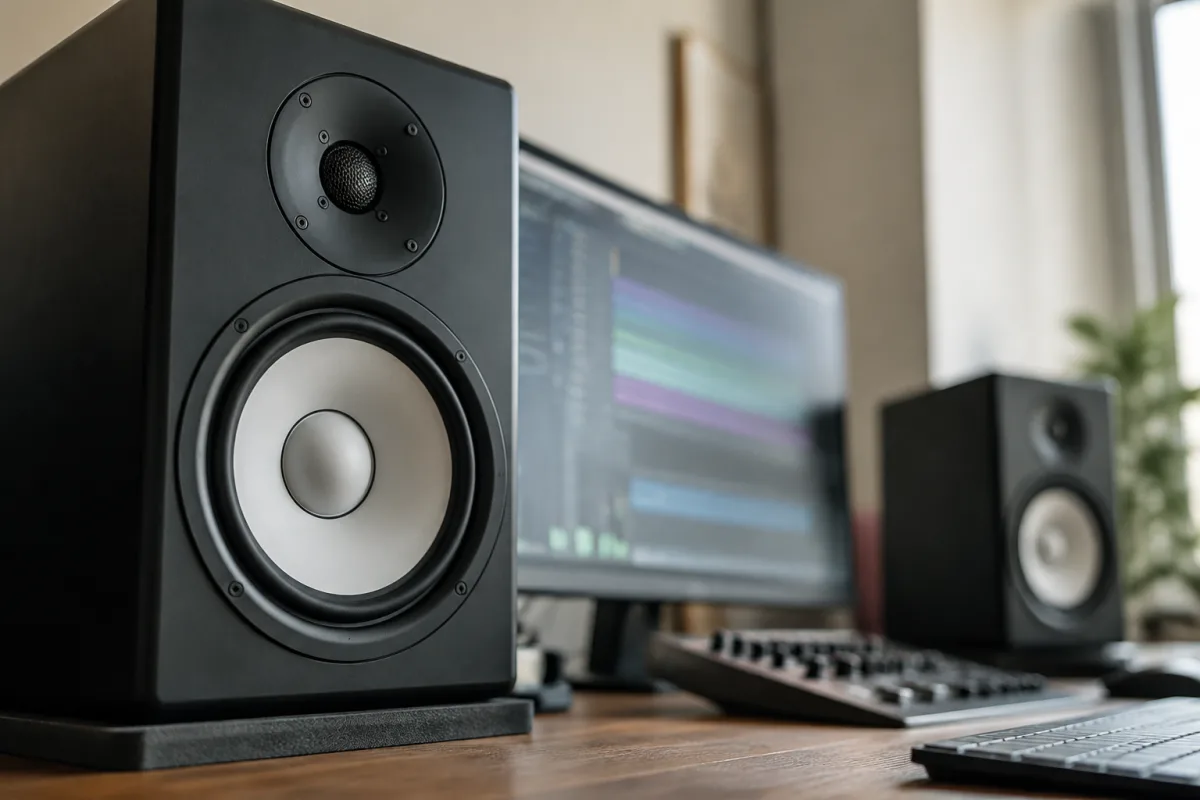
Adam Audio has established itself as a premium manufacturer of studio monitors renowned for accuracy and reliability. Their monitors are favoured in professional recording studios, mastering facilities and music production setups worldwide. Whether you're mixing an album, crafting electronic music or simply seeking honest playback of your recordings, Adam Audio studio monitors represent a considerable investment in your production environment that yields returns through improved mixing decisions and ultimately better-sounding recordings.
Why Choose Adam Audio Monitors?
Adam Audio studio monitors prioritise accuracy above all else. Rather than flattering colouration or bass enhancement meant to impress casual listeners, these monitors reveal exactly what's on your recording. This honesty is essential for mixing and mastering work, where deception leads to mixes that sound great in the studio but translate poorly to other playback systems.
The company's commitment to precision engineering shows through rigorous quality control and decades of refinement. Adam Audio studio monitors consistently deliver the sonic character that professional mixing engineers expect and rely upon.
Key Technologies in Adam Audio Monitors
Adam Audio employs proprietary technologies distinguishing their monitors from competitors. The company's X-ART (eXtended Acoustic Runtime) tweeter represents their signature innovation—a unique compression driver design that delivers extended high-frequency response and exceptional transient accuracy. This technology helps reveal subtle details in recordings that lesser monitors mask.
Woofer design also receives careful attention. Adam Audio studio monitors typically feature substantial woofer diameters (ranging from 5 to 12 inches depending on model) to ensure powerful, controlled bass without bloat or resonance issues. This engineering enables smaller rooms to enjoy full-range monitoring.
Monitor Specifications and Performance
| Aspect | Specification | Why It Matters |
|---|---|---|
| Frequency Response | Typically 40Hz–27kHz ±2dB | Accurate representation across audible spectrum, revealing all mix elements |
| Maximum SPL | 85–108dB depending on model | Sufficient volume without distortion for monitoring at comfortable levels |
| Impedance Compensation | Room Correction (ARC) available on select models | Adapts monitor response to room acoustics, compensating for problematic frequencies |
| Connectivity | XLR, RCA, USB inputs | Integration with professional audio interfaces and home setup options |
Adam Audio studio monitors across all price points share fundamental design principles ensuring consistent accuracy. The entry-level T5V maintains the acoustic character that has made Adam Audio studio monitors desirable, whilst flagship models expand capabilities for professionals requiring absolute precision.
The Adam Audio Lineup
Entry-level Adam Audio studio monitors like the T5V deliver exceptional value, providing professional accuracy in compact form suitable for smaller studios and bedrooms. Mid-range models like the A7X add enhanced connectivity and refined tuning. Professional-grade designs target mastering facilities and high-end recording studios where budget is secondary to accuracy.
All models share Adam Audio's commitment to honest frequency response. The distinction primarily involves physical size, power output and available refinements rather than fundamental sonic principles.
Room Integration and Acoustic Treatment
Quality monitors only reach their potential in appropriately treated rooms. Adam Audio studio monitors reveal room reflections and acoustic problems that untreated spaces create. Professional mastering engineers invest heavily in acoustic treatment; bedroom producers should prioritise room treatment over monitor quality to achieve the greatest improvement in mix accuracy.
The optional ARC (Acoustic Room Correction) system available on select Adam Audio studio monitors provides electronic room compensation, correcting problematic frequencies introduced by room acoustics. This technology partially compensates for acoustic deficiencies, though proper physical treatment remains the ideal solution.
Comparing Adam Audio to Competitors
Neumann, Genelec and Focal all manufacture respected studio monitors competing in Adam Audio's space. These companies offer comparable accuracy at similar price points. The choice often reflects personal preference; side-by-side comparisons reveal distinct sonic characters that individual engineers prefer differently.
Adam Audio studio monitors occupy a middle ground: premium positioning with professional-level accuracy at prices slightly below top-tier alternatives. This positioning appeals to serious producers seeking quality without premium-tier expense.
Setting Up Adam Audio Monitors Correctly
Proper setup maximises Adam Audio studio monitor performance. Position monitors at ear level when seated, pointing directly at your listening position. The equilateral triangle arrangement (equal distance between left monitor, right monitor and listening position) ensures accurate stereo imaging. Isolate monitors from surfaces using appropriate stands, decoupling them from structural vibration that colours their sound.
Distance from walls affects bass response; moving Adam Audio studio monitors further from corners reduces bass buildup. Experiment with placement, using test materials and ears to optimise imaging and bass response within your specific room.
Long-Term Ownership Considerations
Adam Audio studio monitors represent durable equipment. With reasonable care, these monitors serve for many years. The company supports older models with replacement parts and repair services, suggesting confidence in long-term viability. This durability partially justifies their premium pricing.
Conclusion
Adam Audio studio monitors represent a serious investment in mixing and mastering accuracy. Their reputation for honest, accurate sound is well-earned through decades of professional use. Whether establishing a new mixing environment or upgrading existing monitors, Adam Audio studio monitors warrant serious consideration as a foundation for mixing work that translates reliably across different playback systems. Combine them with appropriate acoustic treatment and you'll possess the monitoring environment that produces mixes competing at professional levels.



Comments