


Active Speakers JBL article
Active Speakers Jbl for Beginners: A Complete Guide
Stepping into active speakers for the first time? This beginner's guide to JBL active speakers walks you through everything from room size to budget to setup, with no confusing jargon.
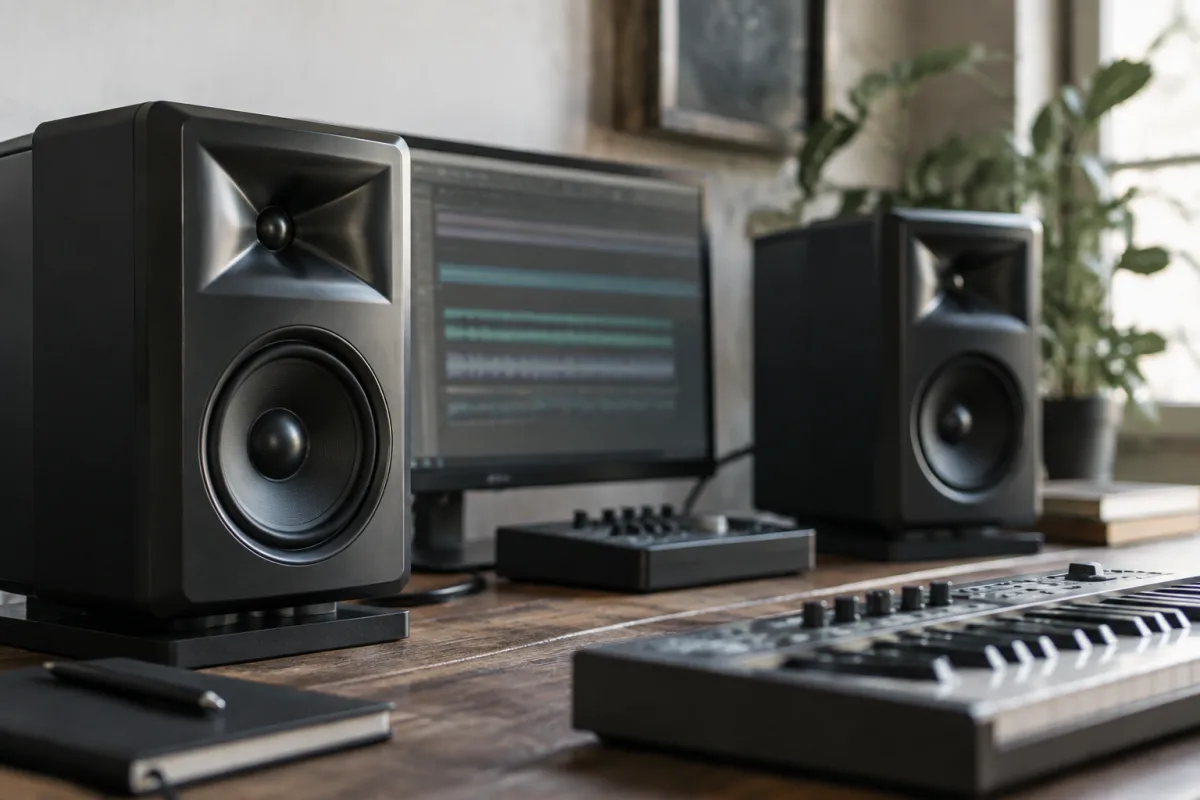
If you're stepping into the world of studio monitoring or home audio for the first time, JBL active speakers might feel like a daunting purchase. The good news? They're far more approachable than you'd think. Unlike passive speakers that need a separate amplifier, active speakers (also called powered speakers) come with built-in amplification, making them perfect for beginners who want to skip the complexity and dive straight into recording or listening. This guide walks you through everything you need to know before buying your first pair of JBL active speakers.
What Are JBL Active Speakers, Really?
Don't let the name intimidate you. An active speaker is simply a speaker that has an amplifier built inside. JBL, a trusted name in audio for decades, makes active speakers in various sizes and price ranges. When you connect your audio interface, mixer, or laptop to a JBL active speaker, the speaker handles both receiving the audio signal and amplifying it to fill your room. This self-contained approach is why they're so popular with beginners—no extra gear to hunt down or connect incorrectly.
Why Choose JBL for Your First Active Speakers?
JBL has built a solid reputation across recording studios, venues, and homes worldwide. Their active speaker range includes models designed specifically for near-field monitoring (the speakers sitting close to you in a studio) and options for casual listening. JBL speakers tend to offer consistent sound quality across their price points, clear mids and highs, and robust construction that lasts years. For someone new to active speakers, this reliability is worth its weight in gold—you get a familiar brand name with proven performance, rather than experimenting with an unknown manufacturer.
Finding the Right Size for Your Space
This is often where beginners get stuck. Do you need massive 8-inch woofers or will tiny 4-inch speakers do? The answer depends on your room and how you'll use them.
- Small rooms (under 100 sq ft, like a bedroom or small home office): Look at 4-inch or 5-inch woofers. These deliver plenty of punch for close-field monitoring and won't shake your walls or disturb neighbours.
- Medium rooms (100–250 sq ft, like a typical lounge or larger bedroom): 6-inch to 7-inch woofers strike the sweet spot. You get warmth and depth without overkill.
- Large rooms or open spaces (250+ sq ft): 8-inch woofers give you the headroom and low-frequency response to fill the space properly.
A common beginner mistake is buying too large, thinking bigger automatically means better. In reality, speakers too powerful for your room muddy the sound and cost more than you need to spend. Start by being honest about your space, then add a size category if you plan to grow later.
Power and Frequency Response: What the Specs Actually Mean
When you compare JBL active speakers online, you'll see numbers like "100W" and "50Hz–24kHz". Let's demystify these.
Wattage (power output): This tells you how loud the speakers can play. For a bedroom or small studio, 50–100W per speaker is more than enough. You're not playing a concert; you're monitoring your music or mixing in a small space. Higher wattage isn't better for beginners—it's just unnecessary cost.
Frequency response: This range (e.g., "50Hz–24kHz") tells you the lowest and highest frequencies the speaker reproduces. Lower numbers mean deeper bass; higher numbers mean crisp treble. For most music and spoken audio, anything from 40Hz to 20kHz is sufficient. Don't obsess over specs here—JBL's standard ranges are reliable across their models.
Connections: Making Sure Your Setup Works
Before you buy, check what cables and connections your gear has. Most JBL active speakers accept audio via XLR (three-pin cables, common in studios) or 3.5mm aux (standard headphone jack). Some newer models also have USB or digital inputs. As a beginner, you'll likely plug in a laptop, audio interface, or mixer using whichever cable matches both devices. If your laptop has a headphone jack, any JBL active speaker with an aux input will work straight away—it's that simple. Buying the right cables takes two minutes and costs very little, so don't let connector worries hold you back.
Sound Quality: What to Expect
JBL active speakers are engineered to give you an honest, flat sound. Unlike consumer speakers that hype the bass and treble to sound "cool," studio-oriented active speakers let you hear exactly what you're playing or recording. As a beginner, this might take a little adjustment if you're used to headphones or cheap laptop speakers. After a day or two, your ear adapts, and you'll appreciate how clear and detailed everything sounds. This flatness is actually a gift—it means you're not fighting built-in colouration when you mix or produce.
Budget and Making Your Choice
JBL active speakers range from around £100 to over £500 per pair. Here's a practical breakdown:
| Budget Range | What You Get | Best For |
|---|---|---|
| £100–£250 | Solid basics, good enough for learning, decent connectivity | Beginners on a tight budget, casual home listening |
| £250–£400 | Noticeably better sound, more refined mids, deeper bass control | Serious hobbyists, bedroom producers, small studios |
| £400+ | Professional-grade sound, studio standard, excellent durability | Professional studios, advanced users, long-term investment |
Your first pair doesn't need to be expensive. Many successful recordings and mixes start on budget JBL models. Pick something in your comfort zone, use it for six months, and upgrade only if you find genuine limitations.
Common Beginner Mistakes to Avoid
- Placing speakers on the floor or in corners: Bass gets trapped and boomy. Raise them to ear level (or close to it) using stands or shelves. Your room will sound instantly better.
- Turning the volume way up immediately: Active speakers can get loud. Start low, adjust gradually, and let your ears settle at a comfortable level. You'll hear more detail at moderate volumes anyway.
- Ignoring the manual: JBL includes little setup guides with their speakers. The five minutes you spend reading gain settings and input options will save you hours of frustration later.
- Buying without checking returns policy: First speakers are personal. You might want to return them if the sound doesn't suit you or the size feels wrong in your space. Buy from a retailer offering a reasonable return window.
Taking Your First Steps
When your JBL active speakers arrive, unpack them, place them at ear level in your space, and connect one to your audio source via the simplest cable you have. Don't overthink it. Play something you know well—a favourite song, a podcast, a recording of your own voice—and listen. You'll hear depth and clarity you might not have noticed before. That's the point. Over the next week, your ear will adjust to the honest sound quality, and you'll develop a baseline for judging audio.
For deeper insight into monitoring and how active speakers fit into a complete studio setup, check out the complete guide to active speakers JBL, which covers the full landscape of these powerful tools.
Conclusion
Buying your first pair of JBL active speakers doesn't require a degree in audio engineering. Choose a size that fits your room, pick a model within your budget, check that the connectors match your gear, and press play. JBL's reputation and reliability mean you're buying from a name you can trust. The hardest part isn't the purchase—it's resisting the urge to upgrade too soon. Give yourself time to learn your new speakers, and you'll be amazed at what you start hearing in your music.



Comments