


Active Monitor article
Active Monitor for Beginners: A Complete Guide
No jargon overload, just the stuff that actually matters on day one with your first active monitor setup.

I made beats for years on a pair of consumer PC speakers before I understood why my mixes fell apart on every other system, and honestly, once I got my first proper pair of monitors set up right, it was a genuine lightbulb moment. Let's get you there faster than I got there. No jargon overload, just the stuff that actually matters on day one.
What Even Is an Active Monitor?
It's a speaker with the amplifier already built in, designed to play back your mix as honestly as possible rather than making it sound flattering. That's genuinely most of what you need to know to get started — the deeper technical distinctions matter more once you're already comfortable with the basics.
Don't Panic About the Spec Sheet Yet
Frequency response, SPL, crossover type — it's a lot to take in when you're new to this, and honestly, none of it matters as much as getting the thing positioned properly in your room. Save the deep spec-reading for later. Your first job is just getting sound coming out of them in a sensible way.
Your First Active Monitor Setup, Step by Step
- Unbox and connect. Balanced XLR or TRS cables from your interface, one to each speaker.
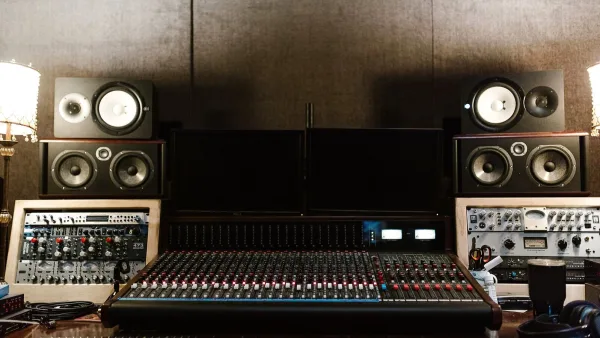
- Place them symmetrically. Equal distance from each other, and equal distance from where you'll be sitting — picture a triangle with you at one point.
- Angle them toward you. Both speakers should point roughly at your head, not straight ahead into the room.
- Get the height right. The tweeter (the small driver) should sit roughly level with your ears when you're sitting normally.
- Avoid putting them flat on the desk. A cheap isolation pad under each one stops the desk itself vibrating and muddying the sound — genuinely one of the best-value tweaks going.
Your First Listening Session
Play a few tracks you know really, really well before you touch your own mix. Commercial releases you've heard a hundred times on headphones, in the car, everywhere. That reference point matters more early on than any technical knowledge — you're training your ear to recognise what "right" sounds like on this specific setup.
Common Beginner Worries, Sorted
"Mine don't sound as bassy as my headphones" — that's normal, and often a good sign rather than a fault; consumer headphones frequently exaggerate bass, which is exactly the flattering colouration an active monitor is built to avoid. "The bass sounds different when I move my head" — also normal, low frequencies behave strangely in small rooms, and it's more about your room than your speakers. "I can't afford acoustic treatment yet" — that's fine, get placement right first; it costs nothing and matters more than most people expect.
Building Good Habits Early
Don't mix at loud volumes out of excitement — it's genuinely bad for both your ears and your judgement, since everything sounds better when it's loud. Check your work at a few different volumes, and don't be afraid to walk away and come back with fresh ears. These habits matter more than any single piece of gear you'll ever buy.
Once the basics feel comfortable, our overview guide goes deeper into the technical side, and our rundown of common mistakes is worth reading before habits become hard to unlearn.
The Bottom Line
You genuinely don't need to understand every spec to get real value from your first active monitor pair. Set them up symmetrically, use reference tracks you know well, and be patient with your ears — the rest builds naturally from there.





Comments