


Wireless Microphone System Buying guide
Wireless Microphone System: A Complete Buyer's Guide
A practical guide to selecting the right wireless microphone system for your needs, covering frequency bands, specifications, performance factors, and budget considerations.
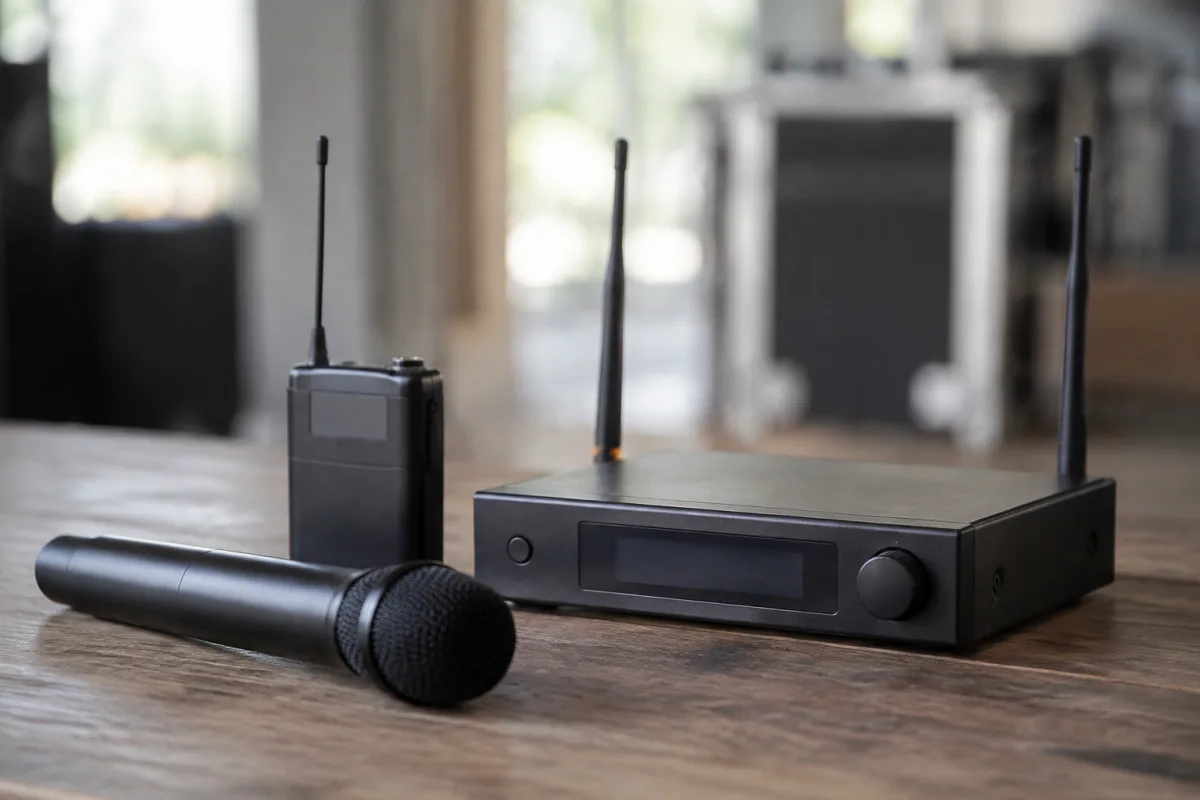
Purchasing a wireless microphone system requires careful evaluation of multiple factors: frequency band selection, interference resistance, battery endurance, frequency response, and budget alignment. Whether you're outfitting a live performance venue, setting up a streaming studio, or selecting gear for corporate events, understanding the critical specifications separates systems that deliver reliable performance from those that frustrate users with dropouts and signal loss.
Frequency Bands and Regulatory Considerations
The frequency band your wireless microphone system operates on determines compatibility with existing equipment and regulatory compliance in your location. Systems operate primarily in three frequency ranges: VHF (very high frequency, around 100-200 MHz), UHF (ultra high frequency, 400-900 MHz), and digital UHF bands.
UHF systems generally outperform VHF in professional applications, offering greater frequency stability and superior interference rejection. Within UHF, you'll encounter two categories: analogue systems and digital systems. Digital wireless microphone systems, becoming increasingly standard, provide automatic frequency hopping, encryption capabilities, and superior sound quality, though they typically cost more than analogue alternatives.
Check local frequency regulations before purchasing. The UK operates specific frequency bands for wireless microphones; purchasing systems intended for North American markets may prove incompatible or even illegal to operate. Research your specific application requirements and verify compliance with UK Ofcom regulations before committing to purchase.
Number of Channels and Simultaneous Transmitter Support
Wireless microphone systems come in single-channel configurations (one microphone per receiver) or multi-channel setups supporting multiple simultaneous transmitters. Small venues or solo performers often need only single-channel systems, but musicians performing in bands, corporate events requiring multiple speakers, or installations with backup microphones benefit from multi-channel systems.
Consider your specific use case: do you need two microphones operating simultaneously, or do you require four, six, or more? Multi-channel systems command premium prices but eliminate the need for purchasing multiple single-channel receivers. Quality multichannel systems from established manufacturers typically support 4-12 simultaneous channels without interference or dropouts.
Frequency Stability and Drift Considerations
Cheaper wireless microphone systems often suffer from frequency drift—the transmitter signal gradually shifts away from the receiver's tuned frequency, causing audio degradation or complete signal loss during performances. Quality systems maintain rock-solid frequency stability even during extended use and temperature fluctuations.
Professional-grade systems employ crystal oscillators or phase-locked loop technology, ensuring frequency drift remains negligible over hours of continuous operation. When evaluating systems, inquire about frequency stability specifications; reputable manufacturers provide detailed technical sheets. Systems boasting stability better than ±50 ppm (parts per million) over standard temperature ranges represent acceptable professional standards.
Battery Life and Power Management
Wireless microphone transmitters run continuously during use, and battery life becomes critical during lengthy performances or all-day events. Budget systems often deliver only 4-6 hours of battery life, requiring frequent battery changes during extended sessions. Mid-range and professional systems typically provide 8-16 hours per battery set, with premium options exceeding 20 hours.
Evaluate whether the system uses standard AA/AAA batteries—widely available and cost-effective—or proprietary rechargeable batteries requiring specific chargers. Standard batteries offer convenience and reliability; proprietary solutions require planning and backup chargers. Some systems include rechargeable battery options alongside standard battery compatibility, providing flexibility for different scenarios.
Consider the receiver side as well: plug-in receivers powered by AC mains eliminate battery concerns for stationary installations, whilst portable battery-powered receivers suit mobile applications or venues lacking convenient power access.
Microphone Capsule Options and Audio Quality
Wireless microphone systems pair with different microphone capsule types: dynamic mics (robust, suitable for live vocals and instruments), condenser mics (sensitive, capturing detailed audio, requiring more power), and lavalier/lapel mics (hands-free options for speaking applications).
Audio quality differences between budget and premium wireless systems stem partly from capsule engineering. Professional wireless systems employ capsules engineered to minimize proximity effect and coloration, delivering natural, articulate audio. Budget systems often exhibit proximity effect (bass boost when speaking closely) and a "thin" character that betrays their lower cost.
Evaluate frequency response specifications: systems responding reliably from 50 Hz to 15 kHz suit most live applications, whilst professional recording applications benefit from extended response down to 20 Hz and beyond 20 kHz. Presence peaks—targeted boosts in the 2-5 kHz range—enhance clarity for vocal applications.
Receiver Sensitivity and Effective Range
The receiver's sensitivity determines the maximum distance between transmitter and receiver whilst maintaining clean, dropout-free signal. Systems specify maximum range, but real-world performance depends on obstacles, interference, and receiver sensitivity.
Professional systems typically maintain reliable performance within 100+ metres in open areas, though walls, metal structures, and other obstacles reduce this substantially. Budget systems often drop to 30-50 metres effective range, severely limiting venue options.
When shopping, inquire about receiver sensitivity specifications (often expressed in microvolts, with lower values indicating greater sensitivity). Quality systems maintain sensitivity better than -100 dBm; anything weaker suggests potential range or reliability issues.
Interference Rejection and Frequency Hopping
In crowded RF environments—particularly urban venues, corporate spaces, and large events—interference from WiFi, cellular networks, and competing wireless systems threatens audio reliability. Systems incorporating frequency hopping automatically shift operating frequency when interference occurs, maintaining uninterrupted audio.
Analogue systems prove vulnerable to interference; digital systems with robust frequency hopping dramatically improve reliability. If your venue operates multiple wireless systems, WiFi networks, or operates near radio towers, digital wireless microphone systems with intelligent frequency management prove essential.
Balanced versus Unbalanced Outputs
Receiver outputs come in two types: unbalanced RCA connections (consumer-grade) and balanced XLR connectors (professional standard). Balanced XLR outputs reject cable-induced noise, essential for longer cable runs or electrically noisy environments. Professional installations invariably employ balanced XLR outputs.
If purchasing a wireless system for integration into an existing professional audio setup, verify XLR output compatibility. Consumer-grade systems with RCA-only outputs may prove difficult to integrate into professional installations without additional converters.
Price Segments and Value Proposition
Entry-level wireless microphone systems, priced £50-150, suit hobbyists, small venues, or temporary setups. These systems often feature limited range, basic build quality, and frequency drift tendencies. They work for casual use but frustrate users in professional contexts.
Mid-range systems (£200-500) represent excellent value for most applications: reliable performance, decent range (50-80 metres), acceptable battery life, and build quality suitable for regular use. Established brands like Shure, Audio-Technica, and Sennheiser offer solid mid-range options.
Professional systems (£800-3000+) deliver premium components, superior frequency stability, extended range capability, and robust interference rejection. These systems prove essential for touring musicians, high-profile events, and permanent installations in challenging RF environments.
Backup Considerations and System Redundancy
Professional applications demand backup capability: carrying spare batteries, spare transmitters, or a secondary wireless system ensures performances continue despite equipment failure. When budgeting, factor in backup equipment costs. A second handheld transmitter typically costs 40-60% of a complete receiver system.
For critical applications, redundant systems operating on different frequencies provide absolute reliability. If one system fails mid-performance, switching to the backup ensures uninterrupted audio without noticeable interruption.
For more comprehensive information on wireless microphone system specifications and operational principles, consult our detailed guide explaining wireless microphone system features, types, and applications.
Making Your Selection
When purchasing a wireless microphone system, prioritise use case requirements over specifications you don't need: a solo performer needs different capabilities than a band requiring four simultaneous microphones. Evaluate frequency stability, battery endurance, receiver sensitivity, and interference rejection capabilities. Match the system's price point with your application's criticality: hobbyist applications tolerate budget options; professional use demands mid-range or premium systems. Verify frequency band compliance with local regulations, confirm balanced output availability, and ensure the capsule type matches your performance requirements.



Comments