
Shure Wireless Mic Receiver article
The Complete Guide to Shure Wireless Mic Receiver
A Shure wireless mic receiver is the foundation of freedom in live performance. Discover what makes them the industry standard and how to choose the right system for your venue.
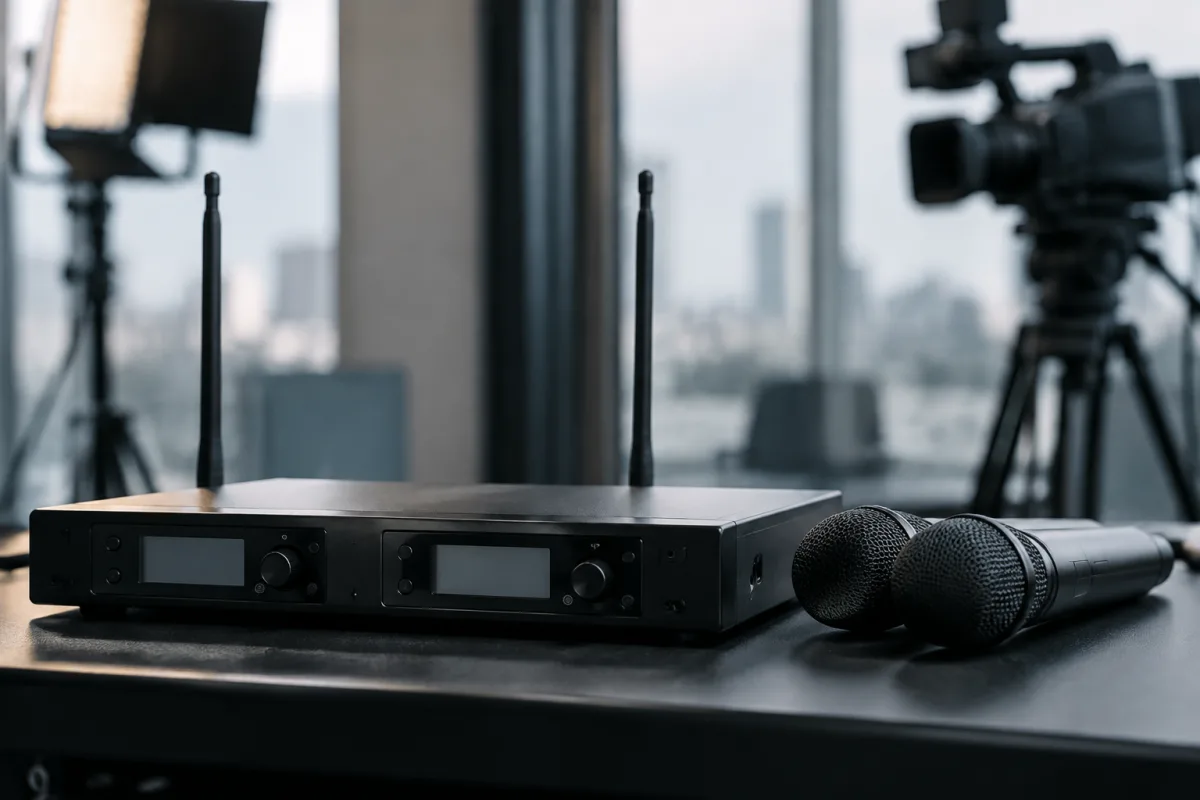
A Shure wireless microphone system is rather like a trusted accompanist who never makes mistakes—it simply works, reliably and without fuss. At the heart of every wireless system sits the receiver, the component that catches the signal travelling through the air and translates it back into usable audio. For anyone managing live sound, whether in a concert hall, theatre, or large rehearsal space, understanding the Shure wireless mic receiver is essential. It's the guardian of clarity and freedom of movement.
What a Shure Wireless Mic Receiver Does
The receiver in a wireless system is the stationary component that remains connected to your mixing console or amplifier. Your performer or speaker carries the transmitter (usually a handheld microphone or a bodypack), which sends audio via radio frequency across a distance. The receiver catches that signal, decodes it, and outputs clean audio to your sound system, much as a radio receives broadcast signals. The difference, of course, is that Shure systems are engineered to the exacting standards of professional audio—minimal latency, crystal clarity, and rock-solid reliability even in challenging RF environments.
Shure has been leading the wireless microphone field for decades, and their receiver technology reflects that heritage. Whether you need a single receiver for a solo performer or a rack-mounted multi-channel system for a full orchestra, Shure offers solutions designed to demand nothing of you but competent setup and basic maintenance.
Understanding Shure Receiver Models
Shure manufactures several receiver families, each serving different needs and scales:
- Wireless Workbench Series: Designed for smaller venues and installations, these single-channel receivers offer excellent value and straightforward operation for local venues and smaller productions.
- ULX-D Digital System: Shure's premium digital wireless solution, offering superior RF management, wider frequency range, and networked multi-channel operation. Ideal for professional theatre, broadcast, and touring operations.
- ULXD4D Quad Receiver: A four-channel receiver in a single unit, allowing simultaneous operation of up to four wireless microphones. Invaluable for any venue where multiple performers need freedom of movement.
- PSM (Personal Sound Monitor) Receivers: Specialised for in-ear monitor systems rather than main audio mixing. Used extensively in live theatre and broadcast monitoring applications.
- Legacy Analog Systems: Older ULX and SLX series receivers remain in widespread use, though most new installations move toward digital systems for their superior RF immunity.
The choice between these systems depends on your venue size, budget, and intended application. A small theatre might require only one or two channels; a large music festival could need a dozen or more simultaneous wireless systems.
Key Features to Understand
Shure wireless receivers share several important features that define their performance. Frequency coordination is critical; you need to ensure your receivers operate on frequencies that don't interfere with one another or with other RF equipment in your venue. Shure provides sophisticated software for managing this across multiple systems. The receiver displays signal strength and battery level of your transmitters, allowing you to catch problems before they occur. More advanced models offer networked control, meaning a single technician can monitor and adjust multiple receivers from a central control station.
Audio output options vary by model, but most provide both balanced XLR output and unbalanced alternatives, allowing integration into virtually any mixing console or amplification setup. The audio quality is transparent; the receiver simply retrieves the signal sent by your transmitter without colouration or distortion. This transparency is precisely what you want—the microphone sound should come through faithfully, with the wireless system itself being completely inaudible.
Choosing the Right Receiver for Your Needs
A single performer requiring freedom of movement needs only one or two channels; a single receiver handles that elegantly. A choir or theatre production with multiple soloists and actors needs enough channels for simultaneous wireless microphone operation—typically four to eight for most stage applications. Broadcast studios and large touring productions may require many more, sometimes using networked receiver systems that operate dozens of channels simultaneously.
Budget is always a consideration, but skimping on wireless receivers is false economy. Shure systems occupy the professional space precisely because they remain reliable under demanding conditions. A failed system at a critical moment can derail an entire production. Purchasing quality equipment now prevents such disasters later.
Installation and Technical Considerations
A Shure wireless receiver typically occupies minimal rack space and integrates simply into your existing audio infrastructure. The antenna placement is critical; poor antenna positioning dramatically reduces range and reliability. Shure provides guidance on optimal antenna placement, and most installations benefit from external antennas mounted at an elevated position with clear line of sight to transmitters. The receiver itself should sit in a well-ventilated location with stable temperature; whilst these devices are built robustly, they appreciate reasonable operating conditions.
Frequency coordination deserves particular emphasis. RF environments are increasingly congested, particularly in cities and venues sharing space with broadcast facilities. Modern Shure receivers offer sophisticated frequency coordination tools that identify available frequencies and assign them intelligently to avoid interference. This is something handled during initial setup, but understanding the concept is important for anyone managing wireless systems.
Maintenance and Care
Shure wireless receivers require minimal maintenance beyond occasional cleaning of antenna connectors and ensuring proper ventilation. The remote batteries in your transmitters, of course, require regular attention and replacement according to the manufacturer's specifications. Most users develop a simple routine: checking signal strength before each use, replacing batteries preventively, and monitoring the system during operation for any anomalies.
A Shure wireless mic receiver is ultimately a remarkably undemanding piece of equipment. When properly installed and configured, it simply works. That reliability, that quiet competence, is precisely what makes Shure systems the standard choice in professional settings. The technology remains invisible, allowing your performers and speakers to focus entirely on their work, free to move across a stage or through a space without the umbilical cord of a microphone cable.


Comments