


Shure Condenser Mic Buying guide
Shure Condenser Mic: A Complete Buyer's Guide
Selecting the right Shure condenser mic requires understanding diaphragm size, polar pattern, and your actual recording needs. This buying guide helps you invest in the right model.
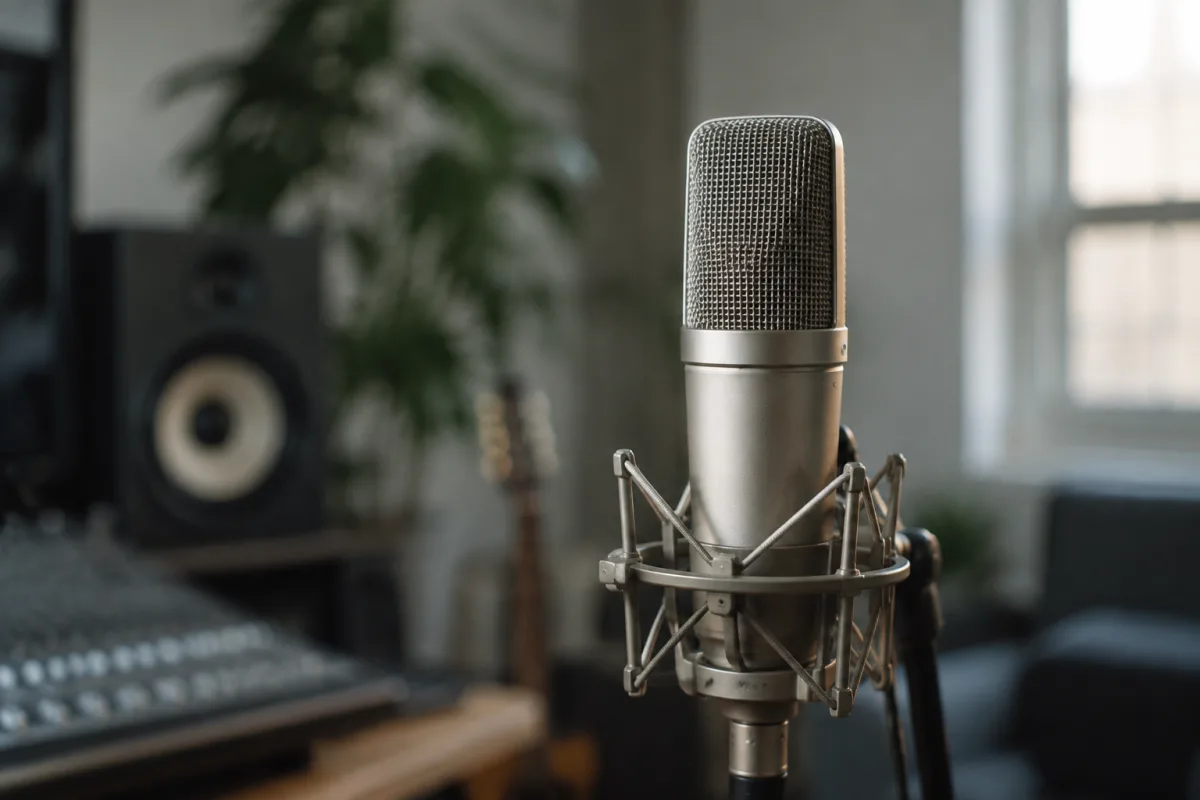
Shure has produced industry-standard studio microphones for decades, and their condenser microphone range remains the go-to choice for recording professionals worldwide. But selecting the right Shure condenser mic requires understanding specifications, applications, and your actual budget. This buying guide covers what matters: diaphragm size, polar pattern, presence peak, and SPL handling. Whether you need a vocal workhorse, overhead mic, or general-purpose studio condenser, knowing how to evaluate a Shure condenser mic ensures you invest in the right model for your recording needs.
Shure Condenser Mic Model Range and Price Structure
Shure’s condenser microphone lineup spans budget-conscious entry models to studio reference standards.
- KSM9/KSM9HS — Flagship vocal Shure condenser mic. Legendary presence peak for cutting through mixes. £2,500–£3,500 new. The reference for professional vocals and podcasting.
- KSM137/141 — Cardioid and omnidirectional small-diaphragm condensers. Excellent overheads and instrument mics. £400–£600 each. Workhorse models found in every serious studio.
- KSM353/353ED — Large-diaphragm condenser, lavalier mounting. Spoken word and podcasting specialist. £300–£450. Underrated for vocals at the price point.
- KSM8/KSM8HS — Cardioid dynamic (hybrid), not pure condenser but often compared. Excellent for live vocals and loud sources. £300–£500.
- KSM44A — Omnidirectional small-diaphragm condenser. Stereo-pair friendly. £500–£700. Classic orchestral recording choice.
Diaphragm Size: Large vs. Small-Diaphragm Shure Condensers
Diaphragm diameter shapes frequency response and best application for a Shure condenser mic.
| Type | Typical Use | Presence Peak | Best For (Shure) |
|---|---|---|---|
| Large-diaphragm (1") | Vocals, spoken word, solo instruments | Pronounced, flattering | Vocal warmth and presence (KSM9) |
| Small-diaphragm (0.5") | Instrument overheads, room mics, acoustic instruments | Subtle, more neutral | Orchestral, classical, acoustic (KSM137) |
Polar Pattern: Understanding Your Shure Condenser Mic’s Directionality
Polar pattern determines how a Shure condenser mic rejects off-axis sound.
Cardioid Shure condenser mic: Most common. Rejects side and rear; precise isolation of source. Ideal for vocals, spoken word, and detailed instrument recording. Examples: KSM9, KSM137. Choose cardioid for controlled studio recording.
Omnidirectional Shure condenser mic: Picks up equally in all directions. Useful for room tone, stereo recording, and orchestral ambient capture. Examples: KSM141 (switchable), KSM44A. Less common for solo vocals but excellent for ensemble recording.
Figure-8 (bidirectional): Rare in Shure’s current lineup but available on some models. Records front and rear equally; rejects sides. Specialized; not essential for most home studios.
Specifications That Matter When Choosing a Shure Condenser Mic
Focus on these specs when evaluating a Shure condenser mic purchase.
- Presence peak — Measured in dB around 2–5 kHz. Higher peak = more "shine" and assertiveness; lower peak = smoother, more neutral. Shure’s KSM9 has a pronounced presence peak (beloved by vocalists); KSM137 is flatter (better for overheads).
- Max SPL (Sound Pressure Level) — How loud a source can be before clipping. Professional Shure condensers handle 130+ dB SPL; sufficient for drums, amplifiers, and most sources. Budget models may drop to 120 dB.
- Self-noise — Measured in dB-A. Lower is better. Shure condenser mics typically achieve 10–15 dB-A; excellent for silent recording environments.
- Polar pattern switchability — Some Shure condenser mics (KSM141) offer selectable patterns. Adds flexibility but complexity. Choose switchable if recording diverse sources; stick to fixed patterns for simplicity.
- Proximity effect — Cardioid condensers boost bass when sources are close. The KSM9 has moderate proximity effect; useful for vocal warmth but requires careful placement.
New vs. Used Shure Condenser Mics
Shure condensers are built to last; used examples represent excellent value.
New purchase: Full warranty, pristine condition, current spec sheets. Prices are premium but peace of mind justifies it for professional studios.
Used Shure condenser mic: Inspect the mesh grille for damage (affects polar response). Check the XLR connector for bent pins. Test the capsule visually — any visible distortion or discolouration signals potential damage. Reputable sellers (Reverb, Thomann used) offer buyer protection; private sellers carry risk. A well-maintained used Shure condenser mic can perform identically to new for 60–70% of the cost.
Matching Your Studio Setup to the Right Shure Condenser Mic
Choose based on your primary recording task.
- Vocal-focused studio: KSM9 is non-negotiable. Its presence peak and large diaphragm suit singing, podcasting, and voiceover. Budget alternative: KSM353ED.
- Acoustic instrument and orchestral: Small-diaphragm cardioid pair (KSM137 stereo pair). Neutral, detailed, excellent phase coherence for stereo recording.
- Multi-purpose home studio: Start with a single KSM137. Cardioid, small-diaphragm, versatile enough for vocals, guitar, room tone. Add a KSM9 later for dedicated vocal tracking.
- Live sound reinforcement: KSM9HS (hypercardioid variant) for maximum feedback rejection. More directional; excellent for stage monitoring.
Budget Guidance for Shure Condenser Mic Purchases
- £200–£400 — Budget small-diaphragm cardioid (KSM137). Solid studio workhorse; excellent value.
- £400–£700 — Quality small-diaphragm or omnidirectional options (KSM44A, KSM141). Versatile for multiple recording tasks.
- £1,500–£3,500 — Professional large-diaphragm vocalists (KSM9, KSM9HS). Industry reference; professional-grade sound and build.
- £3,500+ — Specialty models or vintage Shure condensers. Diminishing returns for most home studios.
Conclusion: Invest in the Right Shure Condenser Mic for Your Studio
A Shure condenser mic is a long-term studio investment. The KSM9 remains the vocal reference for a reason — decades of professional use prove its worth. For orchestral, acoustic, and general recording, the KSM137 delivers studio-quality results at a fraction of the flagship price. Avoid over-speccing; a single versatile small-diaphragm condenser launches a studio far more effectively than a single expensive large-diaphragm model. Choose based on your primary recording task, check used options for value, and you’ll own a microphone that sounds professional for the next decade.
Cross-Reference
For a comprehensive overview of Shure condenser microphone models, construction, and applications, see our complete guide to Shure condenser mics.


Comments