
Shure Radio Microphones article
The Complete Guide to Shure Radio Microphones
Shure radio microphones are the gold standard for wireless vocal capture. Discover how they work, system options, and why professionals worldwide trust them.
Understanding Shure Radio Microphones for Professional Applications
Shure radio microphones represent the gold standard in wireless vocal capture for live performances, presentations, and broadcasts. When you watch a professional stage production and notice performers moving freely whilst remaining clearly audible, they're almost certainly using Shure wireless systems. The company's dominance in this market isn't accidental—decades of refinement have resulted in systems offering reliability, sound quality, and user-friendliness that competitors struggle to match.
The appeal of Shure radio microphones extends beyond simple convenience. A properly configured wireless system lets performers forget about microphones entirely, focusing on their performance. The technology becomes invisible—the audience hears your voice or instrument exactly as intended, without cables constraining movement or acoustic issues degrading clarity. That invisibility is Shure's gift to performers and production teams alike.
How Shure Radio Microphones Work
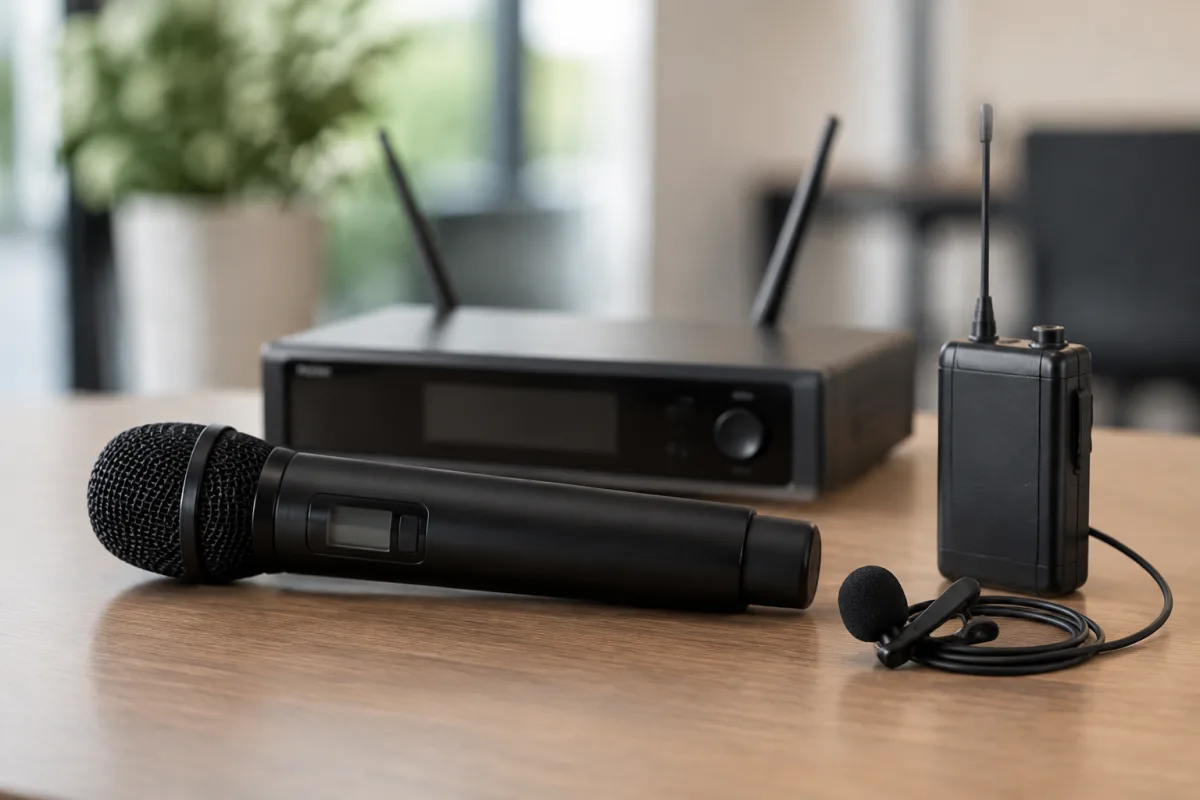
A Shure radio microphone system consists of three primary components: the wireless microphone (handheld or lavalier), a belt-pack transmitter, and a receiver connected to the sound system. The microphone captures your voice, sends it via wireless to the transmitter, which broadcasts to the receiver, which finally sends the signal to your mixer or recording device. Modern Shure systems handle this chain with impressive fidelity and reliability.
Frequency selection matters enormously for wireless systems. Shure radio microphones operate in specific RF (radio frequency) bands chosen to avoid interference from television broadcasts, mobile phones, and other wireless equipment. The UHF (ultra-high frequency) band is standard for professional systems, offering broader frequency allocation and more reliable performance than older VHF systems.
Shure's Professional Wireless Systems
The GLXD (Graphic Wireless Digital) series represents Shure's contemporary professional standard. These systems offer digital transmission for improved reliability and frequency allocation, network connectivity for remote monitoring and control, and user-friendly touchscreen interfaces. The GLXD systems work seamlessly together—you can deploy multiple microphones without frequency conflicts.
The ULX series bridges professional and prosumer markets. These systems deliver professional-grade reliability and sound quality at lower price points than GLXD. Many churches, theatres, and touring bands operate successfully with ULX systems. The tradeoff is fewer advanced features—less flexibility in frequency selection, simpler user interfaces. But the core technology—capture fidelity and wireless stability—remains world-class.
The Wireless Workbench software that accompanies professional Shure radio microphones lets you pre-configure systems, manage multiple devices, and troubleshoot wireless issues without on-site experimentation. For touring productions, rental companies, and broadcast facilities, this software represents genuine operational efficiency gains.
Microphone Selection for Shure Wireless Systems
Shure radio microphones ship with various capsule options. The SM86 represents the standard for lead vocals—a condenser design with presence peak that makes voices cut through mix clearly and powerfully. For backing vocals or ensemble work, the KSM86 offers more refined, less aggressive presence. For harsh voices or aggressive styles, the dynamic SM58 capsule tames brightness.
Lavalier capsules—the tiny clip-on variety—come in omnidirectional or cardioid patterns. Omnidirectional lavs pick up everything equally, ideal for actors who move and turn during performance. Cardioid patterns reject sound from the rear, useful in noisy theatrical environments. Shure offers lavalier options in condenser or dynamic, giving you tonal control alongside pattern choices.
Bodypack Transmitters and Battery Life
The bodypack transmitter—typically attached to a belt or taped to a performer's body—contains the RF transmission electronics and battery. Shure uses replaceable batteries (AA lithium-ion or disposable alkaline depending on model) that provide 8-16 hours of operation depending on RF power settings. For touring applications, having spare batteries allows continuous operation through multiple performances.
Battery efficiency is a genuine Shure advantage. Lower power consumption means longer operation between charges, reducing the risk of mid-performance battery failure. Modern Shure systems also include battery monitoring—you can see remaining battery life on the receiver, allowing proactive swaps before depletion.
Receiver Options and Installation Flexibility
Single-channel receivers handle one wireless microphone. Dual-channel receivers manage two simultaneously. Multi-channel receivers (4, 6, or more channels) let large productions deploy numerous wireless microphones from a single rack-mountable device. Shure's modular receiver design means you can start small and expand as needs grow—adding channels without replacing existing hardware.
Antenna placement and configuration significantly impact reliability. Shure receiver antennas should be positioned to achieve line-of-sight to transmitters across the performance space. In difficult RF environments—venues with metal structures or RF-noisy neighbours—antenna placement strategy becomes a genuine art form. Shure's technical support helps optimize antenna configurations for problem locations.
Applications and Professional Use
Theatre productions rely on Shure radio microphones for actors to be heard clearly whilst moving around the stage naturally. The wireless freedom eliminates the need for fixed microphone positions. Backup performers, orchestra members, and even off-stage voices use Shure systems for complete theatrical sound coverage.
Live music touring depends heavily on Shure radio microphones for lead vocals, guest performers, and acoustic instruments requiring amplification. The reliability means productions can confidently deploy wireless systems for stadium shows, festival performances, and international tours where consistency across venues is essential.
Corporate presentations and educational lectures benefit from Shure wireless—speakers can move freely around rooms without needing to stay near a podium microphone. The professional appearance of wireless lapel systems adds polish to presentations. Houses of worship use Shure systems for pastors, musicians, and choir members.
Sound Quality and Frequency Response
Despite wireless transmission, Shure radio microphones maintain impressive sound quality. The frequency response remains accurate, distortion stays low, and the presence peak characteristic of each capsule type is preserved. Many professional engineers report that quality wireless systems sound indistinguishable from wired equivalents—high praise given the technical complexity of RF transmission.
Noise performance is another Shure strength. The systems maintain low self-noise (the inherent hiss of the electronics), allowing you to push gain levels without introducing background noise. This is particularly important when miking quiet sources like acoustic guitars or soft vocals.
Choosing and Maintaining Shure Wireless Systems
Start by assessing your actual needs. How many simultaneous channels? Which RF frequency options are legal in your country? Will you need monitoring capabilities or remote control? Shure offers entry-level systems for single-microphone applications and complex professional rigs for multi-channel touring. Matching system scale to your requirements ensures you invest appropriately.
Maintenance for Shure radio microphones is straightforward—keep transmitter batteries fresh, ensure antennas are functioning, and perform periodic firmware updates on digital systems. Regular inspection of cables and connectors prevents signal quality degradation. Most Shure systems are engineered for years of reliable service with minimal maintenance beyond basic care.
Shure radio microphones have earned their industry dominance through consistent reliability, excellent sound quality, and thoughtful engineering. Whether you're running a single wireless microphone system or managing a complex multi-channel deployment, Shure provides the professional tools that performers and engineers trust.


Comments