
Sennheiser Wireless article
The Complete Guide to Sennheiser Wireless
Sennheiser wireless microphone systems are industry standards for live performance and broadcast. This guide explores product lines, sound quality and how to evaluate Sennheiser wireless for your specific application.
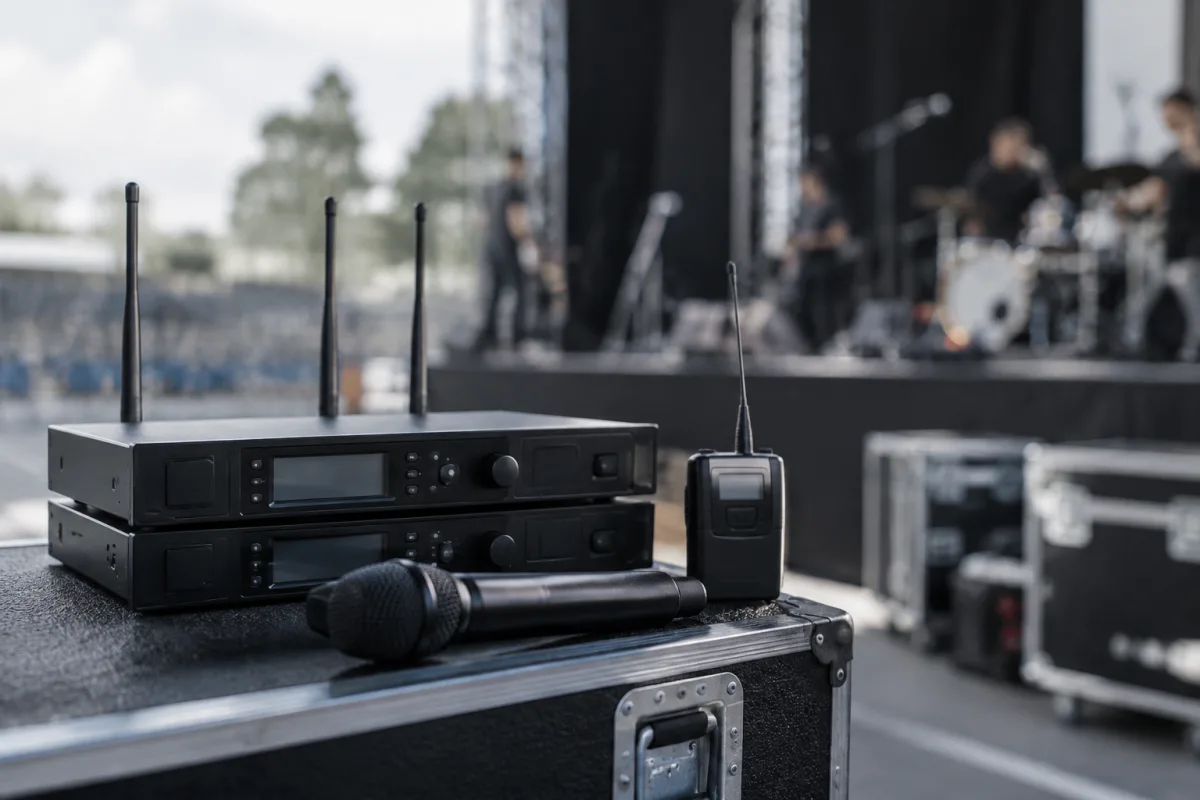
Sennheiser wireless microphone systems have established themselves as industry standards across live performance, theatre, corporate events and broadcast production. Known for reliability, sound quality and innovation, Sennheiser wireless offerings range from entry-level systems for small venues to professional-grade equipment trusted by major broadcasters. This guide explores what makes Sennheiser wireless systems distinctive and how to evaluate options for your specific needs.
Understanding Sennheiser Wireless System Architecture
Sennheiser wireless systems comprise three core components: a wireless microphone (lavalier, handheld or headset), a body pack transmitter worn by the performer, and a stationary receiver connected to the venue's sound system. Modern Sennheiser wireless systems operate on UHF frequencies offering excellent range and interference resistance compared to older VHF-based systems.
The Sennheiser wireless approach prioritises reliability and transparency—the system disappears from consciousness, delivering clean audio without distracting dropouts or noise. This philosophy guides everything from receiver sensitivity to transmitter power efficiency, creating systems that simply work in challenging real-world environments.
Popular Sennheiser Wireless Product Lines
The EW (Evolution Wireless) series represents Sennheiser wireless technology at accessible price points. EW 100 systems suit small venues and basic applications, delivering reliable operation for presentations and small events. EW 300 and EW 500 series target professional installers and touring acts, offering superior audio quality and advanced features.
The EW-D digital series represents Sennheiser wireless innovation using 2.4GHz digital transmission. This frequency choice offers immunity to RF interference endemic to crowded venues and broadcast facilities. Digital transmission also enables advanced features like automatic frequency coordination and encrypted audio, appealing to broadcasters and large venues.
Sennheiser wireless systems targeting specific applications include instrument-mounted options for live drum and guitar use, headset designs for fitness instructors and performers, and ultra-compact body packs for theatrical applications where size matters.
Sound Quality Characteristics
| Series | Frequency Response | Signal-to-Noise | Typical Use | Price Range |
|---|---|---|---|---|
| EW 100 | 80Hz–16kHz | 100dB | Presentations, small events | £400–£700 |
| EW 300 | 50Hz–20kHz | 107dB | Theatre, live performance | £1,000–£1,600 |
| EW 500 | 50Hz–20kHz | 110dB | Touring, broadcast quality | £1,500–£2,500 |
| EW-D Digital | 50Hz–20kHz | 112dB | Large venues, broadcast | £2,000–£4,000+ |
Even entry-level Sennheiser wireless systems deliver frequency response adequate for full-spectrum instrument and voice reproduction. The difference between series lies in preamp quality, transmitter efficiency and receiver sensitivity—factors influencing performance in challenging RF environments rather than basic audio fidelity.
Frequency Coordination and Interference
Sennheiser wireless systems operating in crowded RF environments benefit from frequency coordination—assigning channels that avoid interference from competing wireless systems, mobile networks and building electrical systems. Automated frequency coordination software (available on professional series) scans available frequencies and recommends non-interfering channels instantly.
The 2.4GHz EW-D digital systems sidestep many of these concerns through digital encoding and spread spectrum technology, making them popular choices for large events where frequency congestion is problematic. However, 2.4GHz popularity means WiFi interference becomes a concern—Sennheiser digital systems employ robust error correction addressing this challenge.
Microphone Options Within Sennheiser Wireless
Sennheiser wireless lavalier microphones prioritise hands-free operation for public speakers and performers. Compact, discrete designs blend into formal attire whilst cardioid patterns reject room noise. For singers and speakers who want maximum positioning flexibility, handheld Sennheiser wireless microphones offer the classic microphone feel with wireless freedom.
Headset designs secure the microphone permanently, ensuring consistent proximity for theatrical applications, fitness instructors and performers moving dramatically. Instrument-mounted capsules let guitarists and drummers use Sennheiser wireless without body packs, ideal for energetic performances.
Sennheiser designs these microphones expecting real-world treatment—sweat, rain, accidental drops and extreme temperature swings. Build quality and ruggedness distinguish Sennheiser wireless from cheaper alternatives failing after minimal touring use.
Transmission Range and Coverage
Professional Sennheiser wireless systems deliver reliable coverage 100+ metres in open space, less in venues with metal structures and dense audiences. Receiver antenna placement critically affects range—position antennas high and central in your venue for optimal coverage. Distributed antenna systems (multiple receivers in different venue locations) ensure consistent signal throughout large spaces.
Battery efficiency in Sennheiser wireless transmitters means 8–12 hours continuous operation on alkaline batteries, extending to 16+ hours with lithium alternatives. Professional users carry spares—if your transmitter dies mid-performance, quickly swapping to a fresh battery keeps your show moving.
Latency and Synchronisation
Modern Sennheiser wireless systems introduce minimal latency (typically under 4ms)—imperceptible to listeners and performers. This technical achievement enables live monitoring where performers hear themselves through their personal in-ear mixing system mixed with the Sennheiser wireless audio. Lower latency means tighter performer-backing track synchronisation.
When using multiple Sennheiser wireless channels simultaneously (multiple speakers or performers), receivers stay synchronised meaning audio arrives simultaneously to the mixing console. This matters enormously for live theatre and large events where timing precision is critical.
Professional Applications
Theatre productions rely on Sennheiser wireless for hands-free actor microphones enabling movement across stage without losing audio quality. Fast-paced action scenes, stage violence and strenuous choreography demand rugged, reliable Sennheiser wireless systems that perform consistently through hundreds of performances.
Broadcast facilities and live event venues use Sennheiser wireless as standard issue because of legendary reliability. When your show goes out live to millions of viewers, you choose proven systems that never embarrass you with audio dropouts or noise.
Setup and Maintenance
Sennheiser wireless systems benefit from initial professional setup—frequency coordination, antenna placement, receiver positioning and audio calibration. This investment pays dividends through years of reliable operation. User manuals support DIY setup for simpler systems, though professional consultation helps optimise performance.
Regular maintenance (battery replacement, microphone element cleaning, cable inspection) keeps Sennheiser wireless systems performing optimally. Most components are user-replaceable, extending equipment life and reducing long-term ownership costs.
Evaluating Sennheiser Wireless for Your Application
Entry-level Sennheiser wireless systems suit presentations, small events and basic institutional use. Professional series justify investment for touring acts, large venues and applications where reliable, high-quality audio is non-negotiable. Digital systems suit venues with severe RF congestion and broadcast applications demanding interference immunity.
Test Sennheiser wireless systems in your actual venue before committing. Bring your own RF equipment to evaluate coexistence. Professional installers can coordinate frequencies and optimise antenna placement, maximising performance in your specific environment.
Integration With Modern Sound Systems
Sennheiser wireless systems integrate seamlessly into professional audio workflows. XLR outputs connect directly to mixing consoles. Digital systems support networked audio protocols enabling remote monitoring and control. These professional integrations appeal to venues and touring companies building permanent or semi-permanent installations.
Choosing Sennheiser wireless reflects a philosophy valuing reliability, sound quality and professional integration. Whether you're running a small venue, producing theatre, broadcasting live events or touring internationally, Sennheiser wireless systems deliver the performance and peace of mind that keeps your audio working reliably night after night.


Comments