
Sennheiser Wireless Mic article
The Complete Guide to Sennheiser Wireless Mic
Sennheiser wireless microphones set the standard for professional live and broadcast applications. Discover the systems, features and setup practices that make Sennheiser trusted by touring professionals.
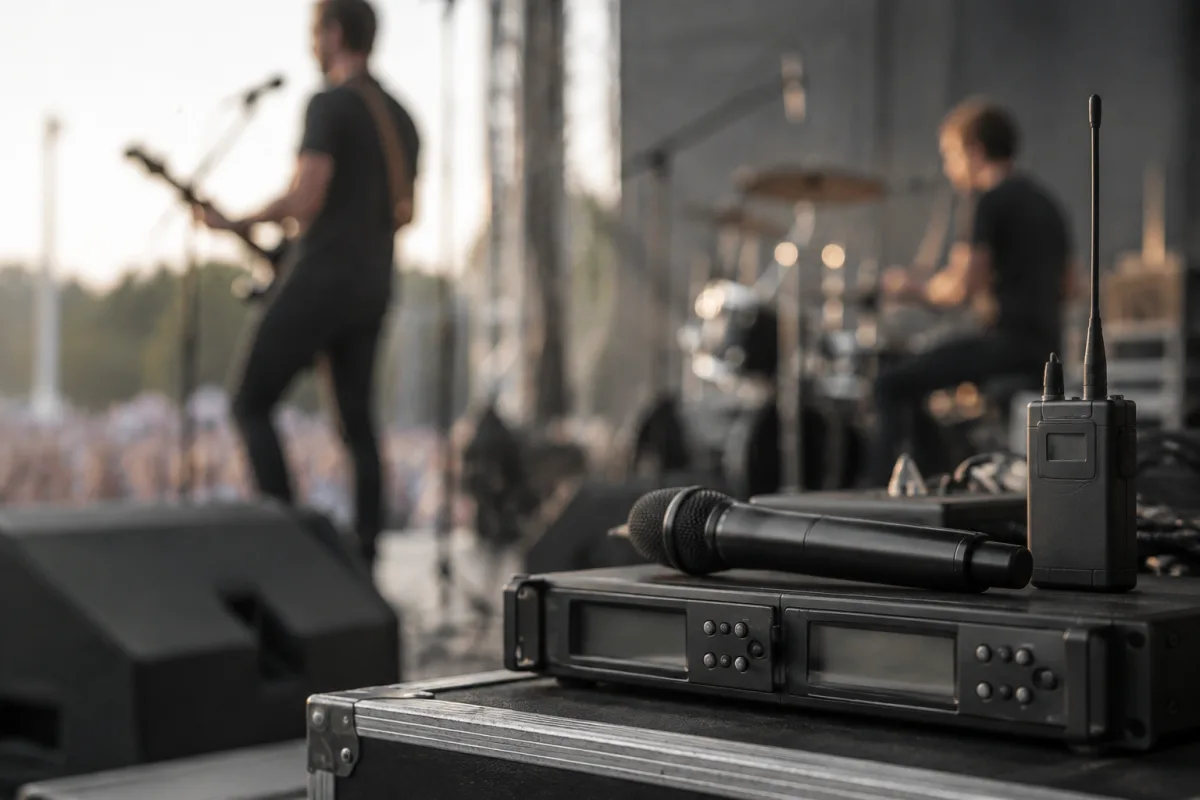
Sennheiser wireless microphones have set the standard for professional live and studio applications for decades. The German manufacturer's reputation for reliability, sound quality, and durability makes Sennheiser wireless mic systems the choice of touring performers, live sound engineers, and broadcast professionals. Whether you need a lavalier for a presentation, a headset for live performance, or a handheld for stage vocals, Sennheiser wireless microphones deliver consistency and clarity across demanding environments.
Why Sennheiser Wireless Microphones Lead the Industry
Reliability matters on stage and in live broadcast. A wireless microphone dropout during a performance or speech is catastrophic. Sennheiser wireless microphone systems combine rock-solid RF transmission, true diversity antenna design, and proven durability. Professional live sound engineers trust Sennheiser above nearly any competitor because the systems work, sound good, and keep working through hundreds of events.
Sennheiser wireless microphone lines span budget-conscious venues to touring festivals, each tier maintaining the brand's quality standards. That consistency—knowing that a Sennheiser system will perform as expected—justifies the premium price over cheaper alternatives.
Sennheiser Wireless Microphone Systems: Overview of Major Lines
Sennheiser organizes wireless systems by application and budget:
EW (Evolution) series — The mainstream line. EW100, EW300, and EW500 offer increasing features and frequency flexibility. Most touring and rental companies stock EW series systems. These Sennheiser wireless microphone options span £400–£1,500+ per system.
D7 and EW-DX series — Digital wireless, reducing interference and expanding frequency options. More expensive than analogue but future-proof. Used in high-profile touring and broadcast where interference risk is critical.
AVX series — Compact, portable Sennheiser wireless microphone systems aimed at content creators, presenters, and smaller venues. £600–£1,200, offering freedom without the bulk of larger rigs.
XSW series — Budget-friendly entry-level Sennheiser wireless microphone options for smaller venues, churches, and starting-out performers. Still maintains Sennheiser quality at £300–£600.
Microphone Types Within Sennheiser Wireless Systems
Sennheiser wireless microphone offerings include multiple types for different applications:
Handheld Sennheiser wireless microphones (e825, e835, e945) — Professional-grade handheld capsules for lead vocals and spoken word. The e935 is the industry standard for live vocals. Bright presence peak cuts through stage mixes.
Lavalier/omnidirectional (ME2, ME4) — Miniature condenser capsules for hands-free speaking, presentations, and lecturing. Excellent polar pattern rejection reduces stage feedback.
Headset Sennheiser wireless microphone options — Wearable boom mics for fitness instructors, aerobics performers, and theatre production. Secure fit, hands-free operation, professional sound.
Clip-on lavalier — Hidden condenser mics clipped to clothing. Ideal for corporate presentations and broadcast. Nearly invisible on stage.
Key Features of Sennheiser Wireless Microphone Systems
What separates Sennheiser wireless microphone systems from cheaper alternatives:
| Feature | What It Does | Why It Matters |
|---|---|---|
| True diversity antenna | Dual antennas combat RF dead zones and multipath reflections | Fewer dropouts, smoother coverage across venues |
| Automatic frequency management | Sennheiser wireless systems scan and avoid interference on startup | Instant setup in crowded RF environments; no manual tuning |
| Audio companding | Dynamic range compression in the transmitter, expansion in the receiver | Clean, hiss-free audio even at low signal levels |
| Backup battery alarm | LED and audio warning when batteries run low | No surprise dead mics mid-performance |
| Metallic chassis | Rugged build, not cheap plastic | Survives touring, drops, and abuse |
Sennheiser Wireless Microphone Frequency Considerations
Sennheiser wireless microphone systems operate on licensed or license-free UHF bands depending on region:
UK and Europe: Typically 470–790 MHz (TV white space). The 790 MHz band phased out in early 2020; older Sennheiser wireless microphone systems operating there needed frequency conversion.
USA: Multiple bands available; 600 MHz band popular but contracted to TV broadcasters. Touring systems often include flexible Sennheiser wireless microphone transmitters capable of operating across multiple approved bands.
Check local regulations before purchasing. Professional Sennheiser wireless microphone systems often cost more partly because they include frequency coordination for touring across regions.
Sennheiser Wireless Microphone Setup and Best Practices
Getting the best performance from Sennheiser wireless microphone systems requires proper technique:
- Mount antennas vertically — Separated by at least 1 metre. Horizontal antenna placement reduces range and causes nulls (dead zones).
- Scan frequencies on startup — Let Sennheiser wireless microphone systems automatically detect and avoid interference.
- Use the provided cables — Cheap third-party XLR cables degrade RF shielding. Sennheiser wireless microphone systems deserve proper cabling.
- Position the receiver away from the stage — RF interaction and reflections reduce transmission reliability. Keep receivers at monitor positions, not behind the stage.
- Use quality batteries — Cheap batteries die unpredictably. Sennheiser wireless microphone systems perform best with name-brand alkaline or NiMH rechargeable.
Sennheiser Wireless Microphone Cost and Budgeting
Sennheiser wireless microphone systems cost more than budget brands, justified by reliability and longevity:
Entry-level (XSW series): £300–£600 per system. One transmitter, one receiver, basic features. Good for churches, small events, starting out.
Professional (EW series): £700–£1,500 per system. Industry workhorse. Most touring rental companies stock these.
Premium (D7, EW-DX): £1,500–£3,000+ per system. Digital, future-proof, used in high-profile touring and broadcast.
Budget multiple systems. Professional venues and touring bands run 2–4 Sennheiser wireless microphone systems simultaneously for redundancy and coverage.
Competing with Other Wireless Microphone Brands
Sennheiser wireless microphones compete primarily with Shure (ULXD, QLX series) and newer options from brands like Electro-Voice and Audio-Technica. Shure systems are equally professional and popular in North America; Sennheiser dominates European touring. Both brands are reliable; choice often comes down to existing infrastructure and personal preference.
Conclusion
Sennheiser wireless microphone systems justify their premium through reliability, sound quality, and durability across demanding live and broadcast environments. Whether you're outfitting a venue, touring live, or investing in professional audio, Sennheiser wireless microphones deliver consistency and performance that justifies the investment. Choose the line matching your application and budget, invest in quality antennas and cabling, and trust that your Sennheiser wireless microphone system will perform when it matters most.


Comments