
Monitor Neumann article
The Complete Guide to Monitor Neumann
Neumann monitoring equipment represents eight decades of precision engineering. Explore why professional studios worldwide trust Neumann for accurate, colourless audio monitoring.
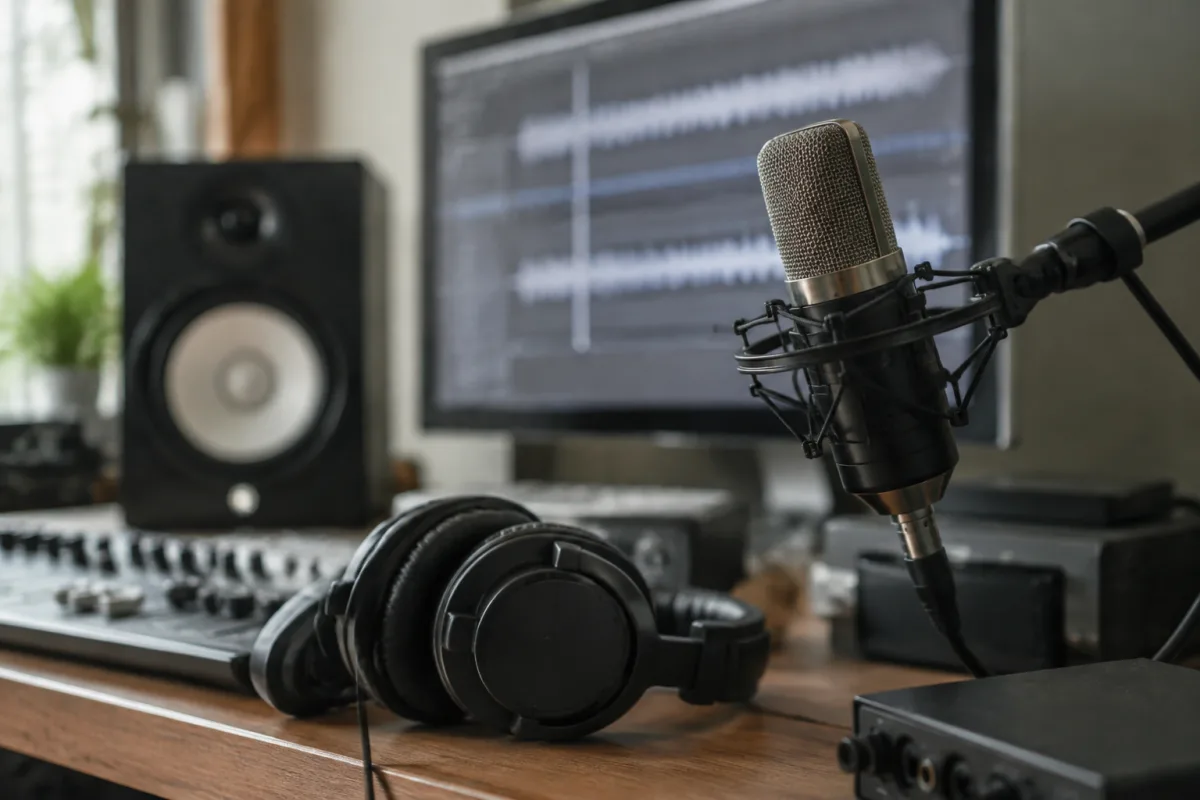
Neumann, the legendary German microphone and audio equipment manufacturer, represents the gold standard in professional studio monitoring. Their monitoring microphones and systems are trusted by recording engineers, mastering professionals, and broadcasters worldwide for their uncoloured, honest reproduction of sound. Whether you're recording vocals in a home studio, mastering a finished mix, or monitoring live broadcast audio, Neumann monitoring equipment delivers the accuracy required to make critical decisions about your sound. Their reputation — built over eight decades of precision engineering — makes a Neumann monitor microphone instantly recognisable as professional-grade equipment.
Neumann's Legacy in Studio Monitoring
Founded in 1928 by Georg Neumann in Berlin, the company pioneered vacuum-tube microphone design and has remained at the forefront of professional audio equipment ever since. Neumann's monitoring products represent an evolution of that engineering philosophy: absolute fidelity to the source sound, with minimal colouration or distortion.
In the context of studio recording, a "monitor" microphone refers to microphones designed for critical listening and control room applications, where accuracy is paramount. Neumann's monitor offerings include both large-diaphragm condenser microphones suitable for main monitoring channels and specialised measurement microphones for precise acoustic assessment.
The Neumann name carries such weight in professional circles that owning Neumann gear signals commitment to quality. This reputation extends from their legendary microphones (the U87, the U67, the TLM series) to their monitoring and measurement equipment.
Key Neumann Monitoring Products
Neumann offers several monitor-grade microphones and solutions:
- Large-diaphragm condenser microphones. Models like the U87, U89, and TLM102 are used not just for recording vocals and instruments, but also as reference monitors in control rooms. Their flat, accurate response makes them ideal for critical monitoring.
- Lavalier and overhead microphones. Designed for broadcast and live sound monitoring, capturing dialogue and environmental audio with precision.
- Measurement microphones. Specialised instruments for acoustic testing and room analysis, allowing engineers to assess acoustics before recording begins.
- Monitor controller systems. Neumann's monitoring solutions extend to signal routing, level control, and reference monitoring systems for professional control rooms.
Why Neumann Monitoring Gear Matters in Studios
Recording and mixing decisions depend entirely on what you hear. If your monitoring chain — microphones, preamps, monitoring speakers, and control room acoustics — colours the sound, your mixes will be inaccurate. You'll add compression where none is needed, boost frequencies that aren't actually present, and miss actual problems in the recording.
Neumann monitoring equipment provides the neutral, honest sound foundation that allows engineers to make correct decisions. A Neumann U87 monitoring a mix, for instance, reveals exactly what's happening in the recording without flattering or masking problems. This transparency, whilst sometimes uncomfortable for the artist being recorded, is essential for professional-quality results.
The Cost of Neumann Monitoring Equipment
Professional-grade Neumann monitoring equipment is expensive. A new Neumann U87 costs £2500–3500. Measurement microphones cost £1500–5000+. This pricing reflects the precision engineering, materials, and customer support included. For hobby studios or small projects, this investment is often unjustifiable. However, for professional recording studios, mastering facilities, or broadcast environments where accuracy directly affects product quality and reputation, Neumann's cost is justified by the superior results.
Second-hand Neumann equipment offers a practical alternative. Vintage Neumann microphones from the 1960s and 1970s remain highly desirable because they still perform at professional standards decades later. The used market for Neumann gear is robust, allowing budget-conscious studios to own genuine professional equipment at half the new price.
Neumann Monitoring in Professional Contexts
| Context | Neumann Monitor Use | Why It Matters |
|---|---|---|
| Professional recording studio | Main monitoring microphone, reference chain during mixing | Ensures client recordings sound professional and mixes are accurate |
| Mastering facility | Critical listening reference, measurement microphone for room analysis | Guarantees masters translate across all playback systems |
| Broadcast station | Monitoring incoming talent and on-air performers | Ensures broadcast audio meets quality standards |
| Theatre or live event venue | Front-of-house and monitor mixing reference | Allows sound engineers to make real-time mixing decisions with confidence |
Alternatives to Neumann Monitoring Equipment
Whilst Neumann remains the prestige choice, alternatives exist. Microtech Gefell (inheritors of Telefunken microphone technology), Brüel & Kjær (specialised in measurement equipment), and newer brands like Shure and Audio-Technica offer quality monitoring microphones at lower price points. However, none quite match Neumann's reputation or the consistency of their design philosophy across decades.
For serious studios seeking monitoring accuracy, a Neumann monitor microphone represents a one-time investment that will outlast trends and provide reliable, honest sound for decades. It's the choice of professionals not because it's fashionable, but because it works.


Comments