
Lavalier Mics article
The Complete Guide to Lavalier Mics
Lavalier mics deliver hands-free professional voice capture for presenters, performers, and content creators, combining invisible design with reliable audio clarity across theatre, broadcast, and education.
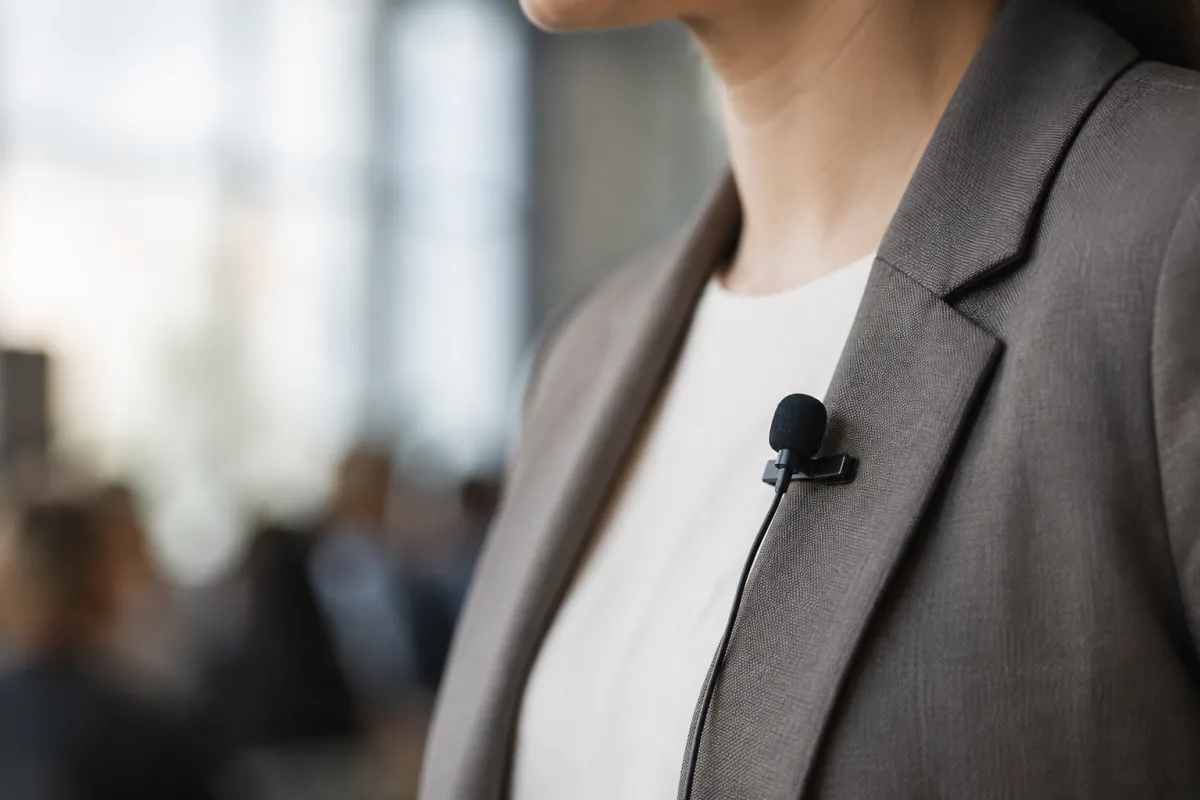
Lavalier mics represent a specialised category of microphones designed for hands-free voice capture, ideal for presenters, performers, journalists, and content creators who need reliable audio without holding or mounting a microphone. These compact condenser microphones clip to clothing, capturing clear dialogue and vocals whilst remaining virtually invisible to audiences. Whether you're speaking at a conference, performing on stage, recording interviews, or streaming content, quality lavalier mics deliver professional audio clarity and freedom of movement essential for modern communication. This guide explores lavalier mics capabilities, applications, and selection criteria.
Understanding Lavalier Microphones
Lavalier mics, also known as lapel microphones or clip-on mics, are designed to attach to clothing near the mouth. The microphone element itself is tiny—typically 5–8mm in diameter—but sophisticated condenser technology captures voice with remarkable clarity. Lavalier mics connect via a thin cable to a wireless transmitter (for wireless systems) or directly to recording equipment (for wired lavalier mics), allowing users complete freedom of movement whilst maintaining consistent microphone positioning and audio capture.
The design philosophy behind lavalier mics prioritises mobility and discretion. Unlike handheld or stand-mounted microphones that demand user attention and spatial awareness, lavalier mics operate invisibly. This liberation transforms how performers, speakers, and presenters can interact with their environment—gesturing naturally, moving freely, and engaging audiences without technical constraints.
Types of Lavalier Mics
Lavalier mics fall into two main categories: wireless lavalier mics and wired lavalier mics. Wireless lavalier mics use a battery-powered transmitter connected to the microphone element via a thin cable. The transmitter broadcasts audio to a receiver worn on the body or placed nearby, offering maximum mobility. Wireless lavalier mics are standard in theatre, television, conference presentations, and live events.
Wired lavalier mics connect directly to recording devices via a 3.5mm jack or USB connector. These systems eliminate transmission concerns and battery management, making them ideal for interviews, podcasts, and film production. Wired lavalier mics often provide superior audio consistency and are preferred in professional recording environments where cable routing is manageable.
Applications for Lavalier Mics
Lavalier mics excel across numerous professional and creative contexts:
- Theatre and live performance: Actors wear lavalier mics to deliver amplified vocals throughout venues. Modern stage lavalier mics are virtually invisible, maintaining the illusion of unamplified performance.
- Public speaking and conferences: Presenters and speakers use lavalier mics to address audiences without holding microphones, enabling engaging delivery and natural gesturing.
- Television and film: Documentary and narrative productions rely on lavalier mics for intimate dialogue and interview capture, often supported by hidden boom microphones for environmental sound.
- Interviews and podcasts: Journalists and podcast producers use wired lavalier mics for clear, consistent voice capture across varied recording locations.
- Video content creation: YouTubers, online educators, and livestream performers use lavalier mics for professional-quality audio without visible microphone stands.
- Sports commentary: Sportscasters and commentators use lavalier mics to deliver real-time analysis whilst remaining mobile and visually present.
Key Specifications and Performance Metrics
| Specification | What It Means | Typical Range for Lavalier Mics |
|---|---|---|
| Frequency response | Range of audible tones captured | 50 Hz–20 kHz (voice-optimised) |
| Polar pattern | Directional sensitivity (where the mic picks up sound) | Omnidirectional (all directions) or cardioid (front-favoring) |
| Output impedance | Electrical resistance (affects compatibility) | 32–200 ohms |
| Maximum SPL | Loudest sound without distortion | 120–140 dB |
| Wireless frequency range | Distance lavalier mics transmit (wireless systems) | 50–300 metres depending on system |
Choosing Quality Lavalier Mics
Start by considering your intended use. Theatre and live events demand wireless lavalier mics with excellent range, durability, and stage-optimised frequency response. Film and video production benefit from cardioid lavalier mics that favour voice whilst rejecting background noise. Podcast and interview applications require lavalier mics with clear midrange and reliable wired connectivity.
Frequency response matters significantly. Professional lavalier mics tailored for voice emphasise the 1–8 kHz range where human speech clarity concentrates, whilst minimising low-frequency rumble and high-frequency noise. Compare lavalier mics frequency charts to identify models optimised for your vocal range.
Build quality directly affects longevity and reliability. Lavalier mics endure constant handling, cable flexing, and environmental exposure. Look for durable materials, secure connectors, and cables rated for repeated flexing. Professional-grade lavalier mics cost more initially but outlast budget alternatives significantly.
Optimal Placement and Mic Technique
Proper lavalier mics placement dramatically improves audio quality. Position the microphone capsule 15–20cm from the mouth, slightly below the chin and angled toward the mouth. Clip lavalier mics to the clothing directly over this point—typically 10–15cm below the neck on the torso. Avoid placing lavalier mics directly over the heart where clothing rustle is most pronounced.
Use lavalier mics clip attachments correctly. The clip should grip fabric securely but not so tightly it damages material. Test the clip's grip before performance or recording to prevent accidental drops. For wireless lavalier mics, conceal the cable routing along the body, tucking the transmitter into a pocket or attaching it to a belt.
Common Lavalier Mics Challenges and Solutions
Wind noise is the primary challenge for lavalier mics used outdoors. Purchase foam windscreens designed for your specific microphone model—they reduce wind noise dramatically without significantly affecting voice clarity. Clothing noise (rustling fabric) can degrade audio; position lavalier mics away from high-movement areas and use adhesive tape to secure cables to prevent friction against fabric.
For wireless lavalier mics, signal dropouts occur in environments with heavy radio-frequency interference (such as concert venues with multiple wireless systems). Professional wireless systems operate on frequency-agile channels that automatically switch to less-congested frequencies, mitigating this problem. Wired lavalier mics eliminate wireless concerns entirely but introduce cable management considerations.
Maintenance and Care
Clean lavalier mics regularly with a soft, dry cloth to prevent dust accumulation on the microphone capsule, which degrades tonal clarity. For wireless systems, replace batteries regularly and ensure the transmitter and receiver sync properly before important events. Store lavalier mics in a protective pouch or case, coiling cables gently to prevent internal damage.
Test lavalier mics regularly—perform audio checks before important presentations or recordings to identify problems early. Replace foam windscreens when they become compressed or damaged; they cost little but significantly improve sound quality.
Conclusion
Lavalier mics enable hands-free, professional-quality voice capture across theatre, broadcast, education, and content creation. Their virtually invisible presence, reliable performance, and freedom of movement make them indispensable for modern presenters, performers, and creators. By understanding lavalier mics capabilities, selecting appropriate models for your specific application, and implementing proper technique, you'll deliver clear, engaging audio that audiences and listeners appreciate.


Comments